I received one of those pop-up “courtesy” messages from Amazon the other day — you know, the ones that start: “We’ve found something you might like . . .” This one was about an author whose books I’ve bought before, though not because he’s a literary giant; they were for research. This author is someone to whom I have a personal, though indirect, connection. His name is John Helmer, he is an Australian journalist, and he has lived and worked in Russia since 1989.
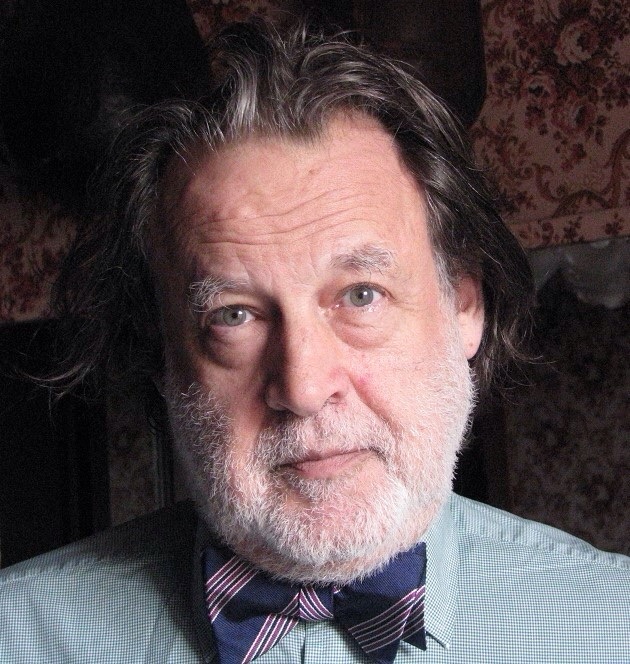
Never heard of him? I’m not surprised. He’s no John Grisham or J.K. Rowling; his books are non-fiction (more or less) on a variety of scholarly subjects, including quite a bit about Russia. But when I read that email from Amazon, it started me on a voyage of reminiscence, which led to some still unanswered questions, which in turn . . .
But I’m getting ahead of myself. So relax, dear reader, because this one may take a while.

No, no, no . . . not that relaxed!

Okay, that’s better. Now here we go:
Before relocating to Russia, Helmer didn’t just hang around Down Under. Having graduated from the University of Melbourne, he came to the United States and earned Masters and Ph.D. degrees in political science from Harvard. During his career, he bounced around the globe, and is said to have served at various times as an adviser to then President Jimmy Carter, and to Greek Prime Minister Andreas Papandreou.
And, according to retired KGB Major Yuri Shvets, Helmer was recruited by the KGB in the late 1980s, and allegedly passed classified information to the Soviets on the Iran-Contra affair, an upcoming bombing raid on Libya, and other sensitive matters. Shvets refers to him in his own book by the invented code name “Socrates.”
And that’s where I came in. While I had never met — or even heard of the existence of — John Helmer in 1993, I was all too-well acquainted with the aforesaid Yuri Shvets. That year, I was responsible for bringing Shvets and his colleague, retired KGB Colonel Valentin Aksilenko, to the U.S. to sell the book Shvets was writing about his years as a Soviet spy in the United States. Both men met with the FBI, and — with their wives and Shvets’ two sons — subsequently defected, and have lived in the U.S. ever since.
But this isn’t about me; it’s about John Helmer.
Naturally, Helmer — having been outed as the alleged “Socrates” by Shvets in a “60 Minutes” interview in 1995 — denies the allegation of spying for the KGB. And his denial was backed up by one Viktor Cherkashin, who — as head of counterintelligence at the Soviet Embassy in Washington and the handler of one of the CIA’s most notorious turncoats, Aldrich Ames, in the mid-1980s — is hardly the most credible of witnesses. So whom should we believe: Shvets or Cherkashin . . . two men who spent most of their lives lying for a living? It’s a tough call.
But back to the present time.
As you may know if you’ve followed my writing — or if you simply read the news on a regular basis — Vladimir Putin is a man who does not take kindly to criticism of himself or his style of governing Russia. Thousands of dissidents — including vast numbers of journalists, broadcasters and bloggers — have been rounded up and imprisoned on specious criminal charges. Those opponents who have become too popular have simply been eliminated: Boris Nemtsov, Anna Politkovskaya, and Aleksei Navalny, to name just a few.
So how — I ask myself — has John Helmer survived for some 36 years as a foreign correspondent in Russia? Is it because he sweet-talks Putin, and toes the political line?
Possibly. But . . .
While his earlier journalistic output included articles on such disparate subjects as urban decay, illegal drug trade, and the Vietnam War; and as a reporter he specializes in coverage of Russian business for media in London, New York, Hong Kong, Toronto and Johannesburg; his recent books have taken an entirely different direction. Consider, for example:
> The Man Who Knows Too Much About Russia (2018) — about his own alleged attempted poisoning by the KGB;
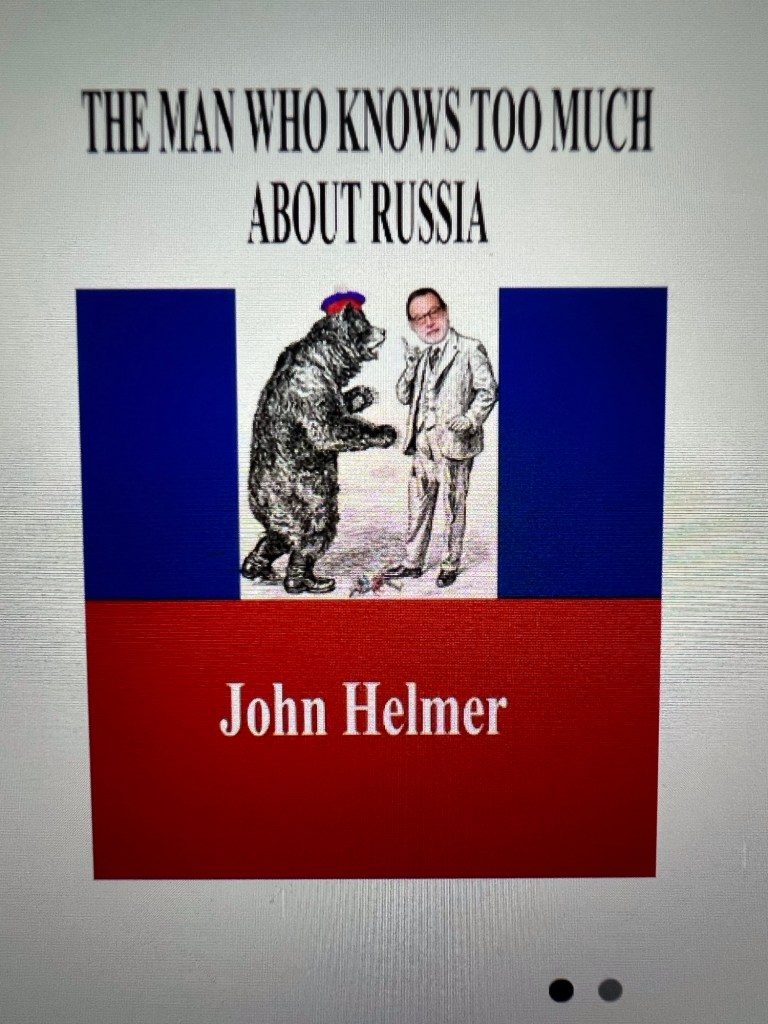
The Lie That Shot Down MH17 (2020) — about the Malaysia Airlines flight shot down by Russian forces over Ukraine in 2014, though of course denied by the Kremlin;
> Sovcomplot: How Kremlin Pirates Tried to Capture the Treasure of the Russian Seas, and Were Caught Out (2020) — another tell-all about Russian government corruption and cover-ups;
> Skripal in Prison (2020) — about the poisoning of former Soviet/Russian GRU (military intelligence) agent Sergei Skripal and his daughter following his defection to the UK;
> Long Live Novichok! The British Poison Which Fooled the World (2025) — about the proprietary Russian nerve agent used to poison Sergei Skripal, Aleksei Navalny, and who-knows-how-many others.
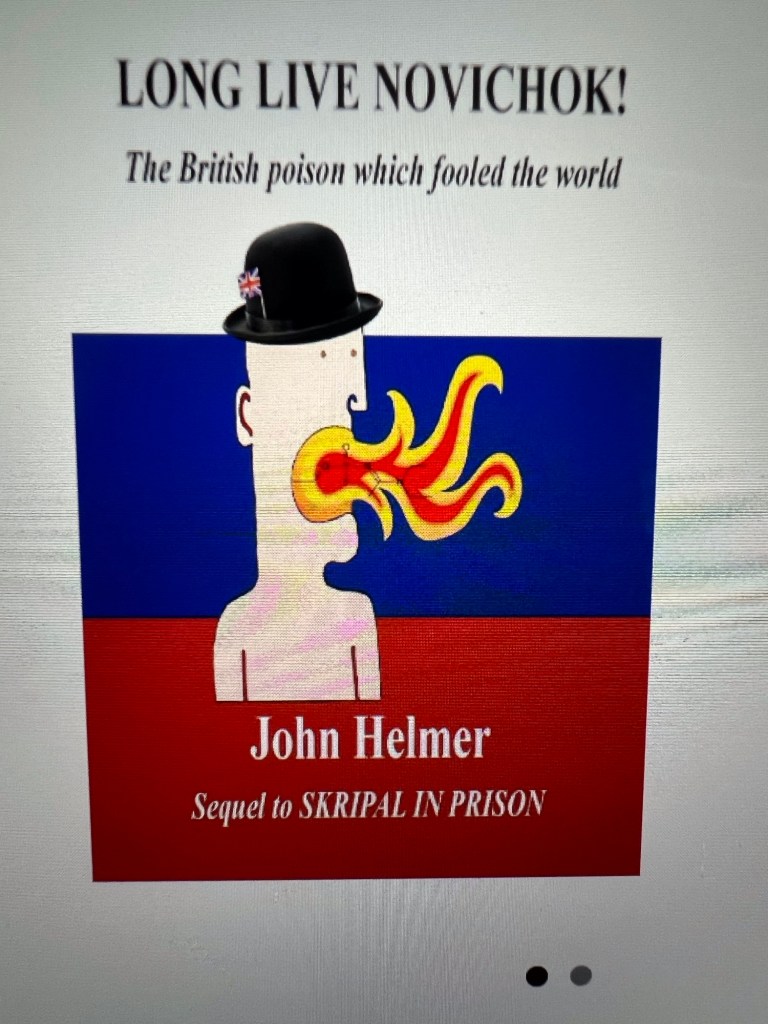
I have not followed Helmer’s day-to-day work, and do not know whether he is routinely critical of Putin or the war — excuse me, the “special military operation” — in Ukraine. But those five books alone should, according to Putin’s normal standards, have landed him in a Siberian penal colony years ago. Yet, now approaching 80 years of age, he lives on in Moscow.
His Wikipedia biography describes him as “the longest-serving western correspondent in Moscow . . . specializing in the coverage of Russian business for media in London, New York, Hong Kong, Toronto, and Johannesburg.”
I have no axe to grind with John Helmer; as I said, we have never met. But there are just two degrees of separation between us (Yuri Shvets being the common denominator). And my curious nature — plus my background in Russian and Eastern European history, culture and politics — have led me to wonder about the reason for his longevity as a foreign correspondent in Russia.
Is it his marriage to his second wife, a Russian woman named Tatiana Vasilievna Turitsyna (about whom there is no readily-available online information)? Or does he have some simple secret to maneuvering within the system?
Whatever the answer, I imagine there are quite a few journalists in Russia who would like to know.

Just sayin’ . . .
Brendochka
10/20/25
 The Blog About Everything … and Sometimes Nothing