If you asked me to name the happiest summer of my life — other than the two years in which my son and daughter were born, both in July, two years apart — it would be the summer of 1991, when I lived and worked in Prague.
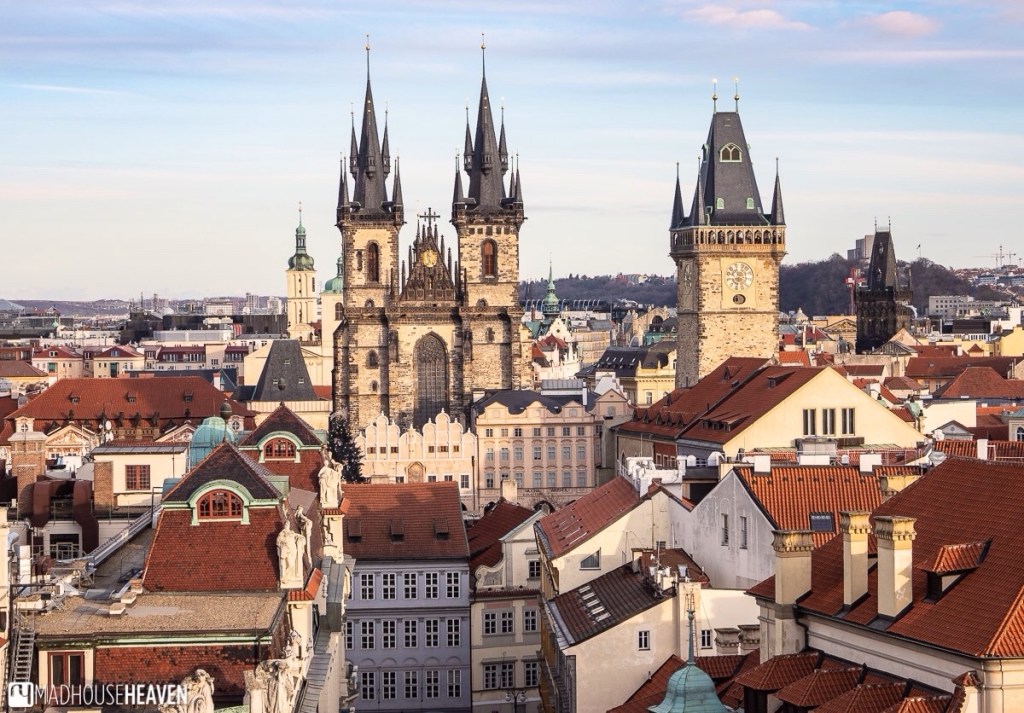
I’ve written about it before, in great detail. It was the summer that the last of the occupying Russian troops left the country after the fall of the Soviet Union, and Prague was in full celebration mode. Being there to share the joy, the sensation of freedom, and the unbridled optimism for an unlimited future was one of the greatest experiences of my life.
Our U.S. law firm was there to advise and assist the new government as it formulated a democratic legal framework under its new liberal president, Vaclav Havel. With the help of our young Czech staff, we worked hard; but evenings and weekends were for fun — and that was when our local friends became our instructors. Because those kids knew how to get the most out of every moment of life.
And that sense of joy and mischief has apparently not subsided over the years, judging from reports of the most recent demonstrations of snarky payback aimed at their former occupiers. Since the invasion of Ukraine in 2022, Russia’s embassy in Prague has been trolled by the locals with not-so-subtle reminders of Vladimir Putin’s crimes against Ukraine and against his own Russian dissidents.
The embassy is located in a lovely area well outside the bustle of Prague’s historic Old Town. And Czech authorities began — even before Putin’s war made Russia an international pariah — renaming some of the surrounding streets and landmarks in honor of some of Putin’s most prominent victims.
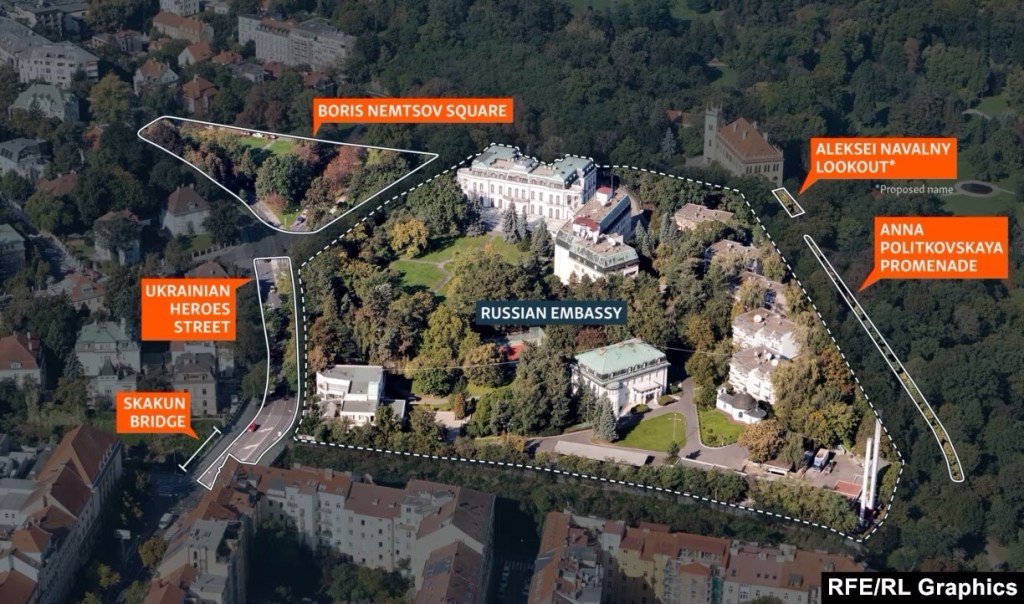
As you approach the Embassy, you are likely to find yourself walking down Ukrainian Heroes Street, which needs no explanation.
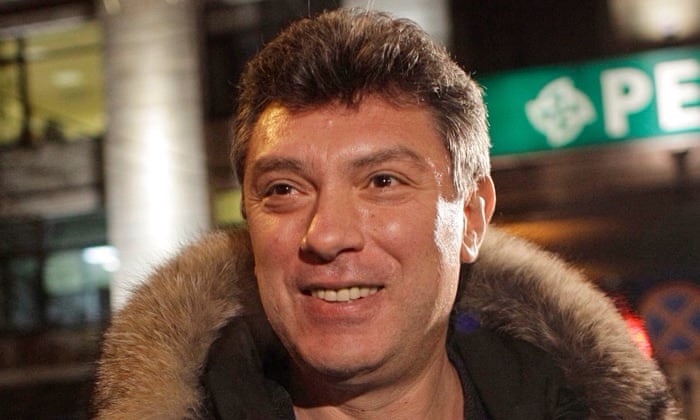
Turn the corner, and you will be across from the entrance to the embassy, on Boris Nemtsov Square — named for one of Putin’s most prominent opponents who was shot and killed while walking home from dinner near Moscow’s Red Square one evening in 2015.
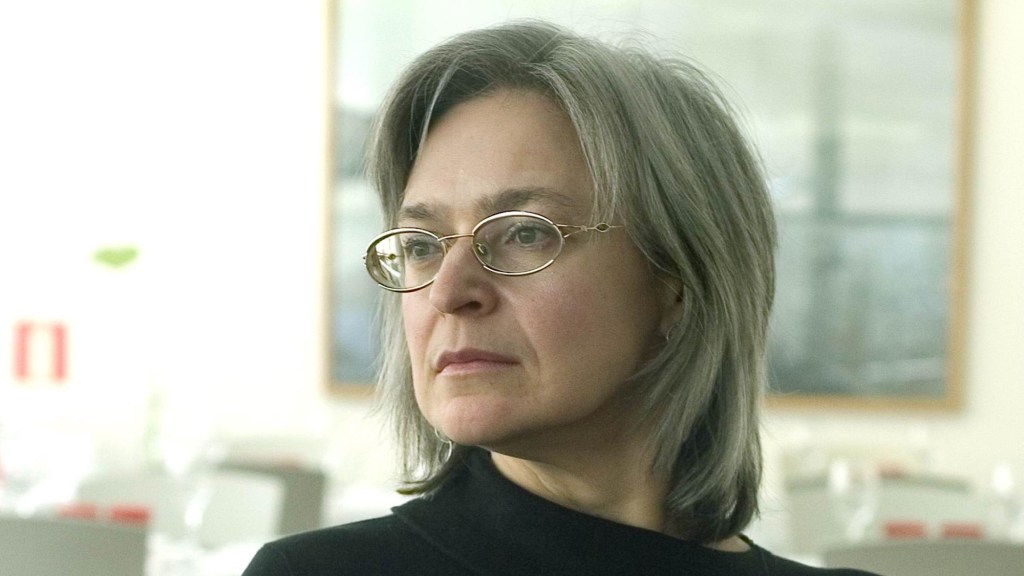
On the far opposite side of the compound is a forest path popular with joggers and dog walkers, now named Anna Politkovskaya Promenade in remembrance of the Russian journalist noted for her outspoken coverage of political events — most notably the wars in Chechnya —and assassinated in 2006 in the elevator of her Moscow apartment building.
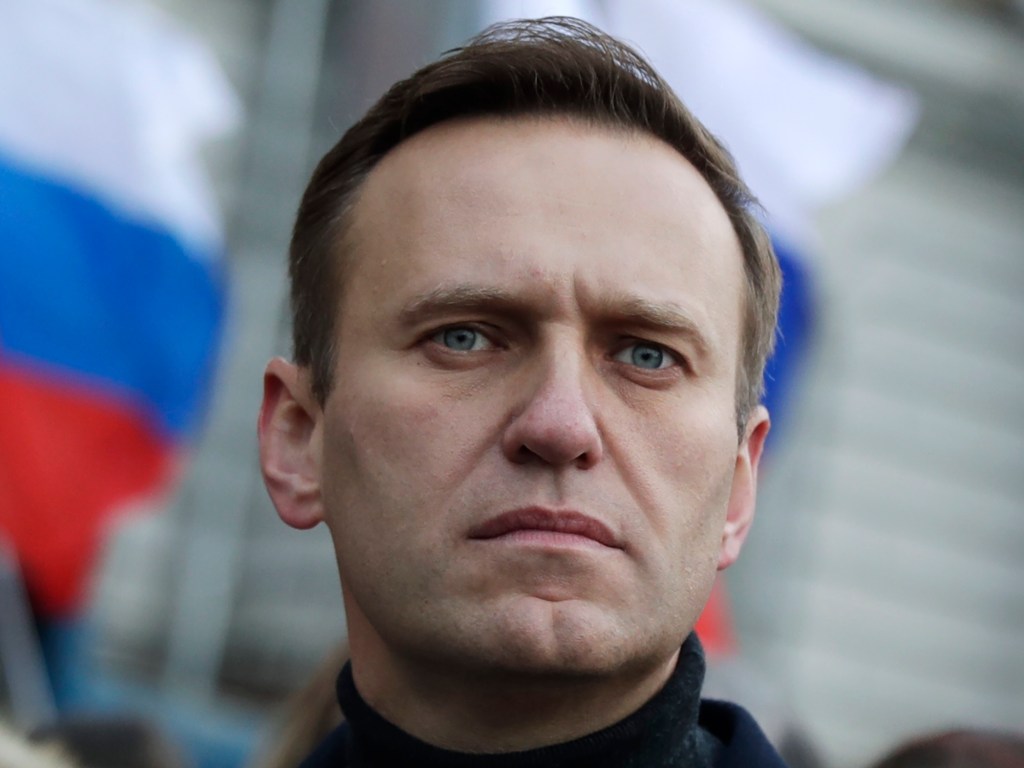
And nearby is a lookout over Prague’s Stromovka Park, now named Aleksei Navalny Lookout for the beloved Russian anti-corruption activist who survived a nearly-successful poisoning attempt, only to die under suspicious circumstances in a Siberian penal colony in February 2024.
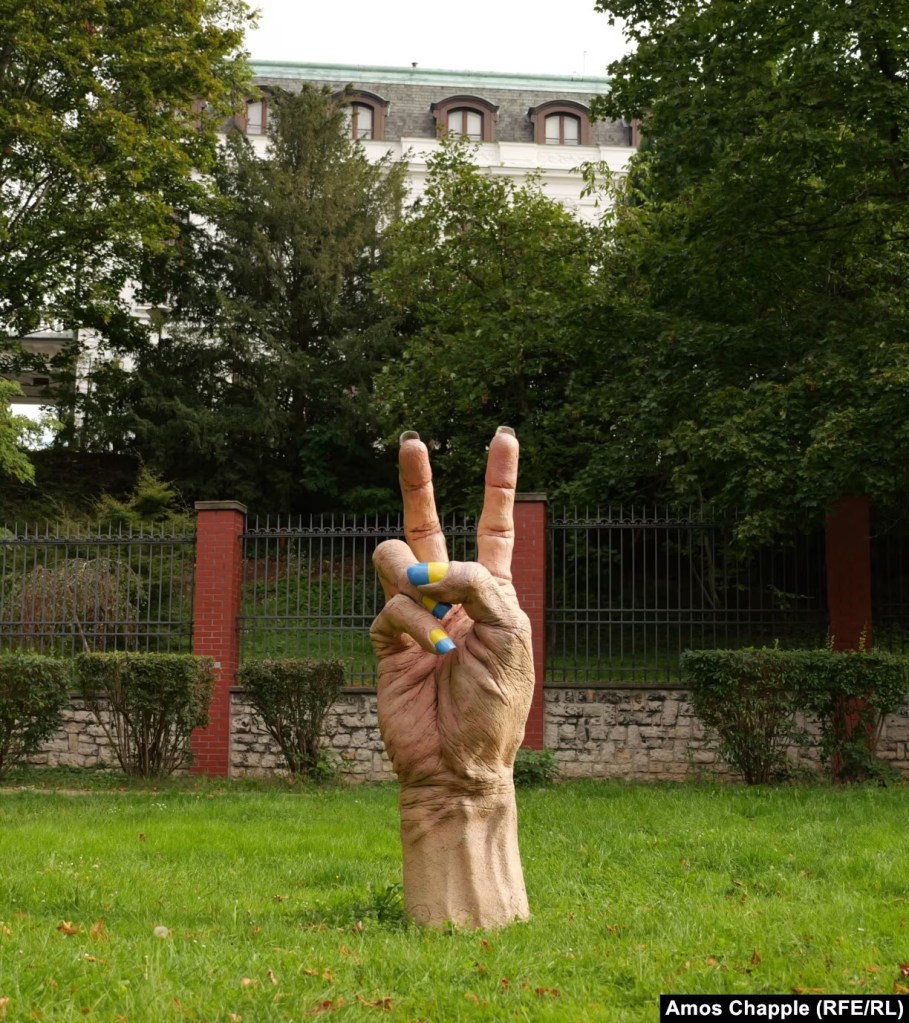
Then there is this sculpture by Jan Slovencik, installed directly outside the Russian embassy fence on Ukrainian Independence Day on August 24, 2022, depicting a “V” for “Victory” — with the Ukrainian national colors of blue and yellow adorning the fingernails:
Clearly, the people of the Czech Republic — a member of both NATO and the EU — are proudly and openly anti-Putin.
How, then, has it come to pass that Andrej Babis, the billionaire leader of the populist ANO Party, has just been edged into position to be elected Czech Prime Minister in a stunning political comeback? (He previously served in that office from 2017-2021.) His party won the largest number of seats in last week’s election, though not with an outright majority.
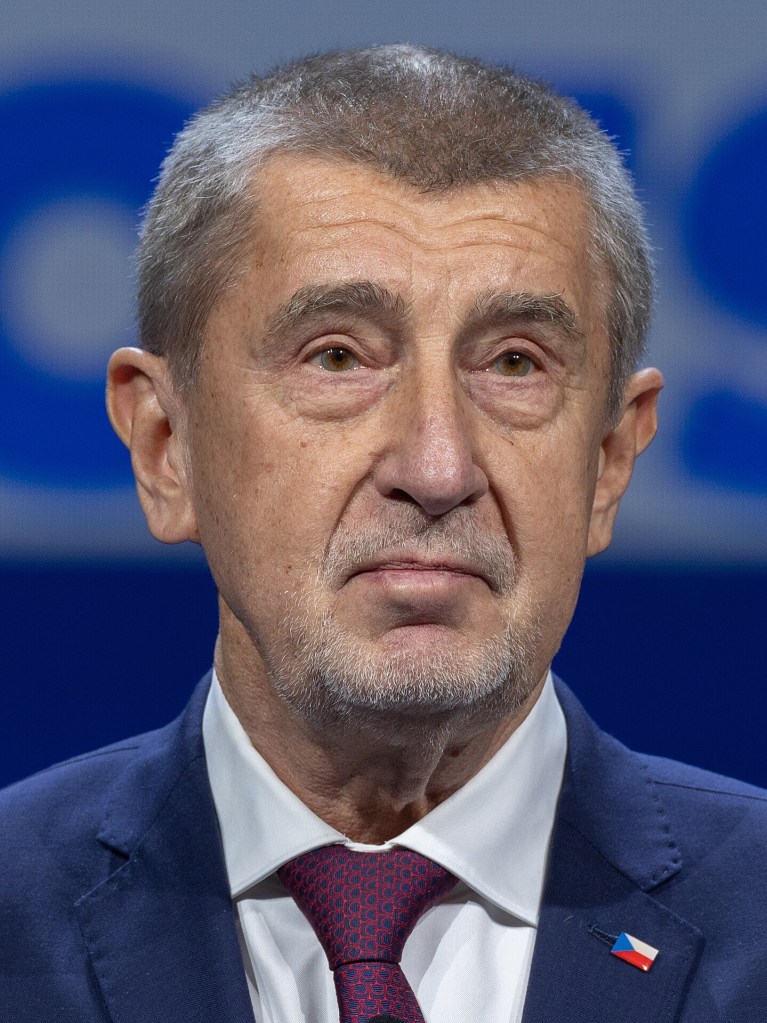
Babis is known for his strong Euroskeptic rhetoric and his suggestions that he would end support for Ukraine. He has also indicated that, in an effort to form a coalition majority in Parliament, he would hold talks with the extremist, pro-Russian SPD Party and another smaller party. He has also expressed support for Hungary’s right-wing, Putin-friendly Prime Minister, Viktor Orban.
In a nation very much committed to Western-style democracy and support for Ukraine in the battle against Russian aggression, how is it possible that Babis’ party was able to win enough votes to potentially allow him to regain office? Assuming that the election was indeed a fair and honest one, it would seem that there is a sizable movement back toward the political right. And if that is the case, then who is driving it?

While not in and of itself a disaster, ANO’s victory is disturbing. Looking at Hungary, Slovakia and Serbia, it is easy to see an increased leaning toward the repressive political right, as NATO and the EU struggle to maintain Europe’s resistance to Putin’s blatant expansionist designs. They cannot spare a single ally.
And from a personal point of view, it would break my heart to see my beautiful, joyous Prague go down that rabbit hole.

Just sayin’ . . .
Brendochka
10/9/25
 The Blog About Everything … and Sometimes Nothing