What is Aleksandr Lukashenko up to now?
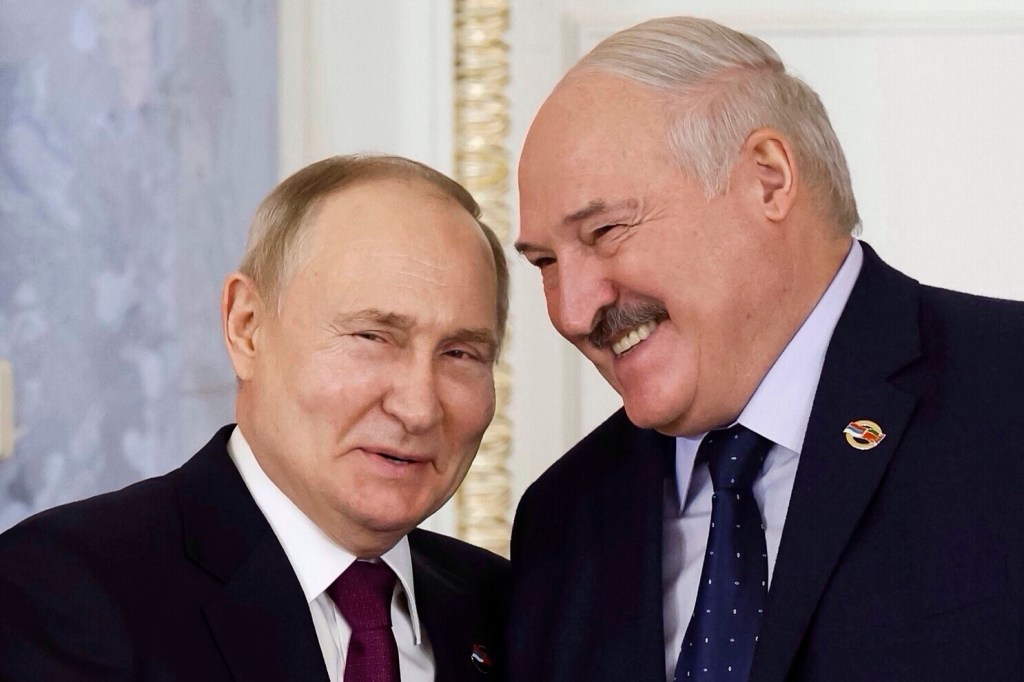
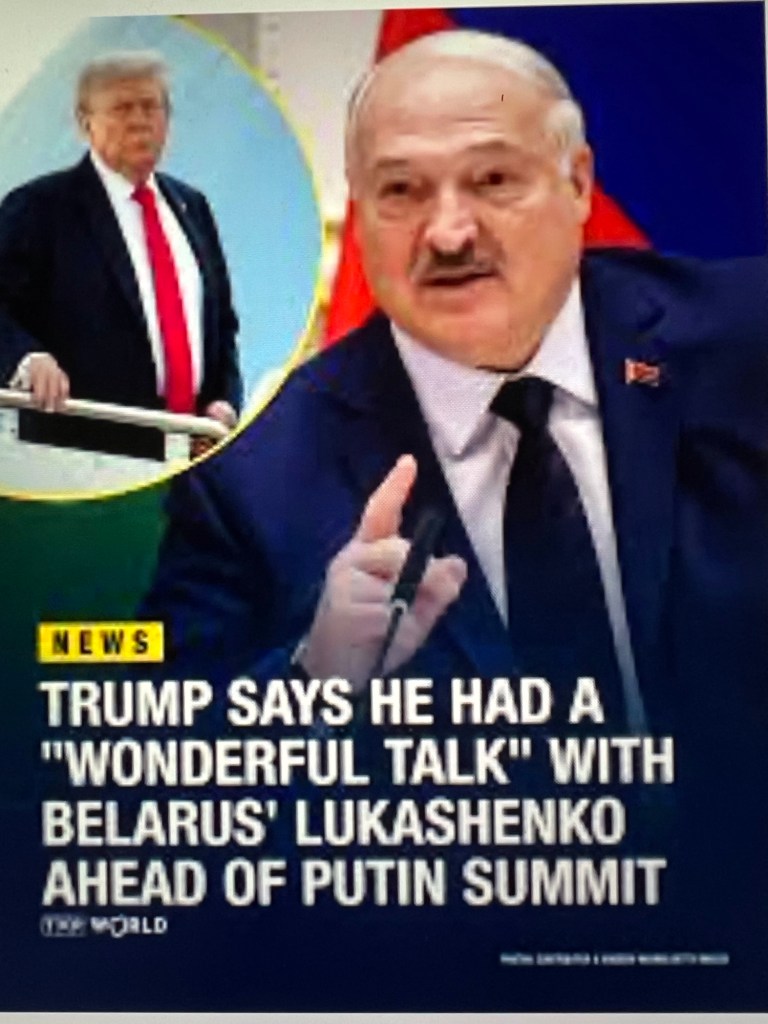
Despite being known as “Europe’s last dictator”; and despite his record of brutal authoritarianism since assuming the presidency of Belarus in 1994; and despite the questionable legitimacy of his subsequent re-elections; and despite his willingness to allow his country to be used as a staging ground for Russian troops and armaments in pursuance of Putin’s war against Ukraine . . . despite all of that, we now see Lukashenko openly making overtures to the U.S. But to what end?
In mid-August, as Donald Trump was en route to his now infamous meeting with Vladimir Putin in Alaska, he took the time to speak by phone with Lukashenko — the first-ever such conversation for the Belarusian leader. In a social media post following that call, Trump, believing that Lukashenko might be of help in U.S.-Russian negotiations concerning the war in Ukraine, referred to the long-ostracized dictator as “highly respected President” — even though officially the West does not recognize Lukashenko as the legitimate president of his country. [Artyom Shraibman, Carnegie Politika, August 21, 2025.]
Trump also expressed appreciation for the release of 16 prisoners (though not referring to them as “political” prisoners), and agreed to meet with Lukashenko in person at some unspecified time . . . even saying he would come to Belarus with his family. Trump’s objective was said to be the release of additional prisoners being held in Belarus, who may number as many as 1,300 in total. [Id.]

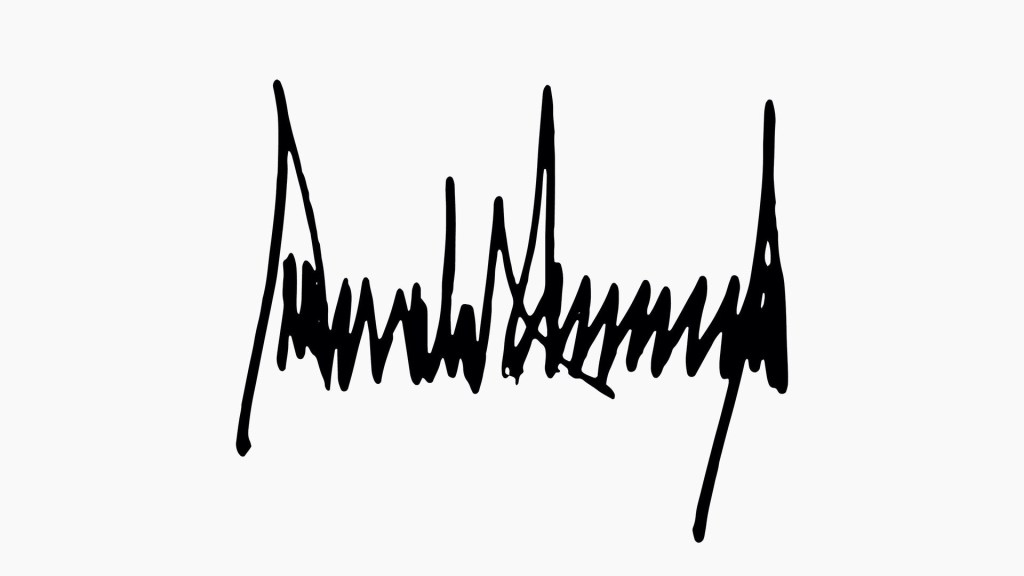
Four weeks later, on September 11th, Lukashenko met with U.S. envoy John Coale in Minsk, where Coale handed him a letter from Trump, written in English and signed simply “Donald.” At that time, Lukashenko announced that he was ready to make a deal on the release of prisoners, saying:
“If Donald insists that he is ready to take in all these released prisoners, God bless you, let’s try to work out a global deal, as Mr. Trump likes to say, a big deal.” [Marina Bobrova, Reuters, September 11, 2025.]
Coale referred to Trump’s letter, and the first-name-only signature, as “a rare act of personal friendship.” [Id.]
Later that day, Belarus released 52 prisoners of various nationalities, who then traveled to Lithuania with the U.S. negotiating team.
Again, Trump’s intentions may be twofold, and perfectly legitimate: seeking the release of as many prisoners as possible, and trying to use Lukashenko’s presumed influence with Putin as leverage in negotiations to end the war in Ukraine.
But what is Lukashenko really up to? Is he merely currying favor to improve his standing in the international political hierarchy? Or is he growing weary of being under Putin’s thumb and genuinely turning Westward?
It has now come to light that on September 10th, as an estimated 700 Russian drones entered Belarusian airspace en route to the Polish border, a Belarusian military officer — not for the first time — used a dedicated phone line to call his Polish counterpart and warn him. And a similar call was made to military officials in neighboring Lithuania as well. [Mike Eckel and Andnrei Shauliuha, RFE/RL, October 3, 2025.]
In addition, there have been unconfirmed reports that a number of those drones have been shot down by Belarusian defense forces, though most have gone unreported by official sources. [Id.]
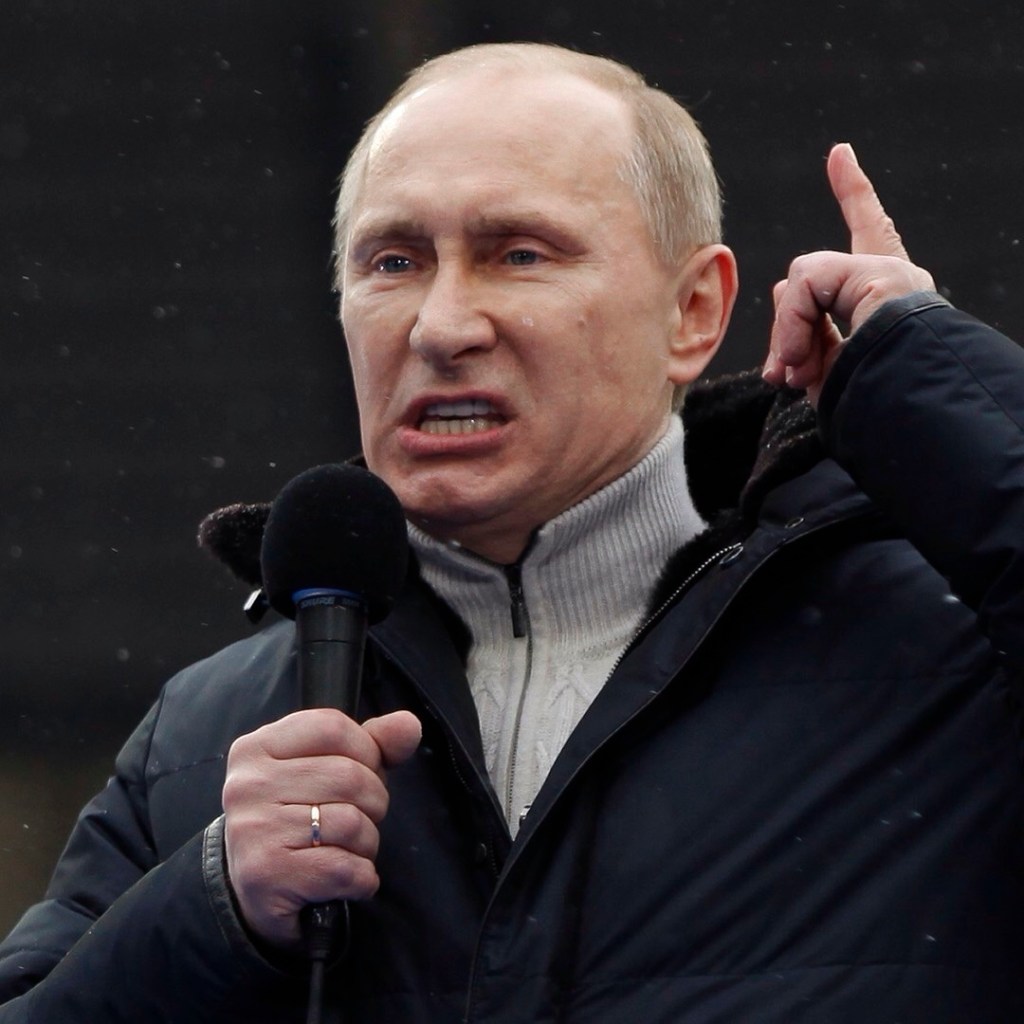
Now, that seems certain to infuriate Vladimir Putin. So why risk it?
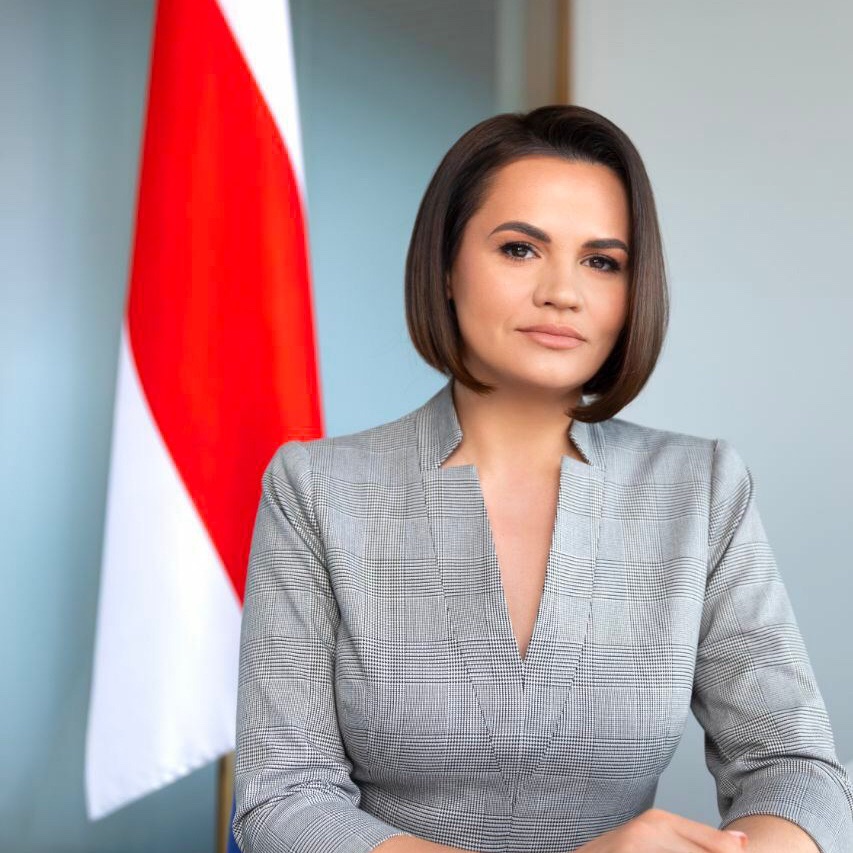
I certainly don’t have the answer to that. But Sviatlana Tsikhanouskaya, the exiled leader of Belarus’ opposition party — whose husband Syarhei is himself a recently-released political prisoner of Lukashenko — warned that the dictator is trying to fool Trump with gestures such as the release of a handful of prisoners, in exchange for which Trump has already eased some sanctions against Belarus.
While expressing appreciation for having won the recent prisoner releases, Tsikhanouskaya cautioned the U.S. “not to pay too much” for the relatively small number of people freed thus far. Noting that Lukashenko’s brutal crackdowns and mass arrests are continuing in what she called a “revolving door,” she urged that the U.S. should continue working to free prisoners while the opportunity presents itself, saying that:
. . . “people are dying in prisons. That’s why we need . . . consistent and irreversible changes, not to let this regime to take more and more and more hostages to sell them for higher price [sic].” [Michael Weissenstein, AP, September 25, 2025.]
Again, it all boils down to a question of trust . . . and Aleksandr Lukashenko is a man who has proven many times over that he cannot, under any circumstances, be trusted. One possible scenario is that he is doing Putin’s bidding — playing up to Trump to gain an easing of sanctions or other favors that would ultimately be of benefit to Russia, if only indirectly.
In the meantime, we can only hope that Trump’s common sense — if he still has any — will for once outweigh his ego’s susceptibility to flattery.

Just sayin’ . . .
Brendochka
10/4/25
 The Blog About Everything … and Sometimes Nothing