While Turkey’s President Erdogan manages to remain firmly seated on the political fence between East and West, the Prime Ministers of two other members of both NATO and the EU — Hungary’s Viktor Orban and Slovakia’s Robert Fico — have been much more outspoken in their support of Vladimir Putin. And now — not for the first time — they are using their leverage in the EU to swing the semi-annual vote on Russian sanctions in Putin’s direction.
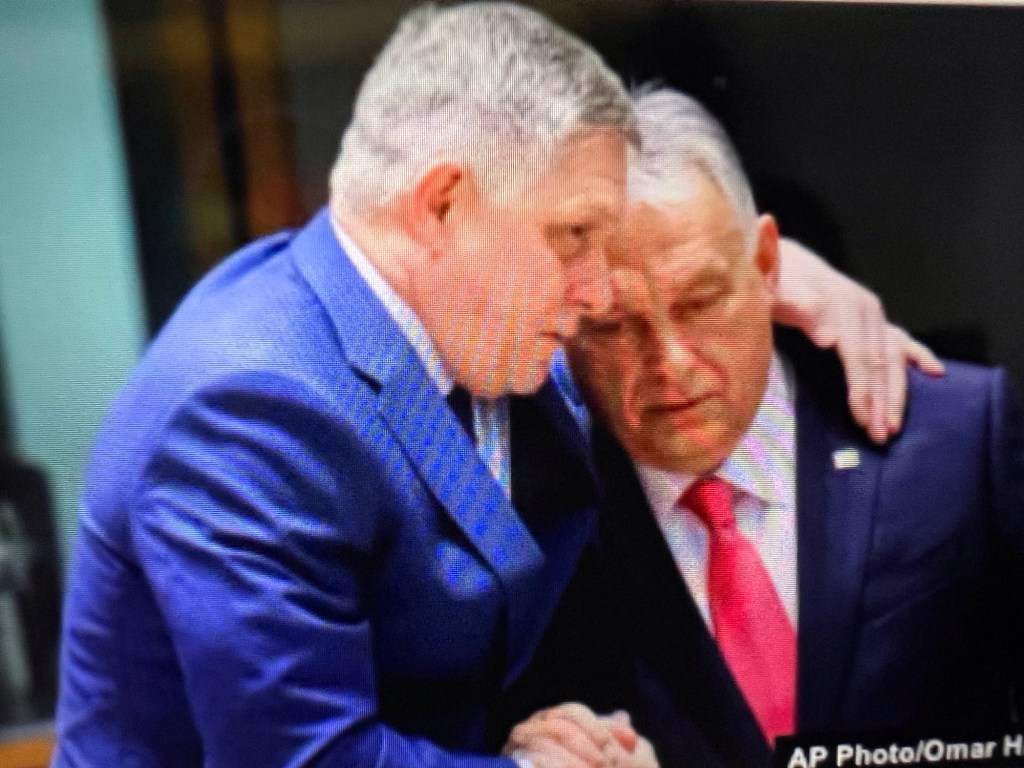
The EU’s Russian sanctions presently cover more than 2,600 individuals and firms in Russia, and must be extended by unanimous vote every six months. The deadline for the next renewal is September 15th, and both Orban and Fico have submitted the names of several individuals — Russian oligarchs and others close to Putin — whose sanctions they want lifted before they will vote for renewal.
They can’t really believe they have a chance of having the entire sanctions program dropped. But by demanding that several high-profile names be removed — names like oligarchs Pyotr Aven and Mikhail Fridman — they have already caused some EU member states to propose an alternative solution: possibly by removing one or two “weak cases,” or individuals most likely to be delisted soon in any event due to lack of provable evidence against them. [Rikard Jozwiak, RFE/RL, September 3, 2025.]
Some sort of agreement will undoubtedly be reached, as it has been in the past. But by forcing the other members to compromise, Orban and Fico — and Putin — will have already won. It may not be a huge victory; but even the small ones, taken cumulatively, eventually become meaningful.
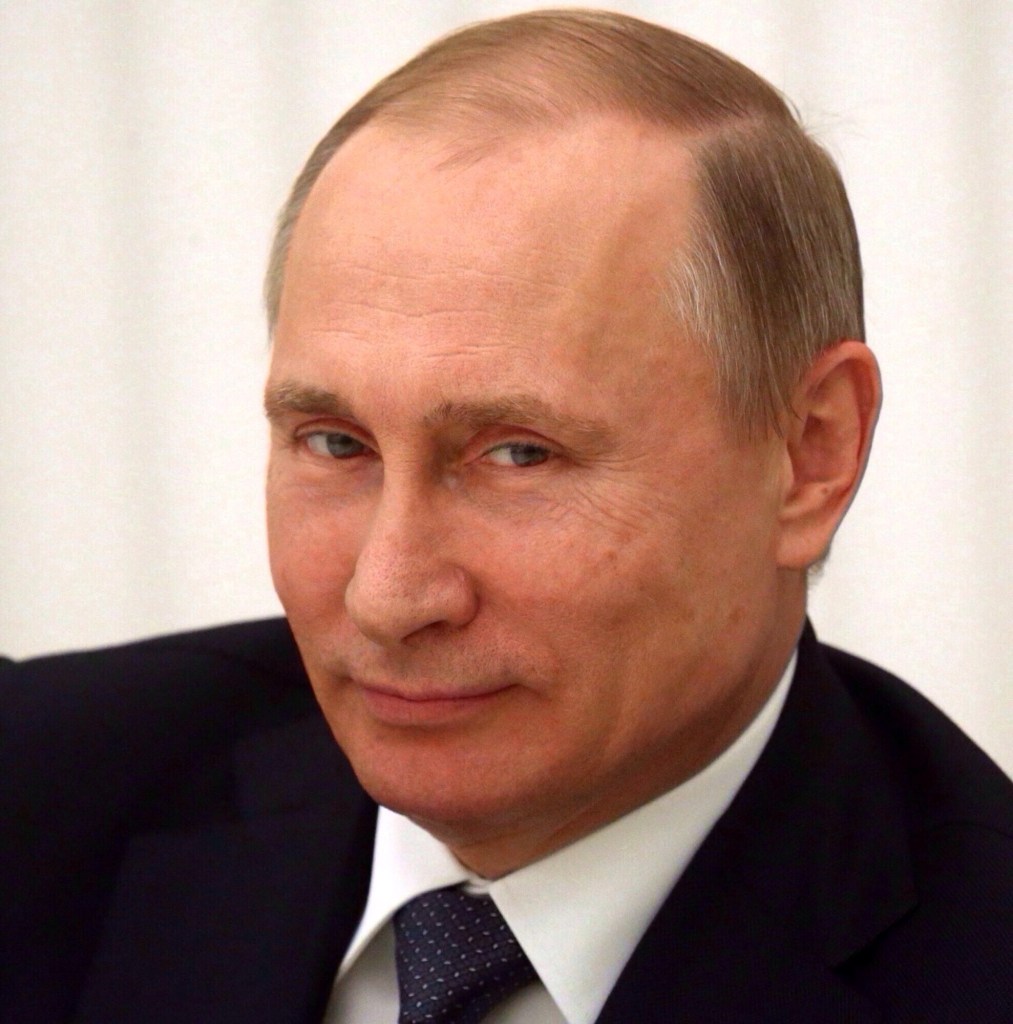
This is not a new tactic; but it demonstrates, once again, Putin’s increasing influence in nations that are members of the EU and/or NATO and whose heads are clearly working against the principles and goals of the two democratic alliances. And shockingly, both Hungary and Slovakia were, just over 30 years, Eastern Bloc countries that fought so hard and so valiantly to escape Soviet hegemony.
Unfortunately, neither NATO nor the EU offers any mechanism for the expulsion of a member country. Fico and Orban are well within their rights to vote against extension of the 2,600 existing sanctions . . . or any other measure that might hinder Putin’s continuation of the war in Ukraine . . . and to do so without fear of reprisal.
It’s coercion, pure and simple. But it’s unpunishable.

*. *. *
Meanwhile, back in Washington, Donald Trump has once again reiterated his wobbly stance regarding Putin’s continuing avoidance of serious peace negotiations with Ukraine.
You’ll be happy to know that he stated he’s still not pleased with his old friend Vlad, saying on conservative commentator Scott Jennings’ radio show on Tuesday:
“I’m very disappointed in President Putin, I can say that. We had a great relationship, I’m very disappointed. Thousands of people are dying. They’re not Americans. They’re Russians and Ukrainians. . . . And it’s a war that makes no sense. We’ll be doing something to help people live . . . Seven thousand people are dying every week — soldiers, mostly. And if I can help to stop that, I think I have an obligation to do it.” [RFE/RL, September 3, 2025.]
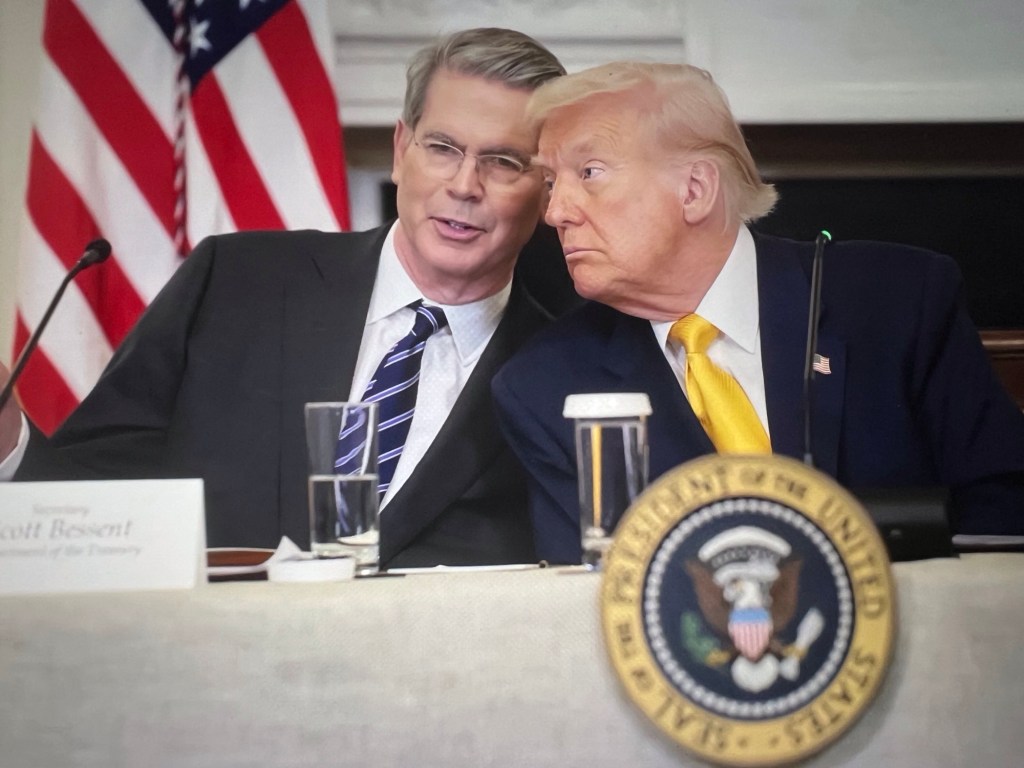
Trump didn’t specify what “something” he would be doing. Nor did U.S. Treasury Secretary Scott Bessent make matters any clearer on Monday when he told Fox News that the administration would this week be “examining options” in regard to a U.S. response to Russia’s continuing deadly attacks on Ukraine. Bessent said that:
“[Putin] has done the opposite of following through on what he indicated [to Trump] that he wanted to do. As a matter of fact, he has, in a despicable, despicable manner, increased the bombing campaign. So, I think with President Trump, all options are on the table, and I think we’ll be examining those very closely this week.” [Id.]
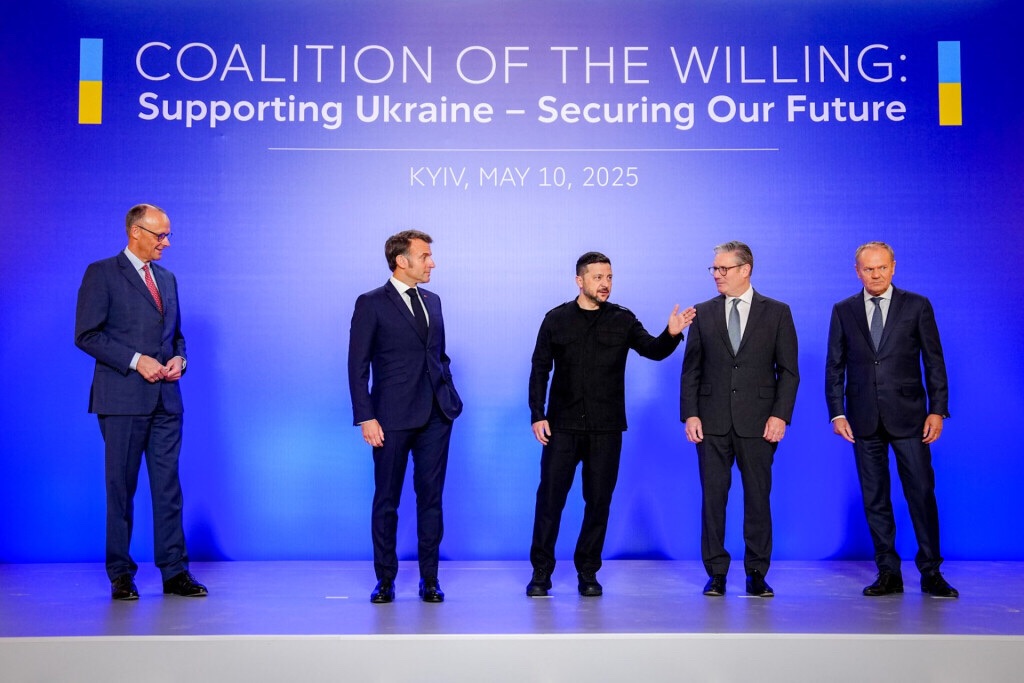
Fortunately for Ukraine, their European allies — a group of nations calling themselves the Coalition of the Willing — have more to offer. Led by French President Emmanuel Macron and British Prime Minister Keir Starmer, they will be meeting today in Paris to discuss potential security guarantees for Kyiv. After speaking with NATO head Mark Rutte, Macron had written this on X:
“Together with our partners, and in coordination with NATO, we will work to define robust security guarantees for Ukraine. These are a necessary prerequisite to move credibly toward peace.” [Id.]
And on the eve of today’s meeting, Macron added:
“Thanks to the contributions prepared, documented, and confirmed this afternoon at the defense minister level under strict secrecy, we can now say: This work is complete and ready for political approval.” [Id.]
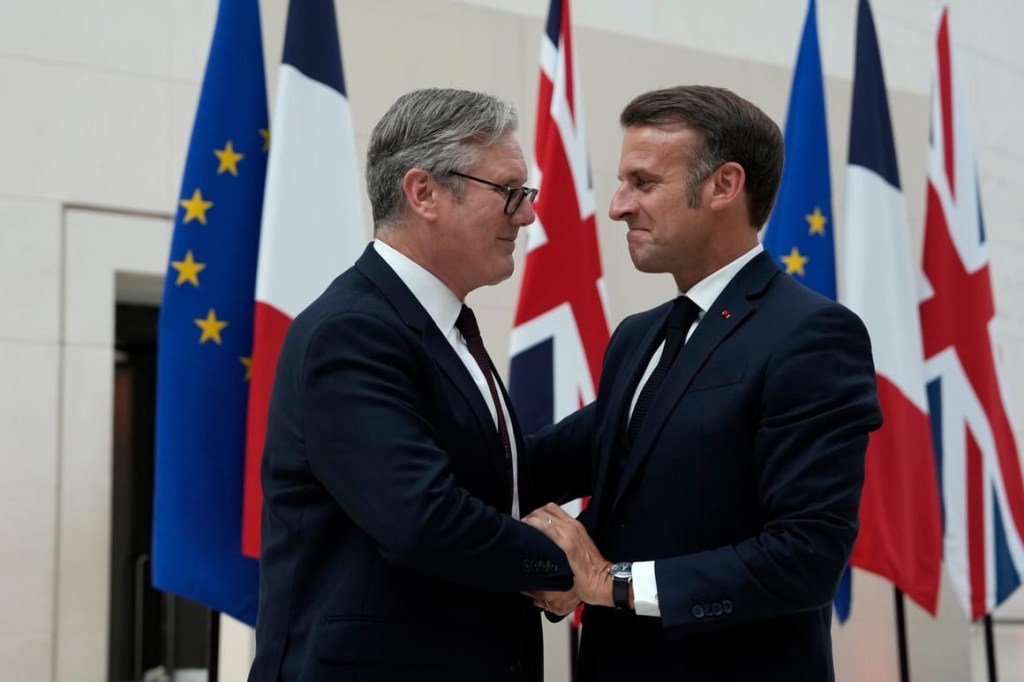
No “disappointment” . . . no “something” . . . no two-week extensions or “options on the table.” They said they would do it, and they’re doing it. And later today, we should know more about what “it” is.
That’s leadership.
Just sayin’ . . .
Brendochka
9/4/25
 The Blog About Everything … and Sometimes Nothing