Trump said he could end Putin’s war against Ukraine within 24 hours of taking office in January. The world laughed at the absurdity of his claim.
The world was right.
Six months — and thousands of casualties — later, Russia’s onslaught continues to escalate.
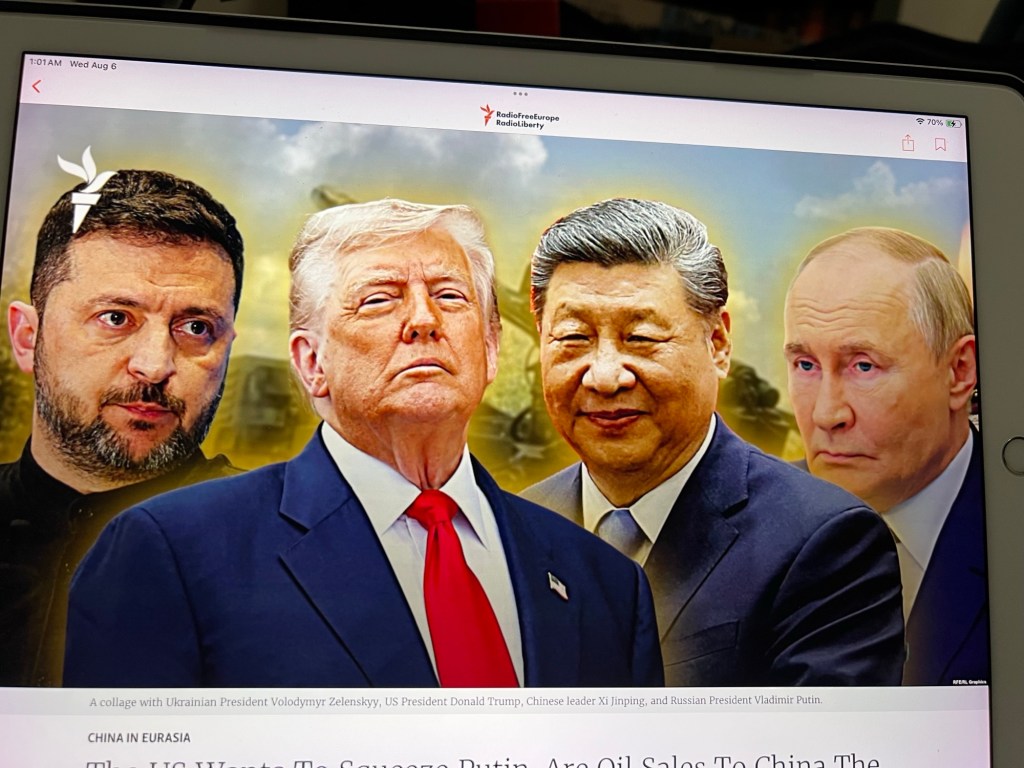
Trump threatened; Putin shrugged. The U.S. and its NATO allies issued crippling sanctions against Russia; Russia adapted. China and India helped picked up the economic slack in Russia; Trump responded with more sanctions.
Sanctions, sanctions, sanctions. What else could we do?
Talks were held, three times, on neutral territory in Istanbul; Trump’s envoy made two trips to Moscow; Putin still refused to compromise on his demands, which would in effect leave Ukraine weak, vulnerable, and an easy target for future invasion. Trump gave him more time. The attacks increased.
Then Dmitry Medvedev inserted himself into the picture, tossing out the “N” word — the nuclear option. And everyone inhaled, held their collective breath.

Now what?
Trump responded angrily, and rightly so. This time Putin listened, advised caution; Medvedev became silent; Trump issued sanctions against India, threatened the same against China.
But Russia announced that it no longer considers itself bound by its self-imposed moratorium on deployment of nuclear-capable intermediate range missiles, citing U.S. and allied efforts to develop similar weapons for deployment in Europe and elsewhere.
Russia’s Foreign Ministry said that such efforts by the U.S. and others create a “direct threat to the security of our country [and carry] significant harmful consequences for regional and global stability, including a dangerous escalation of tensions between nuclear powers.” [Associated Press, August 5, 2025.]
And Kremlin spokesman Dmitry Peskov, when asked where and when Russia might deploy its intermediate-range weapons, replied that it’s not something to be announced in advance, saying:
“Russia no longer has any limitations, Russia no longer considers itself to be constrained by anything. Therefore Russia believes it has the right to take respective steps if necessary.” [Id.]
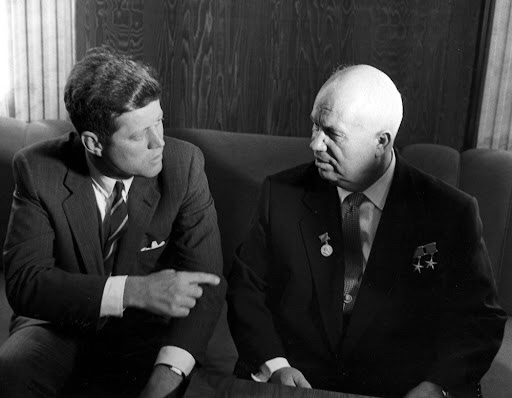
Welcome back to 1962.
Yesterday, envoy Witkoff headed for Moscow for the third time and met with Putin for about three hours. Trump said the meeting was “highly productive” and represented “great progress” toward a settlement of the conflict in Ukraine.
“Everyone agrees this War must come to a close, and we will work towards that in the days and weeks to come,” Trump wrote on social media. But he added that there would not be a ceasefire by his deadline of Friday, August 8th. No explanation was given. [Matthew Luxmoore, Alexander Ward and Alex Leary, The Wall Street Journal, August 6, 2025.]
Later today, a senior U.S. administration official said that Trump intends to meet soon with Putin, based on an offer allegedly made by Russia during Witkoff’s visit. Again, no details were available. [Id.]
*. *. *
To those of us who lived through it, the memories of those days of nuclear brinkmanship are all too fresh. And a repeat performance is the last thing the world needs. In the ‘60s, cooler heads prevailed, and the world was saved from annihilation.
Today, there are no cooler heads.

Just sayin’ . . .
Brendochka
8/6/25
 The Blog About Everything … and Sometimes Nothing