If you’ve read Part 1 of this tale (July 31), you may have been waiting for an explanation of how I knew about Carlos the Jackal’s background, and also wondering who in hell this Yuri Shvets guy is. And if you haven’t read the first part, you might want to do that . . . it’s up to you, of course, but it would probably be helpful.
Anyway, finding both of their names on a list of Moscow’s Patrice Lumumba University alumni was not surprising in and of itself, as Shvets has always claimed to have been a classmate of The Jackal. And while I take most of what Shvets says as questionable (at best), it appears that he may have been telling the truth about this.
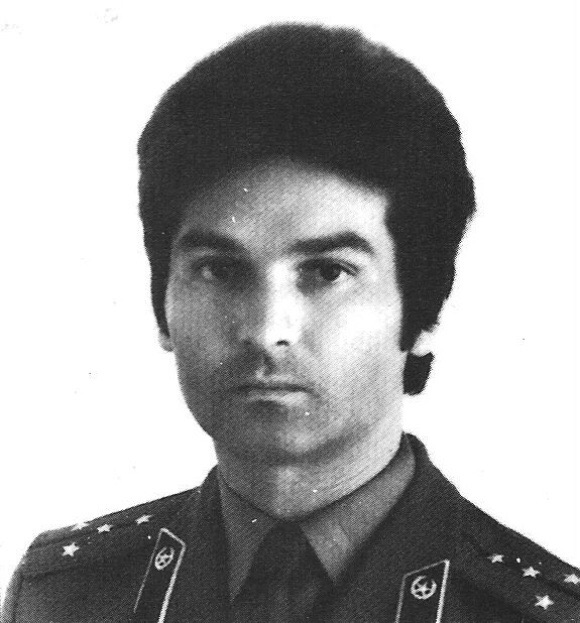
But who is Shvets, and how did I come to be — through him — just two degrees of separation from The Jackal: one of the 20th century’s most notorious terrorists? It’s a long and convoluted story dating back some 30 years, when a Russian acquaintance — Valentin Aksilenko, a retired Colonel in the KGB — asked my help in finding a potential publisher for a tell-all book about the KGB being written by a colleague of his in Moscow. That colleague was Shvets, himself a Major in the KGB, and also supposedly retired.
I’ve written about that little adventure at length in the earliest chapters of my blog, so I won’t go into the grisly details again. But it did end with Shvets’ book — more of an homage to himself than anything resembling provable fact about the KGB — being written and published, and both men defecting with their families to the United States.
During the time all of this was taking place — 1993 to 1995 — it became painfully obvious to me that there were gaping holes in Shvets’ stories, and particularly those of his own past accomplishments and his final “escape” from Moscow. I expressed my misgivings to the FBI agents in charge of their resettlement, and left it to the experts to sort out.
Since then — for 30 blissfully peaceful years — I have had no contact with either Shvets or Aksilenko. I know nothing of their lives in the past three decades, other than having run across Shvets’ YouTube channel, which, after a couple of brief attempts to listen to what he had to say, I dismissed as a waste of my time.
Then — as so often occurs in the course of my online searches — I happened upon an article by Ukrainian independent news medium Babel.ua from last December, titled:
“Pseudo-expert Yuriy Shvets became famous thanks to Dmitry Gordon and Putin. He constantly makes false predictions, invents facts and mentions ‘his country’ — the Soviet Union.”
And I immediately regretted not having paid closer attention to those YouTube broadcasts. Because here were investigative reporters, some 30 years after the fact, echoing my much earlier thoughts . . . only now based on more recent data. And, of course, I wondered why.
According to the Babel report, Shvets’ entire recorded history is founded on unconfirmed, and largely unverifiable, information provided by him. (Note: What can be confirmed is the period of his service at the Soviet Embassy in Washington, D.C. (1985-87), as he was under surveillance by the FBI during that time.)
The reporters also refer to the inaccuracy of the many conspiracy theories he promotes on YouTube, with special emphasis on matters involving Ukraine.
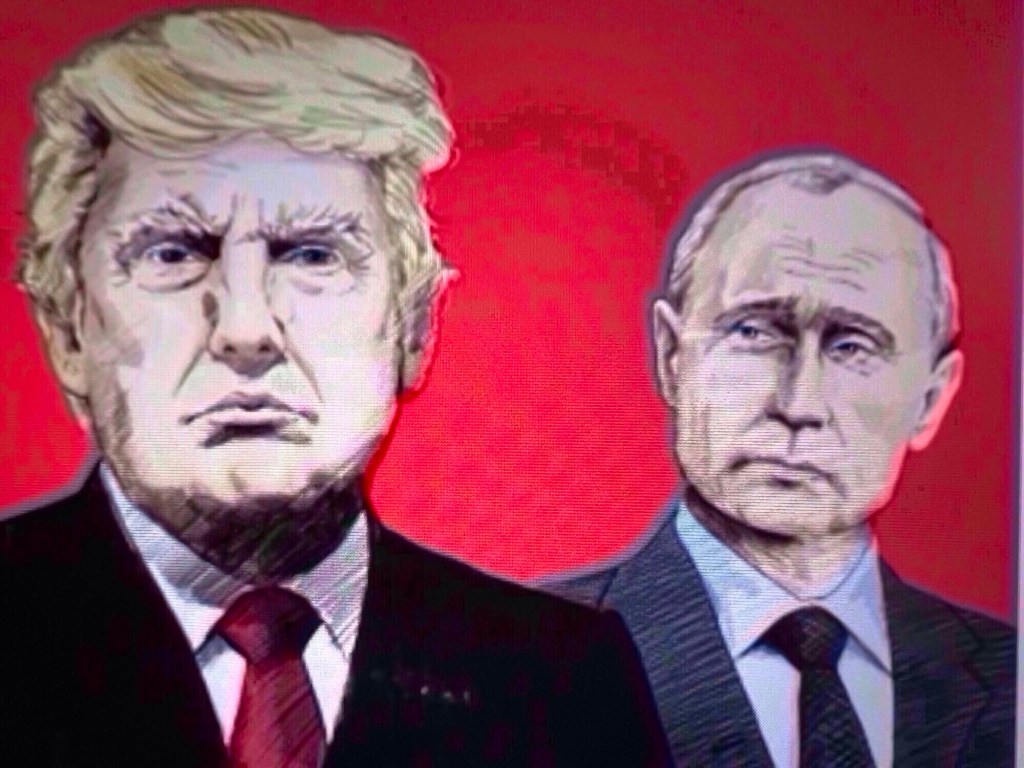
Shvets also has his pet theories about Vladimir Putin, even alleging that he has colon cancer and suffers from a severe mental disorder; that he is fed up with the West, “serious people in the leadership of the Russian Federation” and China, because “he is always walking around with an outstretched hand with idiotic ideas.” [Sofiia Korotunenko and Kateryna Kobernyk, Babel.ua, December 2, 2024.]
I know . . . it makes absolutely no sense. But, from my own experience with Shvets, that’s not surprising.

According to the Babel report, Dmitry Gordon — a Ukrainian journalist, TV host and blogger — gave Shvets his 15 minutes of fame in 2017, when he invited the former spy for an interview and introduced him on air as a classmate of Vladimir Putin at the KGB Institute. Although not quite true — records indicate that they studied at the Institute at different times — the sound bite was picked up by Ukrainian media, and suddenly Shvets was considered “an expert on everything related to Russia and the Kremlin” . . . despite the fact that he has not been to Russia since 1993 and has no known connection to Putin. [Id.]
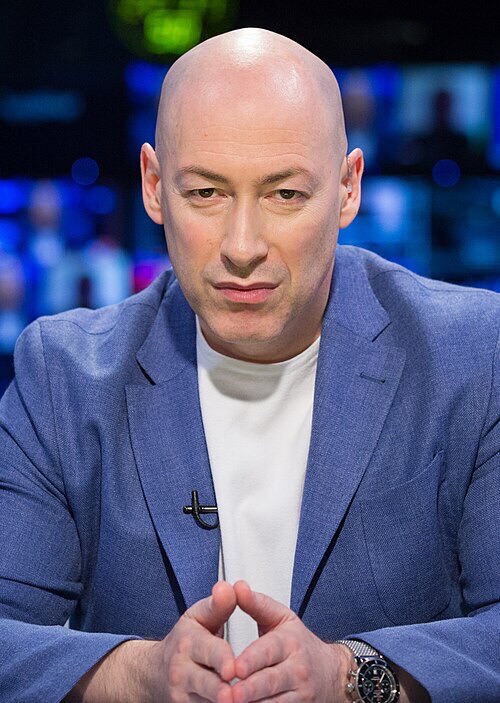
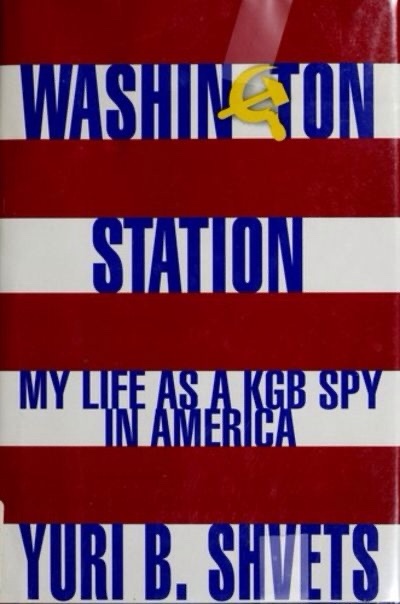
Babel journalist Sofiia Korotunenko says she has watched dozens of Shvets’ broadcasts and interviews, and has read his book, Washington Station: My Life As a KGB Spy In America” — which, for those who might be interested in obtaining a copy, disappeared from the shelves almost as soon as it was published and is only occasionally available from second-hand sources.
Korotunenko gives numerous examples in her article as to why Shvets’ word is not to be trusted, including his bizarre conspiracy theories and usually incorrect predictions. I won’t attempt to repeat all of her revelations here, but one point, having to do with Russia’s invasion of Ukraine, is particularly notable:
“On the eve of a full-scale invasion, Shvets estimated the chances of a Russian invasion as ‘well below 50%,’ because only a ‘crazy fanatic’ would go for it, and Putin is not like that. Besides, Putin and his state are unable to fight, he said.
“Subsequently, Shvets regularly predicted the date of victory and liberation of the occupied Ukrainian territories. And he was constantly wrong.” [Id.]
Note: For those who choose to read the Babel report, let me explain the confusing references to “the Swede.” This is an obvious translation error; the Russian word for “Swede” is ... you guessed it ... “Shvets.” There is no actual Swedish person in this story.

*. *. *
Upon reading the Babel article, my reaction was strictly a personal one . . . an affirmation of what I already knew about Yuri Shvets from a different, earlier segment of my life. Then I read these statistics, which I hadn’t seen before:
> He has 1.5 million subscribers on his YouTube channel;
> Since 2021, he has released new videos almost every day, which have collected 725 million views; and
> Almost 130,000 more followers follow Shvets on TikTok, Instagram, X, and Telegram. [Id.]
At that point, I realized that — even if the numbers are exaggerated, which is entirely possible — the formidable power of social media has exposed millions of people . . . most of them lacking the knowledge or the experience to separate the truth from the bullshit . . . to this man’s alleged “expertise.”
In addition, American author Craig Unger, in his book American Kompromat — a blatant, scathing indictment of Donald Trump — relies heavily upon “information” provided by Shvets and apparently taken by Unger as gospel.
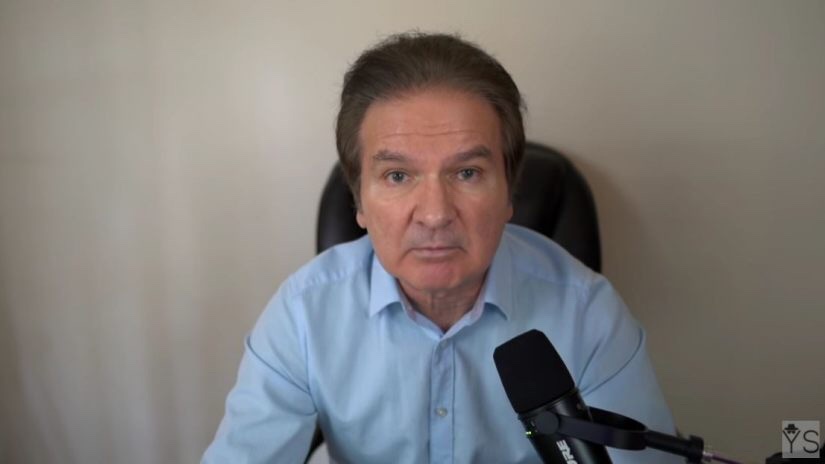
So I felt that this was an opportunity — aside from sharing a bit of personal history — to point out yet another example of the nature and extent of the misinformation — and intentional disinformation — floating around out there in cyberspace, ready to pull the innocent reader into its quagmire of lies and propaganda.
In the simplest of terms, there’s a lot of dangerous crap on the internet. It’s hard not to get sucked into it; but at least we can watch where we step.

Just sayin’ . . .
Brendochka
8/3/25
 The Blog About Everything … and Sometimes Nothing