It doesn’t end for them the day they walk out of prison and board a plane for home.
A year ago today, the world was celebrating the previous day’s release of 16 political prisoners being held hostage in Vladimir Putin’s penal colonies on a variety of specious charges, including Evan Gershkovich, Vladimir Kara-Murza, Alsu Kurmasheva, and Paul Whelan. In return, ten Russians being held on criminal charges in various locations were sent home.
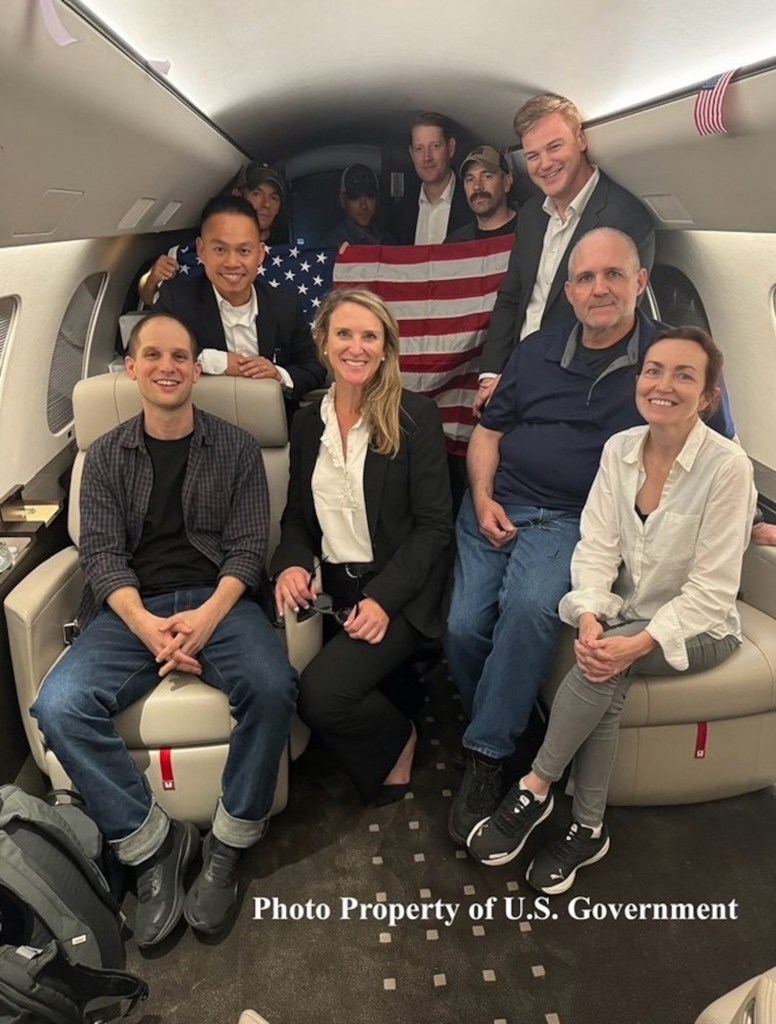
We were treated to joyous scenes of the returnees being reunited with their families and friends, presumably ready to resume their normal lives after a period of well-deserved recuperation.
But were their lives instantly back to normal? That, of course, would differ according to each person’s particular circumstances, and their individual mental and physical conditions. PTSD affects everyone differently.
In an interview with CNN, former U.S. Marine Paul Whelan has said that, after more than five years of imprisonment in Russia, his return has been challenging:
“You’re literally starting over. For people like me who have come home after five-and-a-half years, we really don’t have very much. House is gone. Cars are gone. Employment’s gone. No health insurance.” [Jennifer Hansler, CNN, August 1, 2025.]

Having been “violently arrested” in his Moscow hotel room while visiting for a friend’s wedding, hotel rooms are now a trigger for Paul’s PTSD. He also found that he had developed new seasonal allergies from being away for so long, and that the most ordinary activities can be challenging:
“It took a little bit of time for me to kind of feel comfortable driving down the same streets that I used to or going to a park or doing things that I used to do, especially with my dog when she was alive.” [Id.]
Sadly, his beloved dog passed away while Paul was in prison, never knowing why her best friend had left her.
Paul has also been unable to find a new job. He says that — despite the mitigating circumstances of his imprisonment — there are companies that won’t hire people who have been in prison for any reason. There is also the disadvantage of a six-year employment gap on his resume.
But he is working with Michigan Democratic Representatives Debbie Dingell and Haley Stevens, among others, on a law “that would fund the medical, dental and psychological care listed in the Levinson Act that was never funded,* as well as to provide compensation and things like that for former hostages who were wrongfully detained.” [Id.]
[* S.712 - The Robert Levinson Hostage and Recovery and Hostage-Taking Accountability Act of 2020]

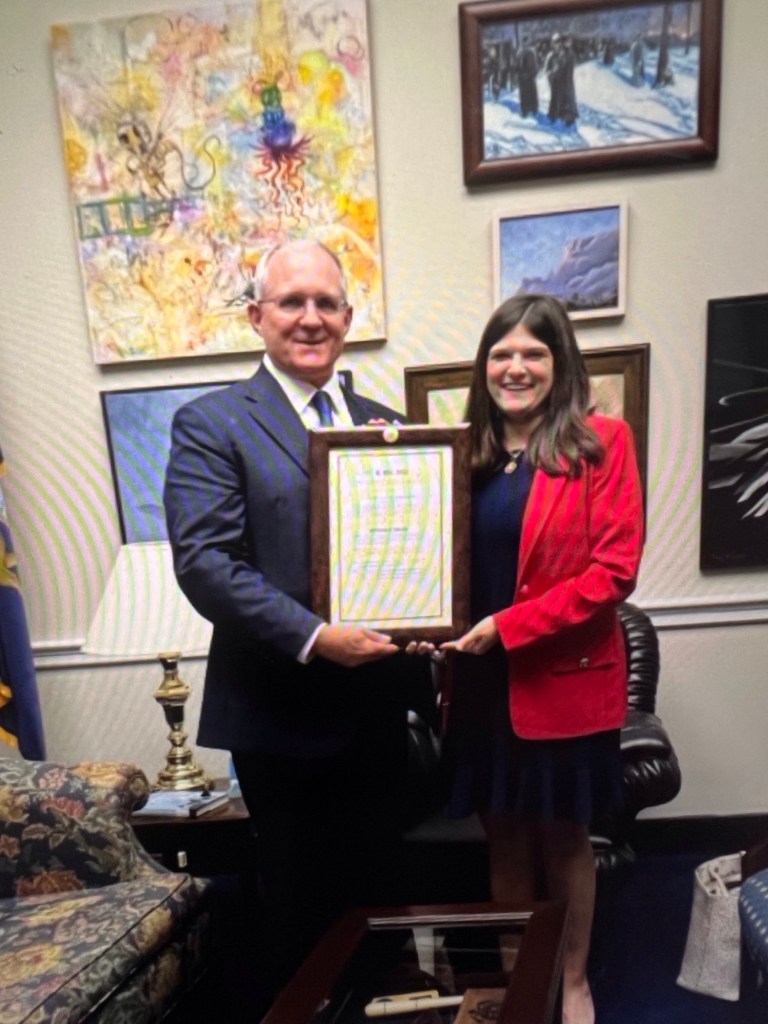
But in the meantime, Paul — and likely others as well — will continue to struggle with their reentry into their “normal” lives.
*. *. *
Since that day in August of 2024 — while a few more hostages have been swapped, including Americans Marc Fogel and Ksenia Karelina — there are countless others still being held unjustly, including at least six Americans (to my knowledge): Robert Romanov Woodland, Staff Sergeant Gordon Black, Robert Gilman, David Barnes, Eugene Spector, and Michael Travis Leake.
It is imperative that, in addition to continuing efforts to negotiate their release, work be pursued for the passage — and funding — of effective legislation to ensure that these innocent victims of Vladimir Putin’s repressive regime be given the help they need once we welcome them back home.

Surely, there must be room in the federal budget to help these people who, through no fault of their own, have been through so much. Or is that no longer the American way?
Just sayin’ . . .
Brendochka
8/2/25
 The Blog About Everything … and Sometimes Nothing