Who knew?

I am a second-generation American; my mother was born in Boston, Massachusetts, and my father in Providence, Rhode Island. I grew up in a family of four Russian/Ukrainian grandparents, one great-grandmother who spoke very little English, numerous aunts and uncles (a couple of whom had been born in the “old country”), and plenty of cousins, mostly on my father’s side though I always have preferred my mother’s-side relatives.
The grandparents (and beyond) also happened to be Jewish, which explains why they left their ancestral home in the first place, for which I thank them.
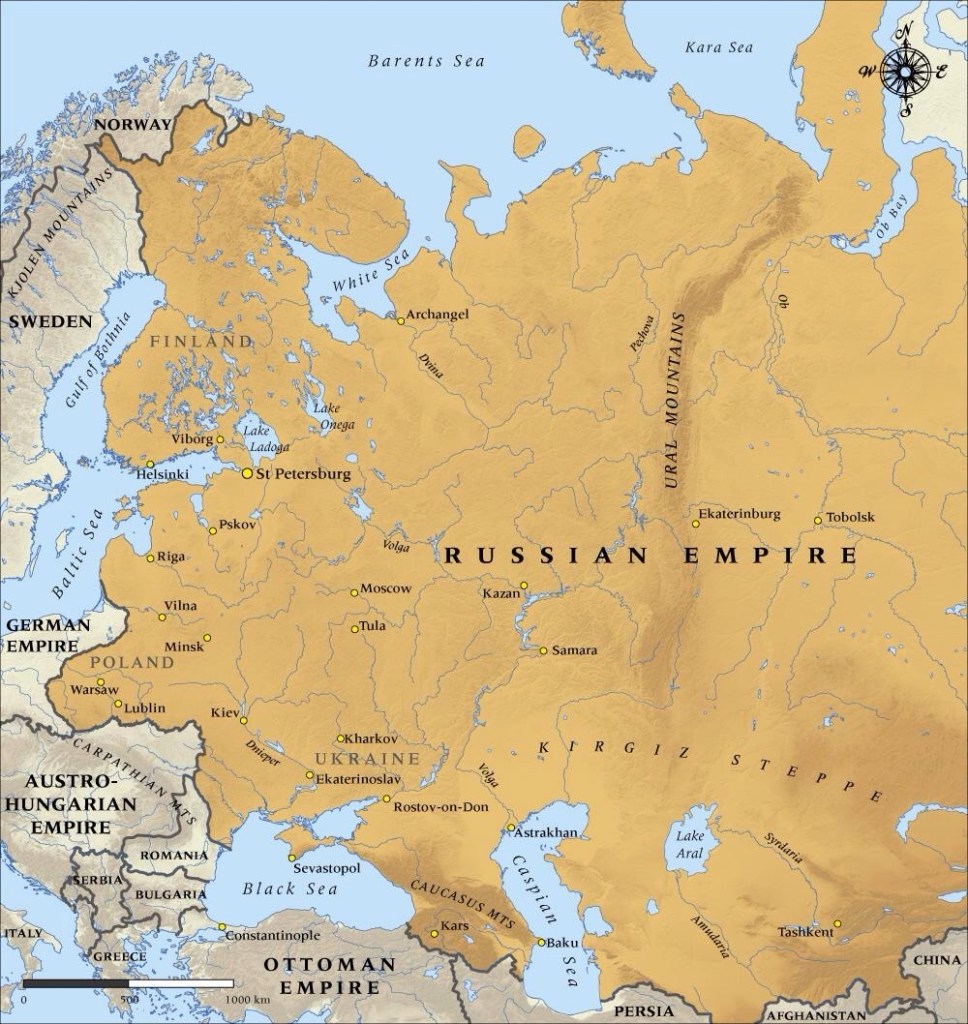
So I was always told that I was of 100% Russian ancestry, since, at the time of my grandparents’ emigration in 1905, what we now know as Ukraine was — for a while — part of the greater Russian Empire. And I was fine with that.
But the decades of my life have seen incredible scientific and technological advances, including the discovery of something called “deoxyribonucleic acid,” better known as DNA, which initially was lauded as an invaluable tool for tracking criminals. And thus the late 20th century became the era of “You can run, but you cannot hide.”
Eventually, however, some entrepreneurial soul also came up with the idea of making DNA tracking available to everyone . . . or those who might be curious about their ancestry, at least. So one day I joined in the fun, spit bubbles into a little test tube, sent it off in the mail, and awaited what I thought would be confirmation of what I already knew. But . . .
Surprise! According to 23 and Me, my DNA is “only” 99% Russian.
But how was that possible? Did some marauding Hun catch one of my great-great-great-grandmothers alone in the hayloft?
Actually, it wasn’t a Hun at all. Because the other 1%, as it turns out, is split between “Middle Eastern or East African” (0.6%) and Norwegian (0.4%).
Well, that would explain my blue eyes and my fondness for couscous. But otherwise, it seemed to make no sense at all.
So I began researching the ancient migratory patterns of peoples from those two parts of the world, and found — lo and behold! — that my saliva could indeed have originated, centuries ago, in either or both of those regions . . . and not in some Ukrainian hayloft with one of Attila’s legions. (Sorry, great-great-great-grandma, for misjudging you.)

From the Middle Eastern regions, I might well be descended from the Scythians — described as Iranian-speaking nomads with a strong military presence who established settlements in southern Russia from around 700 B.C. to the end of the third century B.C.
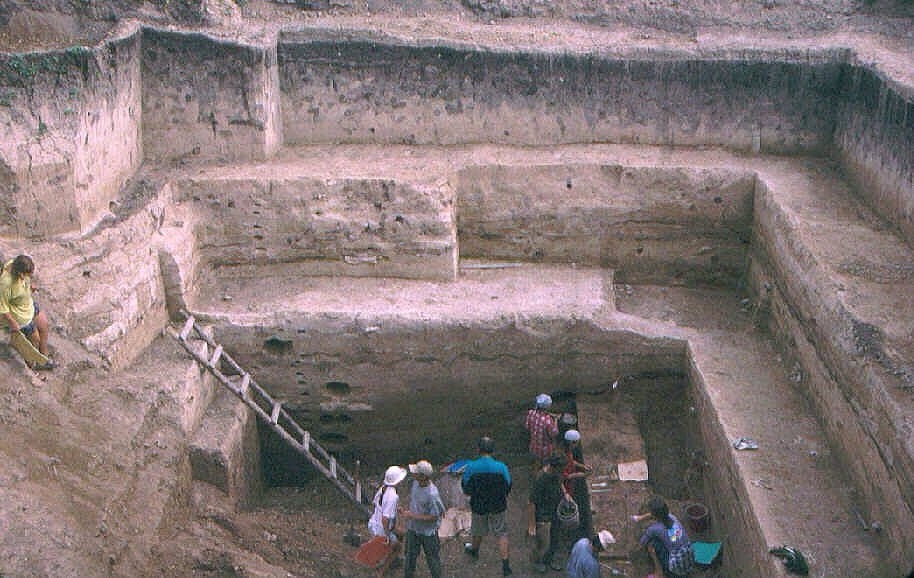
Or not. There were also ancient migrations (70,000 to 50,000 years ago) into Russia from Africa, as shown by archaeological discoveries at Kostyonki, south of Moscow. And more recently — the 8th to 10th centuries A.D. — there was an active slave trade from Africa into many parts of Asia and Europe. So I might even be 0.6% African-American.
Wow!
But even more exciting is the Norwegian connection. During the Viking age (8th to 11th centuries A.D.), both Swedes and Norwegians, then known as Varangians, established trade routes via the Volga and Dnieper (Dnipro) Rivers and settled in Kievan Rus’ — the birthplace of modern-day Russia (though Vladimir Putin would have us believe otherwise).

And it was the Varangian Prince Rurik who is believed to have founded the Rurik Dynasty, also known as the Rurikid, and established himself at Novgorod in the year 862. So I might well be 0.6% descended from royalty.
All of which — if true — would make me a Russian-Ukrainian, Norwegian-Varangian, African-American, Jewish Princess.
Or, in simpler terms, a mongrel . . . which, to be honest, is what we Americans have always been: a proud mixture of a wide variety of ancestries.
Even those who seek to erase DEI.

Suck it up, Donnie … you’re Scots and German!
And you can’t hide from that, no matter how fast you run.
Just sayin’ . . .
Brendochka
7/27/25
 The Blog About Everything … and Sometimes Nothing