This is not a hypothetical question: the Russian government is actually working on it. YouTube has become so popular in Russia, with millions of viewers across the country, that the government considers it a major threat unless it can control its content. They have tried to convince parent company Google to locate its servers inside Russia in order to make them accessible to Russian regulators, but without success. And so far, all they’ve managed to do is slow the service down to “unbearable” speeds. [Mike Eckel, RFE/RL, July 25, 2025.]
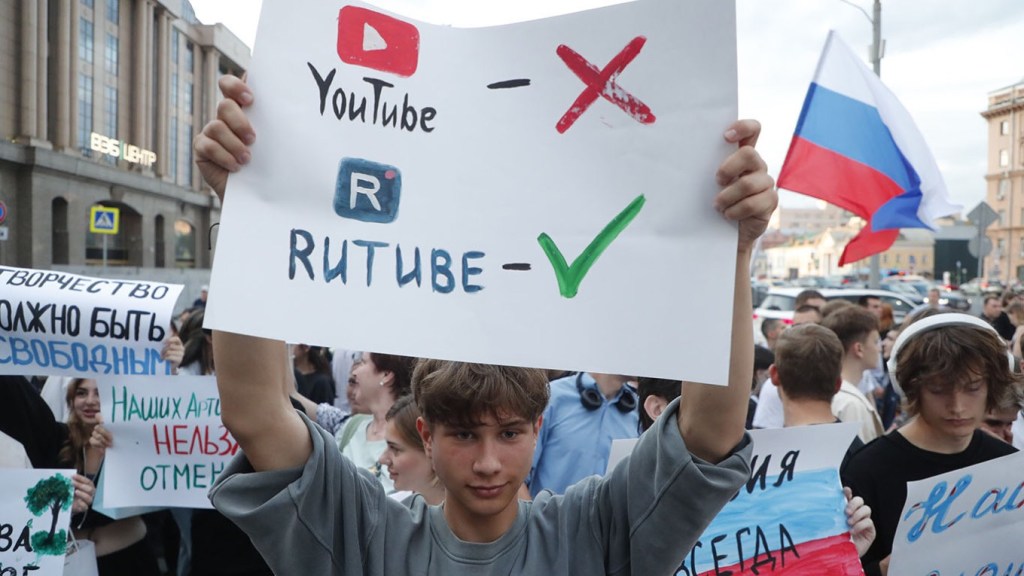
According to market research from Mediascope, 95.9 million Russians — adults and teenagers — visited YouTube each month during the last half of 2024. As regulators began slowing the service, the numbers dropped somewhat in the first half of 2025.
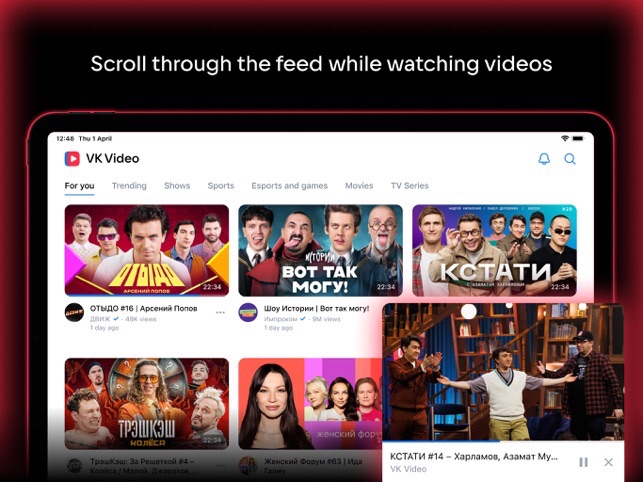
At least five potential challengers have joined the Russian Internet (RuNet) in the hope of drawing viewers away from YouTube. The most viable competitor thus far is Russia’s equivalent to Facebook, known as VK Video (VK is short for VKontakte, or “In Contact”) — a service created by Pavel Durov, who fled Russia when the government began pressuring him to release confidential information on his customers, and later co-founded the highly successful Telegram messaging service.
According to Philipp Dietrich, an expert on Russia’s Internet at the German Council on Foreign Relations:
“I think the only real big alternative is VK Video. I think that’s the main player. They have the money. They’re government-backed. They’re going to go all-in here. They have the servers, the infrastructure, they have good software, they have good engineers, if money doesn’t get into corruption, if it actually goes where it’s supposed to go, VK is going to be a success.” [Id.]
It’s no secret that Vladimir Putin has turned Russia back into an autocratic state . . . or that one of the first agenda items of an autocracy is control of the media. So none of this comes as a surprise.
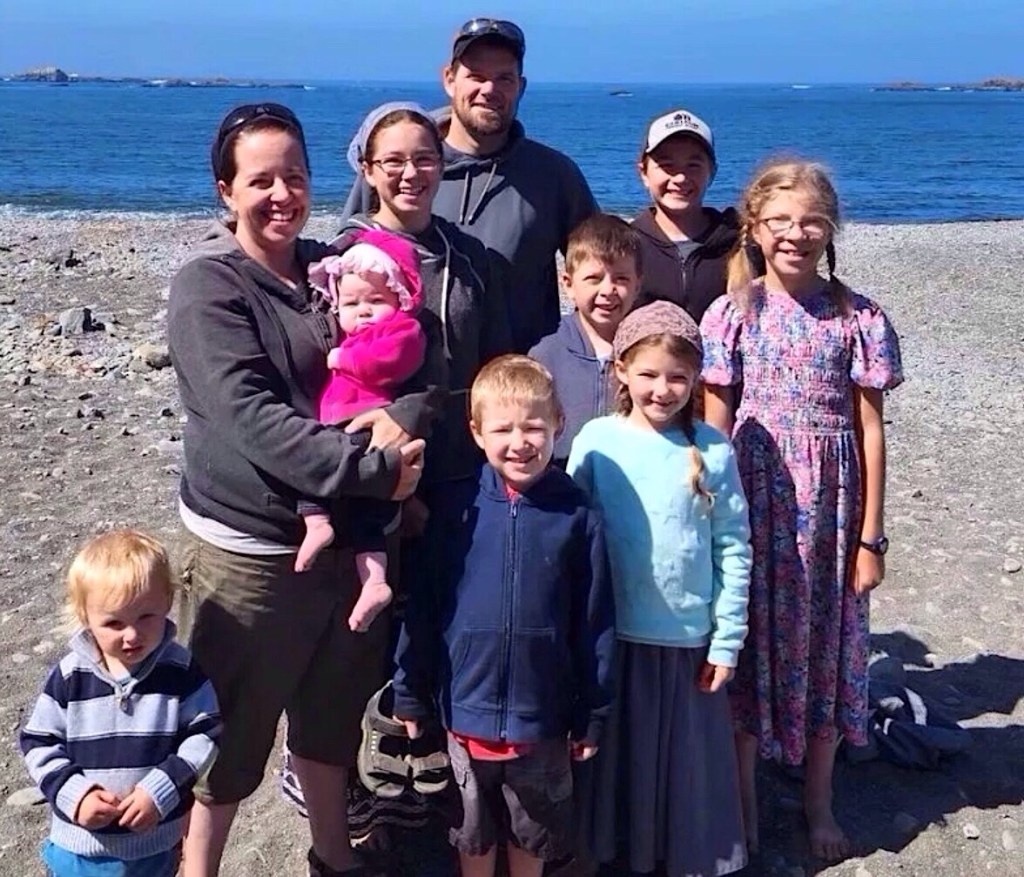
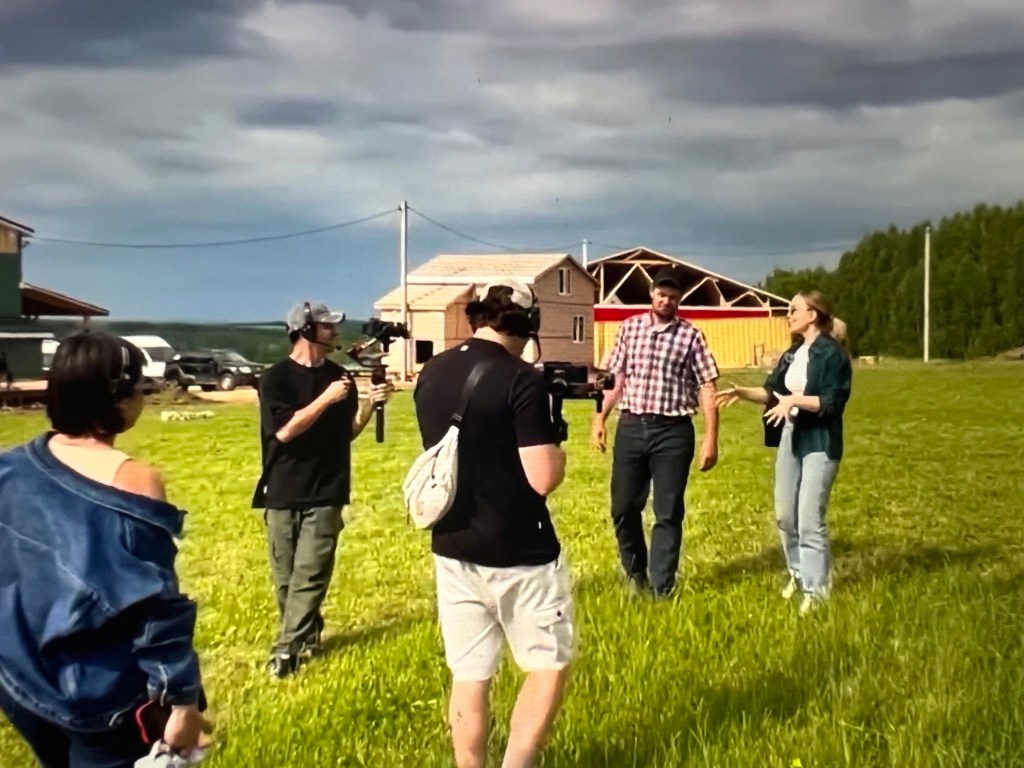
But I’m unable to see how blocking YouTube would square with the government’s promotion of the Canadian Feenstra family, now living on their large farm in the Nizhny Novgorod region and broadcasting almost daily on YouTube to advertise the idyllic life to be found in Russia for other conservative families from Canada, the U.S., and elsewhere.
The Feenstras — Arend, Anneesa, and their eight children — have become the poster children for Putin’s attempts to counteract the disturbing decrease in the country’s population through his twin programs of welcoming large, conservative families from abroad, and encouraging young Russians to . . . well, to put it bluntly . . . procreate.
For the Russian families, there are financial incentives; and for emigre families, there is land, accessibility to farming and building materials and equipment, and the promise of protection from the “wokeness” of the West for their children.
And for the Feenstras, instant fame.
They are an exceptional family — smart, hard-working, devoted to one another, and personable on-camera. As my readers know, I have been following their progress through their YouTube broadcasts since their arrival in Russia at the beginning of 2024. And I’m very worried that, if YouTube is blocked, I will lose them.
But more importantly, what will happen to them if they no longer have access to worldwide social media, and are limited to Russian services? Will they lose their propaganda value to the state, and some of their privileges as well? Or will the government find some work-around to allow them to keep broadcasting?
We’ll have to wait for the answers to those questions. In the meantime, of course, I’m sticking with the Feenstras and their daily adventures in beautiful, woke-free Nizhny Novgorod.
Just sayin’ . . .
Brendochka
7/25/25
 The Blog About Everything … and Sometimes Nothing