Why would the man who, for the past six years, has led Ukraine steadily toward membership in the EU and NATO; worked tirelessly to solidify his country’s relations with the West; and, for three and a half grueling years, inspired his people in their fight against Russia’s brutal invasion . . . why would he suddenly sign into law a bill granting control of the country’s two independent anti-corruption agencies to the Prosecutor General — an appointee of the President?
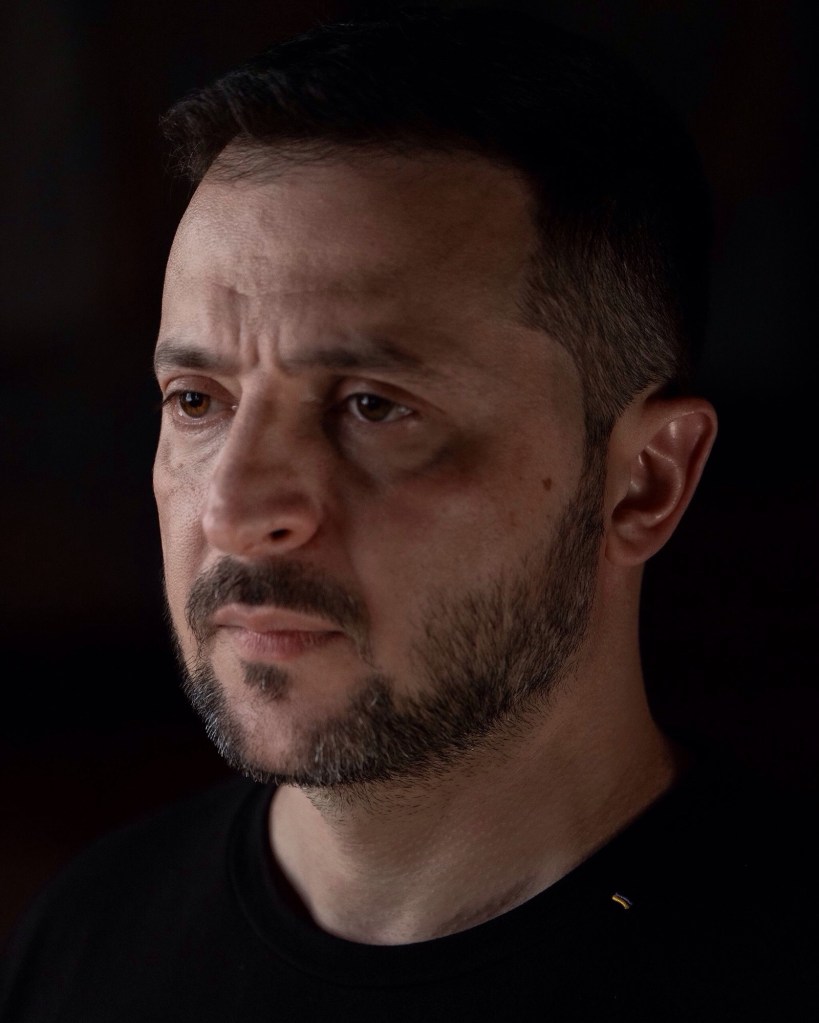
That is the question on everyone’s mind this week, since Ukrainian President Volodymyr Zelensky did exactly that on Tuesday, after the bill received the backing of 263 out of 324 members of Parliament.
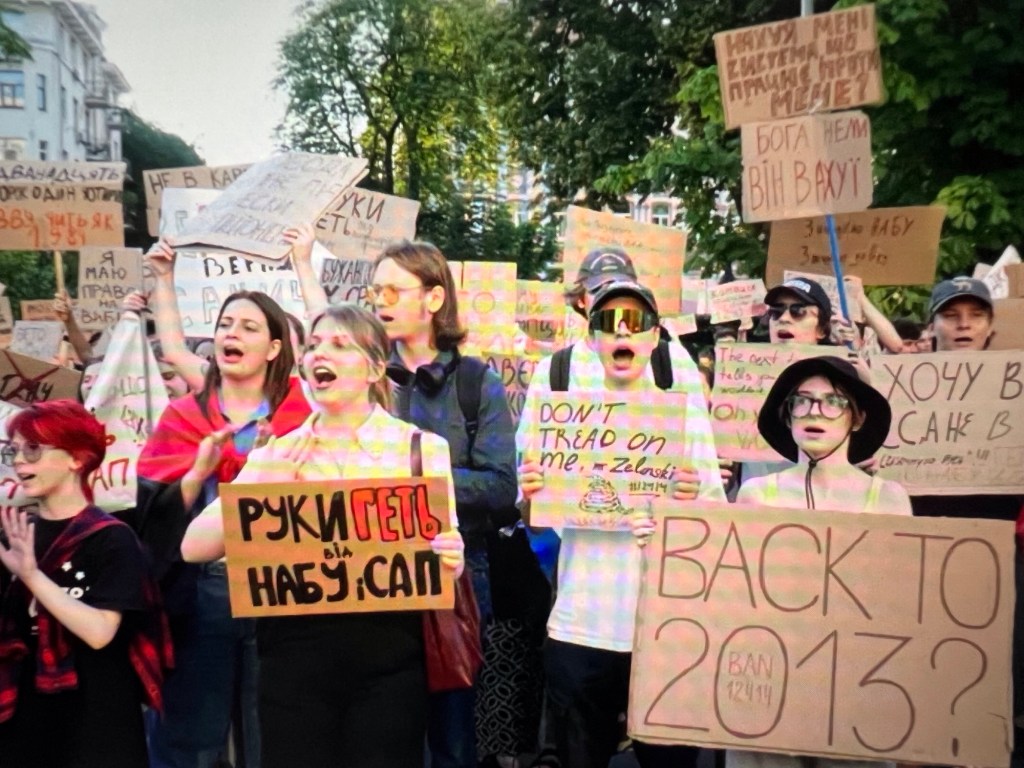
And it took less than a day for the people in Kyiv, Odesa, Dnipro, Lviv and Sumy — despite the constant threat of Russian drone and missile attacks — to take to the streets in protest.
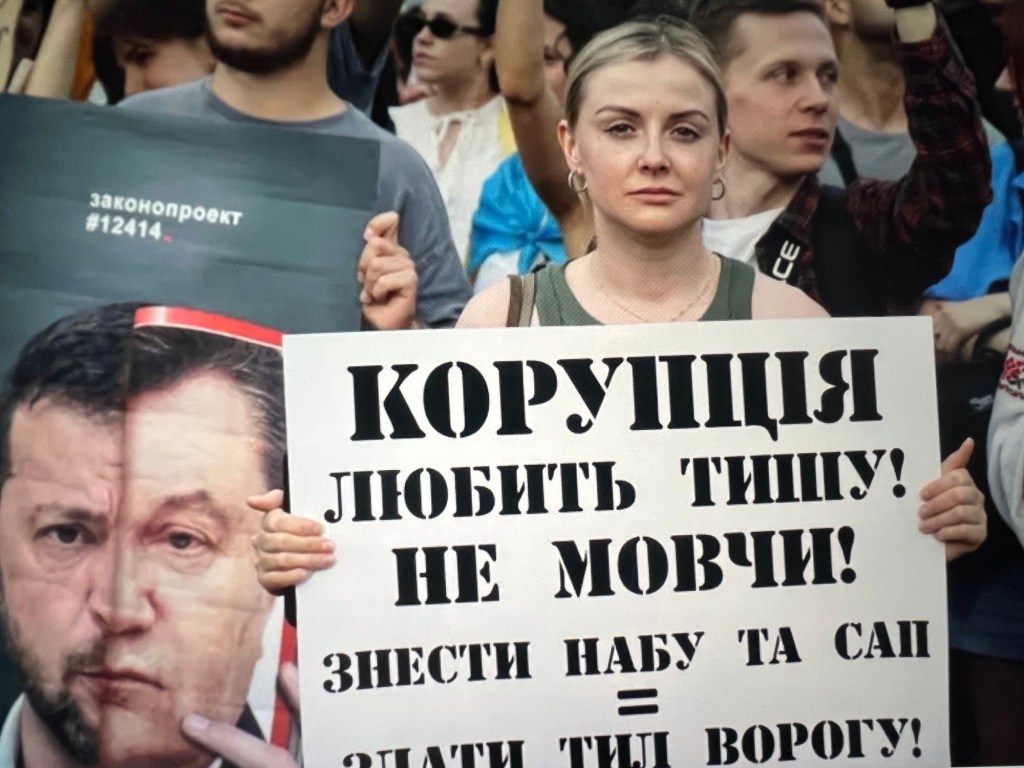
One protester in Dnipro, a city not far from the southeastern front said:
“We had two relatively independent institutions that at least created the appearance — or even the reality — of checks and balances. If we dismantle them, we’ll slide into a fully controlled state. I wouldn’t want to live in a country like that.” [Steve Gutterman, RFE/RL, July 23, 2025.]

And a war veteran attending the protest in Kyiv on July 22nd said:
“In essence, Ukraine is being dragged 10 years back in terms of the fight against corruption. By stripping NABU of its autonomy, they are gradually dismantling everything that’s been built up over the years. I’m in shock, my friends are in shock.” [Id.]
*. *. *
In a nightly address on July 22nd, Zelensky had defended the draft legislation, saying that it would improve anti-graft efforts and remove “Russian influence.” But later on July 23rd, he said he would soon propose another bill, which would still guard against Russian interference but would also provide for “the independence of anti-corruption institutions.” [Steve Gutterman, RFE/RL, July 23, 2025.]
He did not specify at that time whether the new bill would supersede the one he had signed the day before.
Previous Ukrainian administrations had been known for rampant corruption, though there has been some improvement since the two agencies — the National Anti-Corruption Bureau (NABU) and Specialized Anti-Corruption Prosecutor’s Office (SAP) — were created in 2014 as a condition set by the EC and IMF in order to strengthen ties between Ukraine and the West.
Asked by the EC for “explanations,” Zelensky argued that steps had to be taken to remedy NABU’s and SAP’s record of allowing criminal proceedings to stagnate for years, and that they needed to be “cleansed from Russian influence.” [Laura Gozzi and Charlotte Gallagher, BBC, July 23, 2025.]
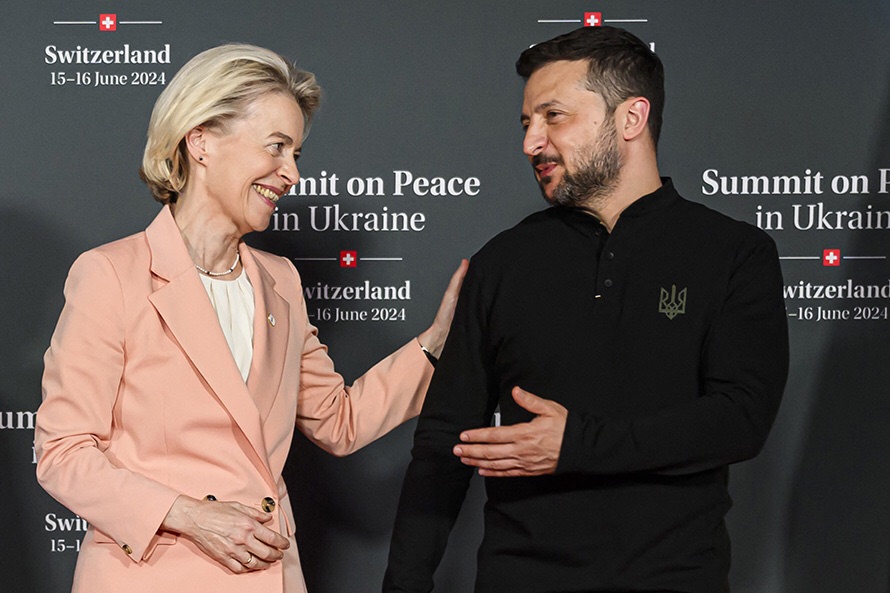
A spokesman for EC President Ursula Von der Leyen reiterated that respect for the rule of law and the fight against corruption were “core elements” of EU membership, and that Ukraine — as a candidate country since 2022 — was expected to maintain those standards.
“There cannot be a compromise,” the spokesman added. [Id.]
Aside from the obvious domestic implications, there is now an overwhelming concern as to the effect this action may have on Western support of Ukraine against Russia’s continuing onslaught.
But at least one person is happy today: Vladimir Putin, who would see this as a golden opportunity to drive a wedge between Ukraine and its allies, and to advance his demand that an immediate presidential election be held to “legitimize” or replace Zelensky.
After all that the people of Ukraine have been through, and all that the West has done to help them, we can only hope that President Zelensky is able to make this right.
Because anything less would be an unspeakable tragedy.

Just sayin’ . . .
Brendochka
7/24/25
 The Blog About Everything … and Sometimes Nothing