Artificial Intelligence — from the first time I heard the term mentioned — has scared the crap out of me. And it still does. Like atomic energy, it has its legitimate, even beneficial, uses. But human nature being what it is, there will always be someone who will find a way to use it for some previously unimaginable, nefarious purpose.

Let me explain what brought this about. We’ll start with the stupidity factor, which would include the entire upper echelon of the federal government in Washington.
I’m sure you remember last March, when Jeffrey Goldberg of The Atlantic was, through no action of his own, mistakenly included in a conference call over an unsecured Signal chat app that included Secretary of Defense Pete Hegseth, Director of National Intelligence Tulsi Gabbard, CIA Director John Ratcliffe, National Security Adviser Mike Waltz, and — from Moscow, where he had traveled to meet with Vladimir Putin — special envoy Steve Witkoff. They weren’t conferring about dinner plans for the weekend; they were discussing classified military plans involving one or more Middle Eastern countries.
There was, of course, a huge hullabaloo . . . for a while. Then it all got swept under the carpet, and no one lost their job or went to prison. (Personally, I think they should all have been canned; but that’s just my opinion, and since none of those people even know I exist, they’re certainly not going to listen to me.)

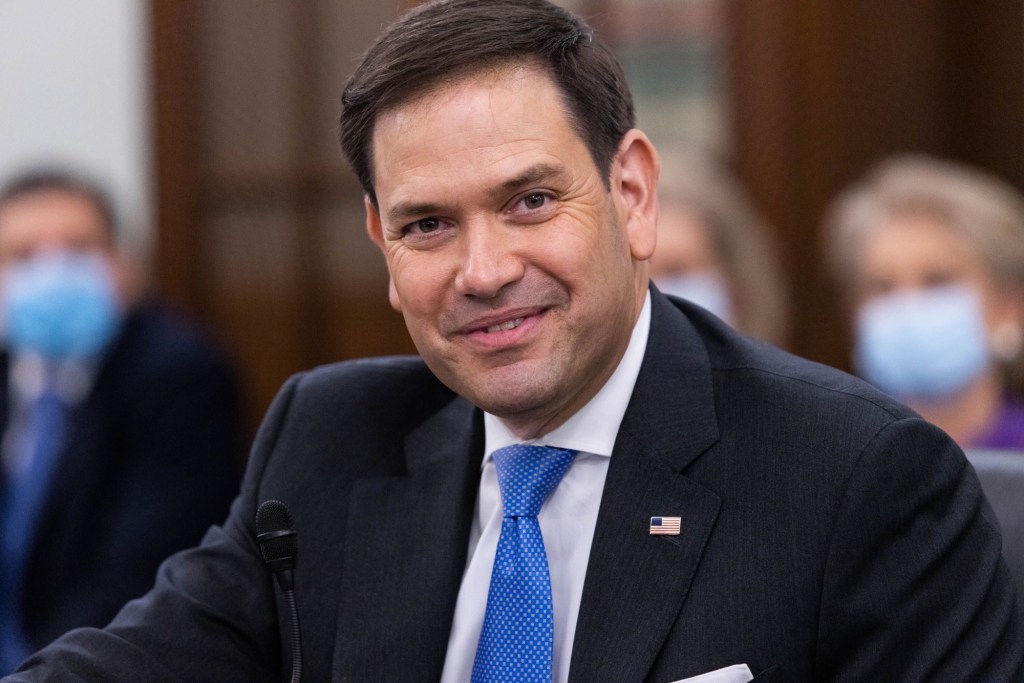
So, now we fast-forward to last month, when AI enters the picture. Utilizing the very same, unsecured Signal messaging app, someone — identified by the U.S. State Department as an “unknown actor” — used artificial intelligence to mimic Secretary of State Marco Rubio’s voice in order to contact three foreign ministers, a U.S. governor, and a member of Congress (also not identified).
On July 3rd, a cable was sent by the State Department to “all diplomatic and consular posts,” advising that a false Signal account had been created in mid-June with the display name “marco.rubio@state.gov,” and that:
“The actor left voicemails on Signal for at least two targeted individuals, and in one instance, sent a text message inviting the individual to communicate on Signal.” [Nadine Yousif, BBC News, July 8, 2025.]
The cable continued:
“There is no direct cyber threat to the department from this campaign, but information shared with a third party could be exposed if targeted individuals are compromised.” [Id.]
According to a Washington Post report, U.S. authorities still don’t know who the “unknown actor” is, but they believe the person’s goal was to manipulate government officials in order to acquire access to information. [Id.]
Well . . . duh!
The Associated Press cited a U.S. official who spoke anonymously, saying that the hoaxes were unsuccessful and “not very sophisticated.” [Id.]
And the State Department assured the world that it is investigating the matter, and that it “continuously takes steps to improve the department’s cybersecurity posture to prevent future incidents.” [Id.]

Well, I certainly feel better, knowing (1) that there is no direct cyber threat from an unknown person; (2) that he or she is supposedly unsophisticated; and (3) that the State Department is working hard to make sure this doesn’t happen again.
Just like the March 26th conference call fiasco isn’t going to happen again . . . only it could, because they haven’t stopped using Signal.
And this latest incursion by an as-yet unknown actor could be repeated, because we are living in a world of robots, and drones, and smart-everythings, and artificial intelligence that potentially has a gazillion uses and one day — like a bad sci-fi movie — might outsmart the very people who created it.
So, you’ll understand if I continue to be just a little bit scared.

Just sayin’ . . .
Brendochka
7/9/25
 The Blog About Everything … and Sometimes Nothing