No, I’m not talking about Donald Trump and Elon Musk; that’s yesterday’s news. This is another on-again-off-again alliance, one that has been bouncing back and forth for decades. I’m talking about the USSR/Russia and China . . . or, in more current and personal terms, Vladimir Putin and Xi Jinping.
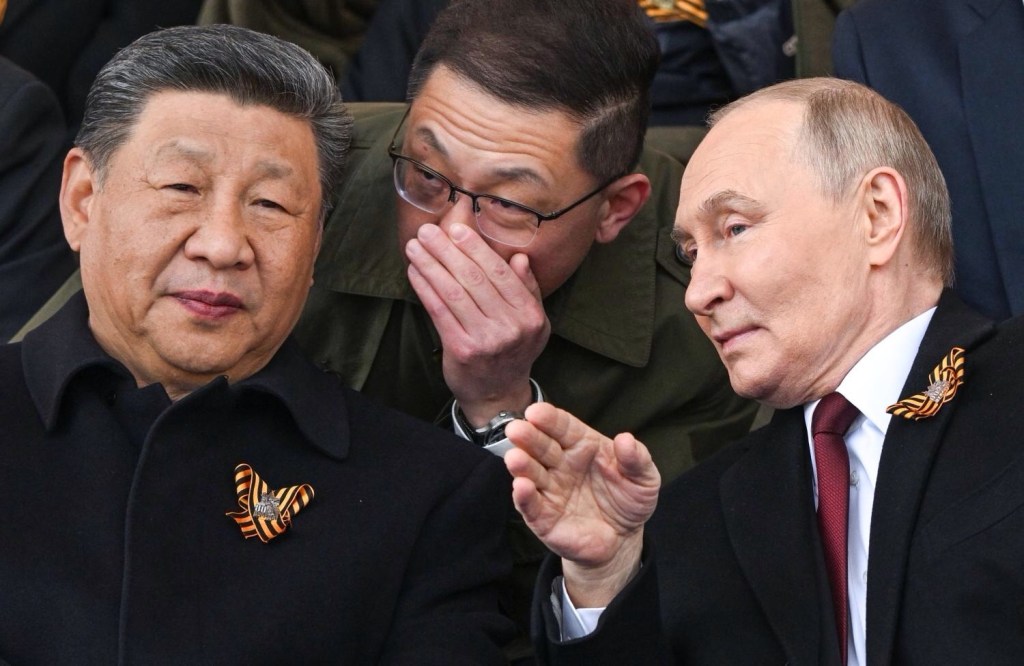
Formal diplomatic relations between the Soviet Union and China were established as far back as 1949. But in the early 1980s, relations between the two countries were at a low point. The United States had been working toward improved trade relations with China since Richard Nixon and Henry Kissinger’s historic visit to Beijing in 1972, making Moscow unhappy; the Soviet Union was continuing its support for Vietnam, and had amassed troops along the Sino-Soviet border, seriously irritating Beijing. The two countries’ leaders were virulently distrustful of one another.
And the joke going around my office was that I had just prevented World War III.
My boss at the time was Walter Sterling Surrey, a Washington attorney whose international practice involved corporate clients doing business throughout the world, including China and the Soviet Union. He was, in the earlier part of his career with the U.S. Department of State, the chief legal draftsman of both the Marshall Plan and the NATO Treaty. He had also later worked with Nixon and Kissinger in reestablishing relations with China. He was well connected.
So it was natural that we would have contacts in numerous embassies to facilitate negotiations of commercial transactions on behalf of our clients. And one day, it happened that back-to-back meetings were scheduled in our office, the first with an economic officer from the Soviet Embassy, and the second with a delegation from China. And we had timed them so that they wouldn’t overlap.
But then Murphy’s Law took over . . . you know, the one that says if anything can go wrong, it will. The Russian visitor, who was meeting with Walter in his office, stayed longer than we had anticipated, and the Chinese group arrived early. I knew we couldn’t let them see each other, but there was no way the Russian could leave without passing through the lobby where the Chinese visitors were waiting.
That was when I went into my Keystone Kops routine. First I rang Walter’s phone and whispered to him that his next appointment had arrived early, and that he should keep the Russian gentleman talking until I gave him the all-clear signal.
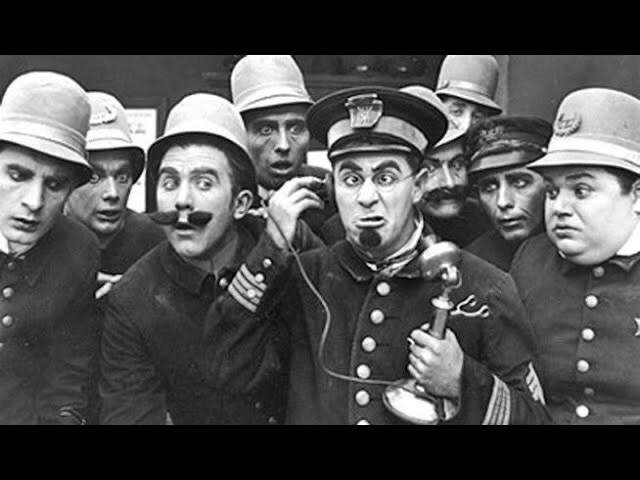
Next, I called one of the firm’s partners who also worked with Walter on matters involving China, told him of the predicament, and asked him to greet the Chinese, take them into a conference room, and keep them behind closed doors until I could scoot the Russian out of the building.
When he had done that, I knocked on Walter’s door, stuck my head inside, and said, “I’m sorry to interrupt, but you’re needed in the conference room.” The Russian diplomat took the hint, and I escorted him past the conference room, through the reception area, and into the elevator, while Walter went on to meet with the blissfully unsuspecting group waiting for him.
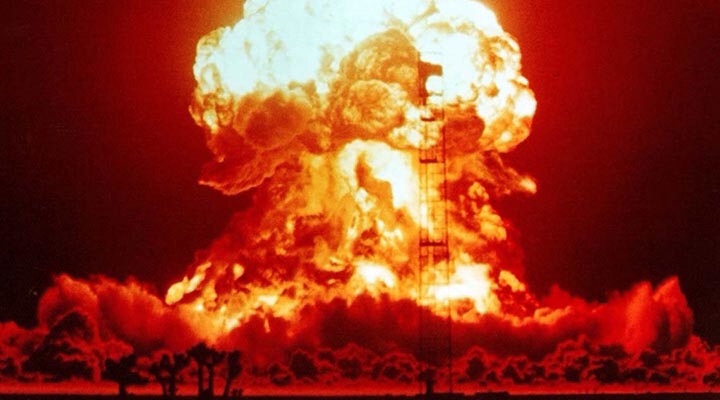
Crisis averted. Had their paths crossed, there would have been more than a little discomfort and embarrassment involved; it could have destroyed the trust our firm had built up over years with the embassies of both countries, and cost our clients millions of dollars in lost business opportunities . . . not to mention the possible loss of some of our firm’s biggest clients. Not literally World War III, of course; but to us and our clients, it would have felt like it.
*. *. *
Such was the state of Sino-Soviet relations in the early ‘80s. Since then, their governments have run hot-and-cold toward each other numerous times. And right now, in 2025, they’re mostly comfortably warm.
Together, Putin and Xi have aligned in an attempt to de-escalate the Israel-Iran conflict, and are calling for Trump to back off and not become involved on the side of Israel. In so doing, they are setting themselves out as the world’s foremost peacemakers, and as power brokers ready to step in where the U.S. has failed.
Ironically, the Kremlin has condemned Israel’s actions as a breach of the United Nations Charter and other standards of international law — typically ignoring Russia’s own ongoing invasion of Ukraine, which China steadfastly refuses to condemn. [Nectar Gan, CNN, June 20, 2025.]
Xi, on his part, has not specifically condemned Israel, but urged both Iran and Israel — “especially Israel” — to call a ceasefire as soon as possible. [Id.]
And in a message to Trump, Xi stressed that “major powers” having a special influence on the parties to the conflict should work to “cool the situation, not the opposite.” [Id.]
So they’re now on the same side of this issue, as well as being allied through their respective memberships in Russian-led BRICS and Russia’s participation in China’s Belt-and-Road Initiative (BRI). They have declared that their friendship has “no limits.” The two totalitarian leaders are, for all intents and purposes, best buddies.
But if that’s the case, then why — according to a New York Times report — has China been increasingly busy hacking Russian government agencies and companies since the start of Russia’s war in Ukraine? [Firstpost.com, June 20, 2025.]
Last year, for example, a Taiwan-based cybersecurity research firm, TeamT5, established that a China-backed group was behind a cyberattack on a major Russian engineering firm, searching for information on nuclear submarines. [Id.]
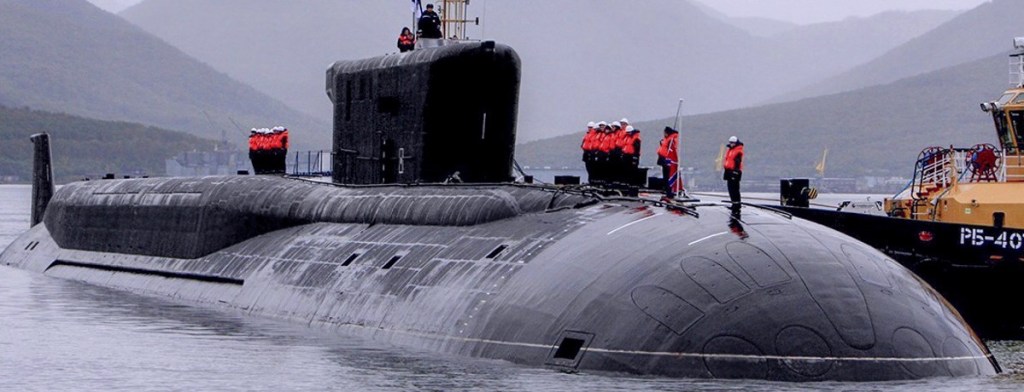
Spying is said to be the world’s second oldest profession. (If you’re too young to know what the oldest one is, you should probably ask a parent.) And in today’s world, that means cyber-spying, as well as HUMINT (human intelligence). It’s business as usual.
We civilians, in our happy ignorance, tend to think of spying as existing between enemies — not allies. But nothing could be further from the truth.
In 1984, National Security Agency intelligence analyst Jonathan Pollard was arrested for selling classified defense information to America’s staunchest ally in the Middle East: Israel. He was convicted, spent the next 30 years in prison, and finally moved to Israel in 2020. Friend or no friend, Israel had no right to our classified information; but that didn’t stop them from wanting it, or finding a way to get their hands on it.
And so it goes. Since Moses sent his spies into Canaan, the world’s nations have been peering through one another’s curtains.

And “friendship” be damned.
Just sayin’ . . .
Brendochka
6/21/25
 The Blog About Everything … and Sometimes Nothing