On this date in 1987, President Ronald Reagan stood on the western side of the Berlin Wall before a crowd of German citizens and spoke to the leader of the USSR, Mikhail Sergeevich Gorbachev:
“There is one sign the Soviets can make that would be unmistakable, that would advance dramatically the cause of freedom and peace. Secretary General Gorbachev, if you seek peace — if you seek prosperity for the Soviet Union and Eastern Europe — if you seek liberalization: come here, to this gate. Mr. Gorbachev, open this gate.
Mr. Gorbachev, tear down this wall.”
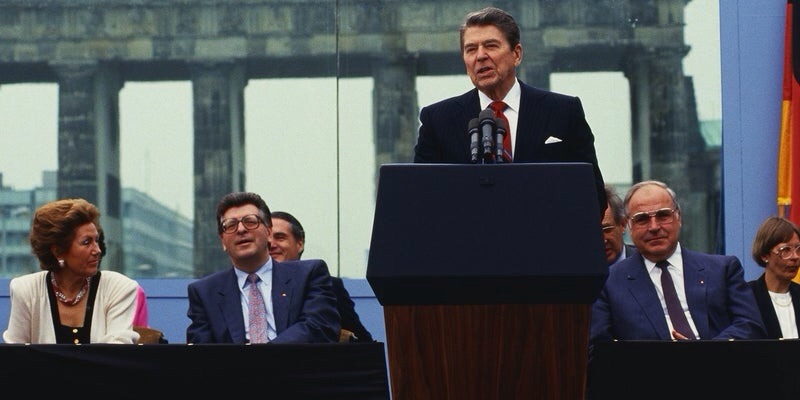
That speech was President Reagan’s reminder that the U.S. was ready to renew negotiations on nuclear arms reductions, and to take whatever steps were appropriate to reduce Cold War tensions. [“This Day In History,” History.com, June 12, 2025.]
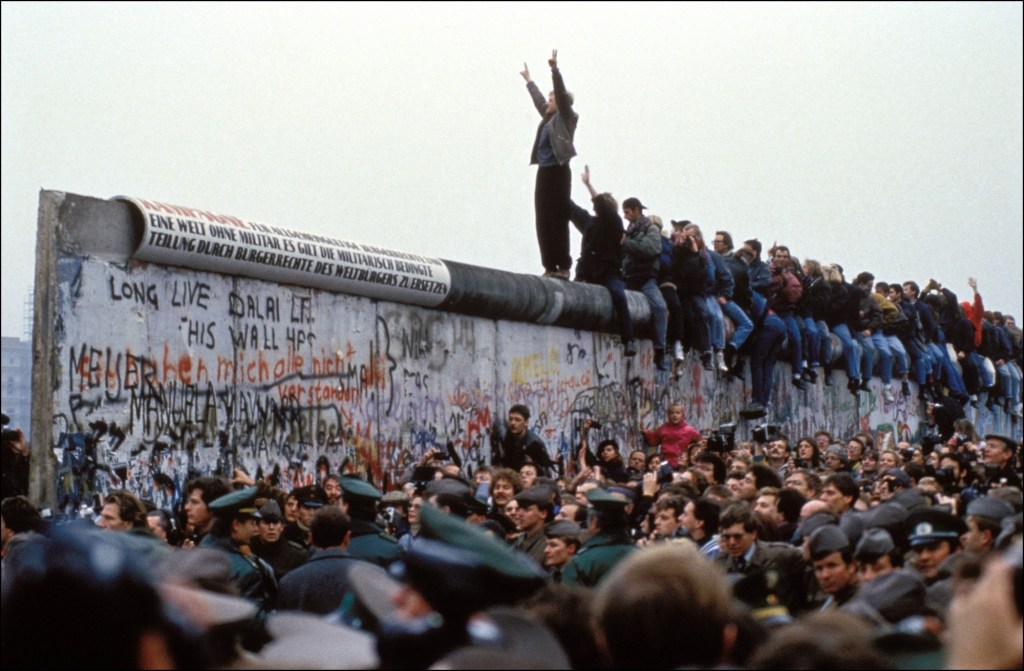
But it was much more than that. It was the precursor of momentous events to come. On December 8th of that year, the U.S. and the Soviet Union signed the Intermediate-Range Nuclear Forces (INF) Treaty; and just two years later, on November 9, 1989, the people of Berlin breached that very wall, and it was — after 28 years of dividing the people of the free West from the communist East — finally torn down. A reunified Germany was ready to begin building a new future.
Another two years after that — on December 26, 1991 — the Soviet Union itself ceased to exist. Its 15 republics became 15 independent nations, and remain so to this day . . . though some less independently than others. (But that is a whole separate story.)
June 12, 1987, remains a day to be celebrated, and one for which Ronald Reagan will always be remembered: a legacy to be proud of, indeed.
Just sayin’ . . .
Brendochka
6/12/25
 The Blog About Everything … and Sometimes Nothing