Twelve years ago, Edward Joseph Snowden — a computer security consultant working for Booz Allen Hamilton, which held a contract with the U.S. National Security Agency (NSA) — became disillusioned with programs with which he was involved, and raised his concerns within the company. But he was ignored, and decided to take matters into his own hands.
Taking medical leave from his job, he traveled to Hong Kong on May 20, 2013, where he leaked to journalists thousands of documents of highly classified NSA information concerning global surveillance programs involving both the United States and some European governments.
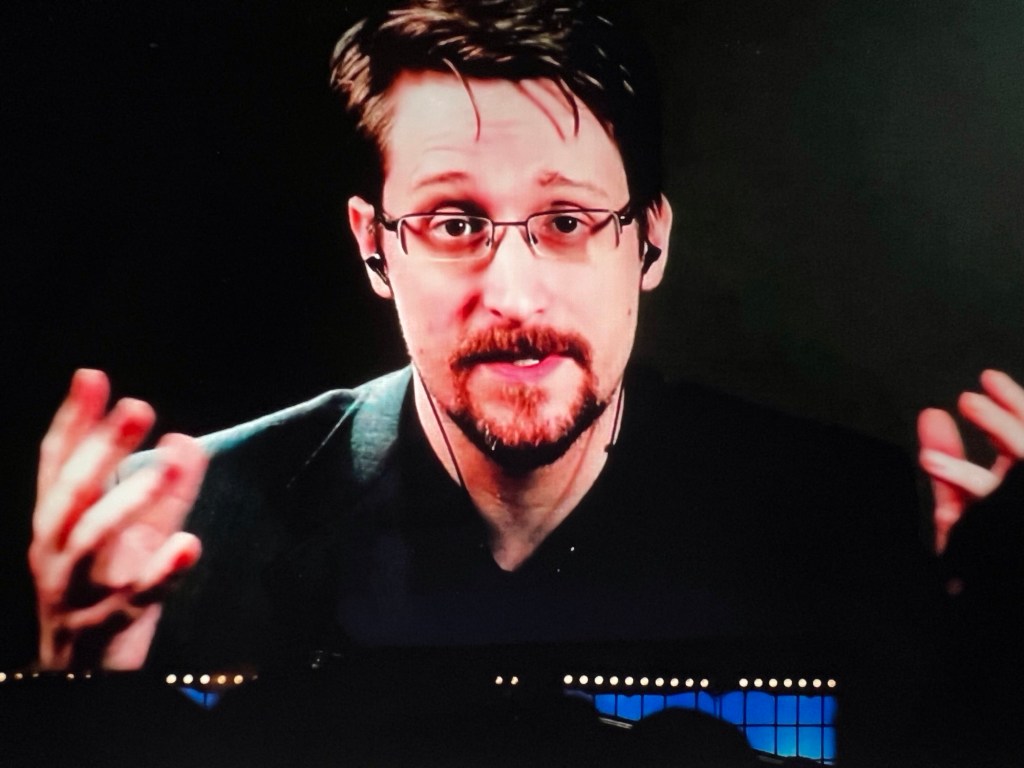
On June 21, 2013, charges against Snowden were entered by the U.S. Department of Justice, consisting of two counts of violating the Espionage Act of 1917 and theft of government property. The State Department revoked his passport, and two days later, Snowden flew from Hong Kong to Moscow.
Since his U.S. passport had been revoked, he was forced to spend more than a month in Moscow’s Sheremetyevo International Airport . . . officially stateless, and thus unable to return to the U.S., but restricted from leaving the airport terminal. (Yes, it does sound like the plot of a 2004 Tom Hanks movie.)
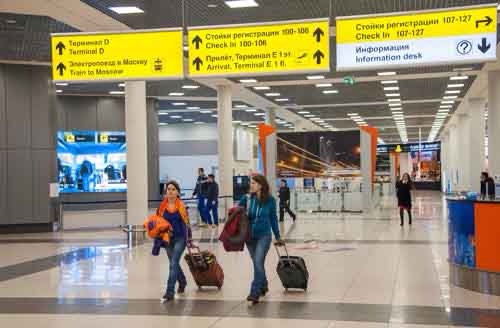
Finally, Snowden was granted asylum by Vladimir Putin, who was undoubtedly delighted at the propaganda value of Snowden’s situation . . . not to mention the prospect of obtaining possibly valuable information from him in the future.
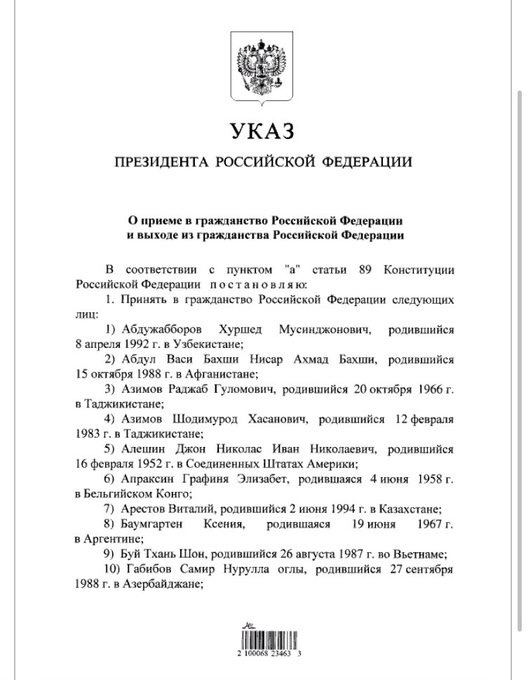
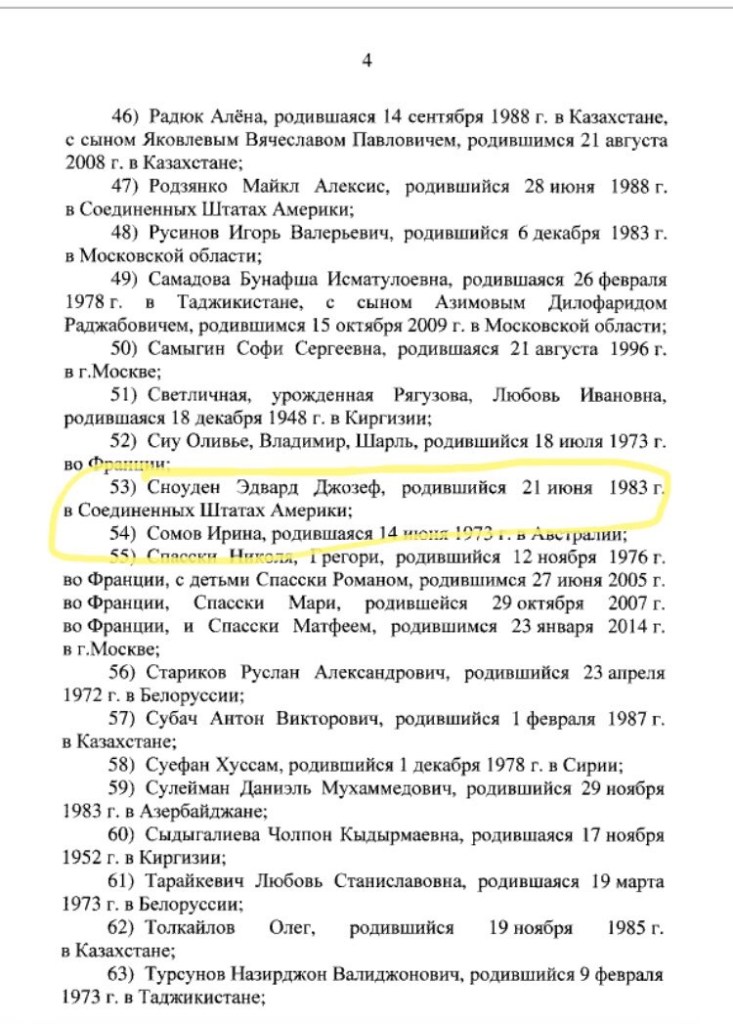
Over the years, he has continued through the process of obtaining temporary residency, then permanent residency, and finally — in September of 2022 — Russian citizenship and a Russian passport. And recent records show that he has been issued a Russian tax ID number. [Andrei Soshnikov, et al., RFE/RL, May 30, 2025.]
*. *. *
Snowden is said to be working currently for a Russian IT company, and living in the Moscow suburb of Lyubertsy . . . not the choicest of locations. [Id.] (I had occasion to visit there in 1992, where I met with the town’s then mayor and a group of educators, at a time when it was best known as the home of some of Russia’s most violent “mafia” gangs. Hopefully, it’s improved since then.)
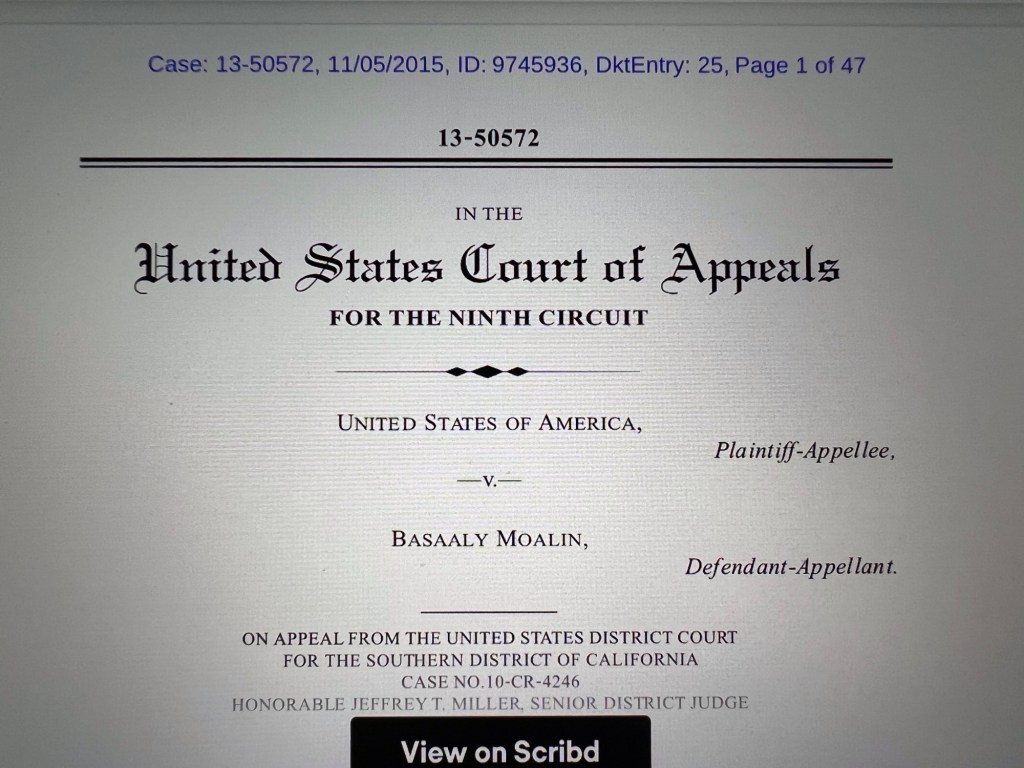
Snowden has long justified his actions as an effort “to inform the public as to that which is done in their name and that which is done against them.” [Edward Snowden biography, Wikipedia.org.] And indeed, the U.S. Court of Appeals for the Ninth Circuit has ruled, in the case of United States v. Moalin, 973 F.3d 977 (9th Cir. 2020), that one of the mass surveillance programs exposed by Snowden was illegal and possibly unconstitutional.
Public opinion has, of course, been divided between those who consider Snowden a hero for having the courage of his convictions, and those for whom the illegality of his actions takes precedence. Whether he is Don Quixote, or a traitor to his country, is not for me to decide.
What strikes me is the irony of his situation. Exiled from the country he allegedly tried to save from what he considered to be illegal and immoral surveillance, he is now consigned to spend perhaps the rest of his life in the country best known for its repressive surveillance and tyrannical control of its citizens and visitors alike.
And if I were able to speak to Edward Snowden to ask him just one question concerning his decision of 12 years ago, it would be this:
“How’s that working out for you?”

Sorry, Edward. Всего хорошего.
Just sayin’ . . .
Brendochka
5/31/25
 The Blog About Everything … and Sometimes Nothing