Once upon a time, a newly-certified Canadian teacher by the name of Laurence J. Peter began observing an astonishing level of incompetence, not only in the field of education, but in nearly all societal hierarchies. Over the years, he developed a theory regarding this phenomenon, and in 1974 wrote a book about it. He called it “The Peter Principle,” and it can be summed up as follows:
“In any hierarchy, an employee tends to rise
to the level of his incompetency.”
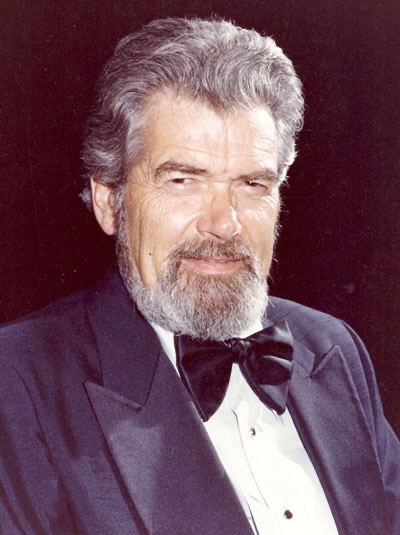
He cited the case of an automobile mechanic who was such an expert at his job that he was promoted to a supervisory position . . . at which he was a complete failure. He also wrote about a school principal who had been an excellent teacher, but as principal was a total washout. And I think we’ve all seen that outstanding office worker, or waitress, or physician’s assistant who moves up to a management slot . . . and turns out to have no management skills whatsoever.
“The Peter Principle” was highly successful when released in 1974. And now, a half century after its publication, Mr. Peter’s book has once again been validated by a group of individuals who, while successful in their original chosen fields, have finally reached a level of attainment that is clearly beyond that of their abilities.
Ladies and gentlemen, I bring you three of 2025’s poster children for the Peter Principle:

Sadly — or perhaps happily — Mr. Peter did not live to witness this latest manifestation of his theory. But I like to think that somewhere, wherever he may be, he is observing the circus taking place in today’s world and taking some satisfaction in knowing that he was right.
And from the point of view of those of us who are still around to witness it first-hand . . . isn’t it nice to finally have a name for it?

Just sayin’ . . .
Brendochka
5/29/25
 The Blog About Everything … and Sometimes Nothing