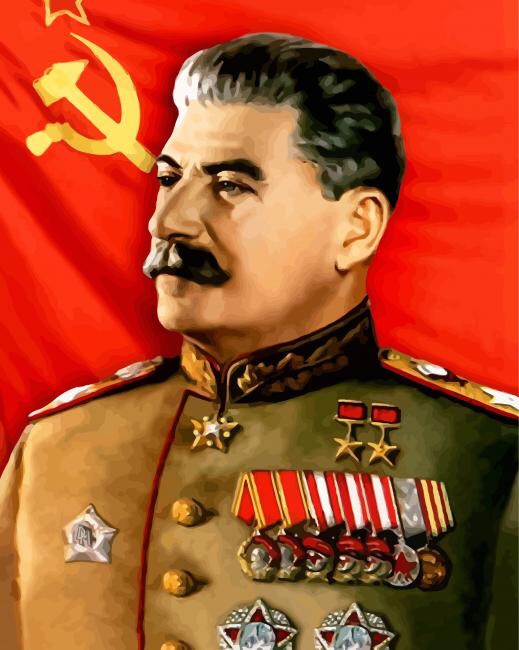
On March 5, 1953, the brutal leader of the Soviet Union died after suffering a stroke at his dacha on the outskirts of Moscow. He was embalmed, and interred four days later in a state funeral that drew a crowd of mourners so large, an estimated 109 people were trampled to death in the ensuing crush. Originally placed in the Lenin Mausoleum, his body was later moved and to this day remains buried in the Kremlin Wall Necropolis adjoining Red Square. He is definitely dead.
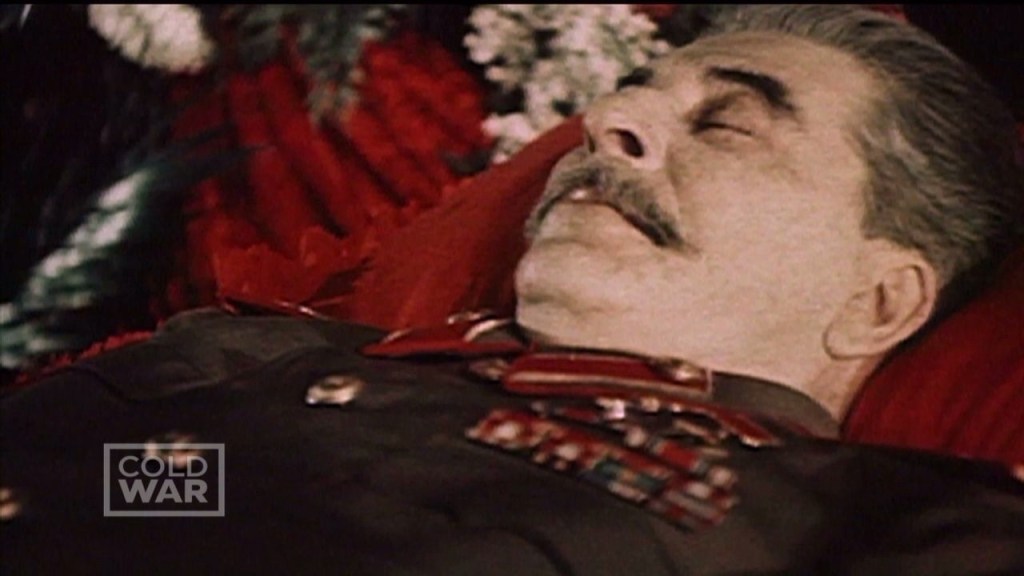
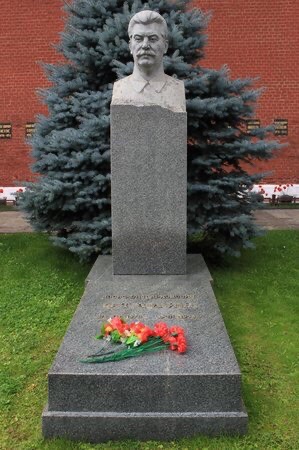
During a period of “de-Stalinization” following his death, most statues and other likenesses of the former dictator were removed.
But he refuses to remain dead . . . because there always seems to be a segment of the Russian population that insists on resurrecting him. And currently, that segment is led by Vladimir Putin.
*. *. *
Many cities throughout the world have excellent mass-transit systems. But the Moscow Metro is famous — not only for the depth of its stations, which served as air raid shelters during World War II — but for the opulence of some of those stations, which have been described as underground palaces.
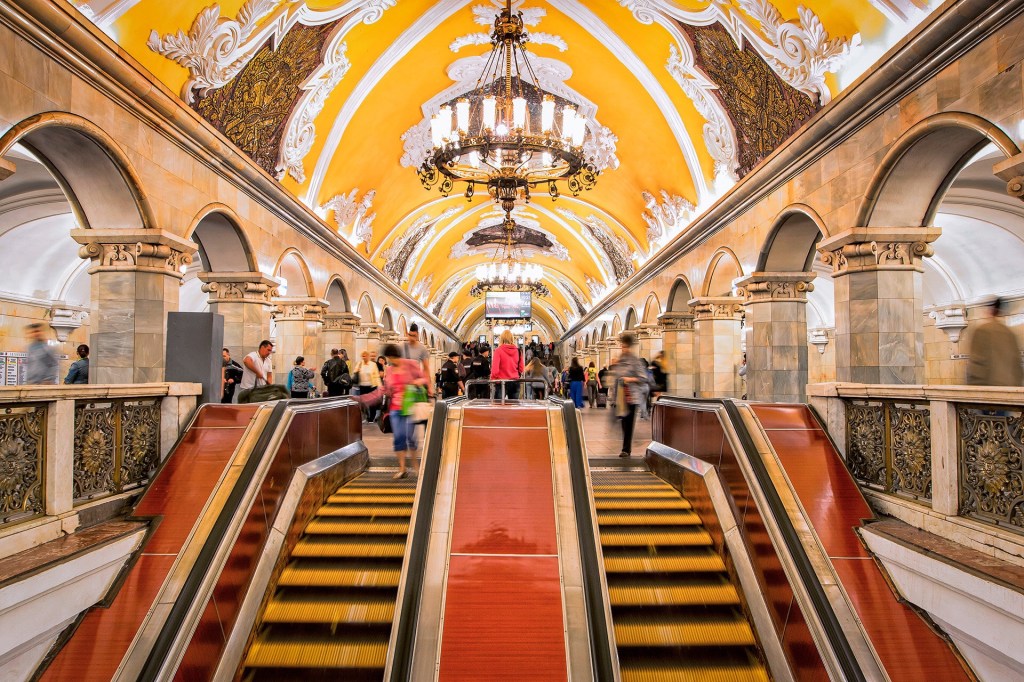
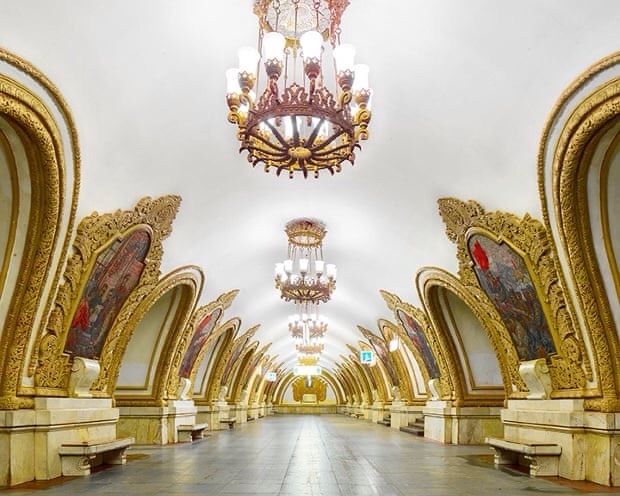
Two of Moscow’s “Underground Palaces”
But recently, a new work of art — if it can indeed be called that — was installed in the central Taganskaya Station: a life-size statue of Stalin, titled “The Gratitude of the People to Leader-Commander,” surrounded by a bevy of his adoring subjects.
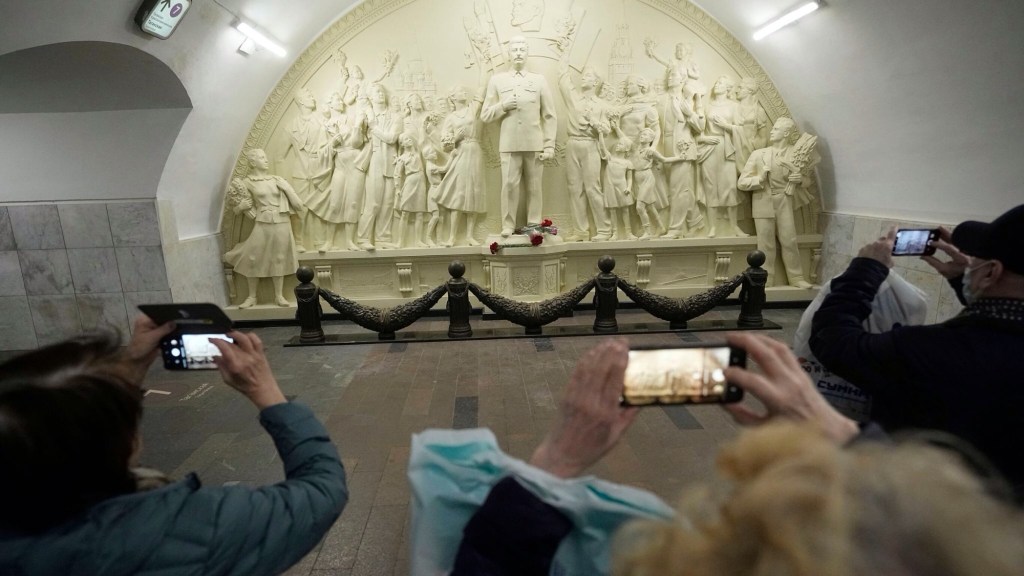
It is said to be a gift to the people of Moscow from the city’s metro system to mark its 90th anniversary, and has been welcomed with joy by some passengers, as indicated by the red carnations placed at Stalin’s feet.
One woman said, “It’s excellent. History of art, culture, significance, beauty.” And a man added, “[It’s] the right decision. This is the history of our state.” [Ivor Bennett, Sky News, May 23, 2025.]
Others, of course, were less than thrilled. A lady named Svetlana opened up to a reporter: “What were they thinking?! How many died under his leadership? And suddenly he appears here, this bloodsucker. How is this possible?!” [Id.]
Another, a gentleman named Oleg, put it less emotionally: “We should remember and honour some of his deeds. But to put him like this is disrespectful. He did a lot of bad things for the Soviet people.” [Id.]
*. *. *
So why now, and why in such a central location?
Since Vladimir Putin’s ascension to the presidency, it seems that Stalin’s ghost has been cropping up in various parts of the country, on a smaller scale. This monstrosity, though, is the first of its size and prominence.
According to Yan Rachinsky, a human rights activist with the noted rights group Memorial:
“For the current government, the main thing is the state. The state is sacred, the state is above everything, the state is infallible. That is why criticism of Stalin is constantly decreasing. Putin’s old statement that one should be proud of history — that’s it. Everything that prevents us from being proud of history fades into the shadows.” [Id.]
I would add to that. In addition to the belief in the infallibility of the state, I see a return to the Soviet “cult of personality” — the unquestioned authority of, and messianic devotion to, the leader of the all-powerful state.
And that leader, in this case, is Vladimir Putin.
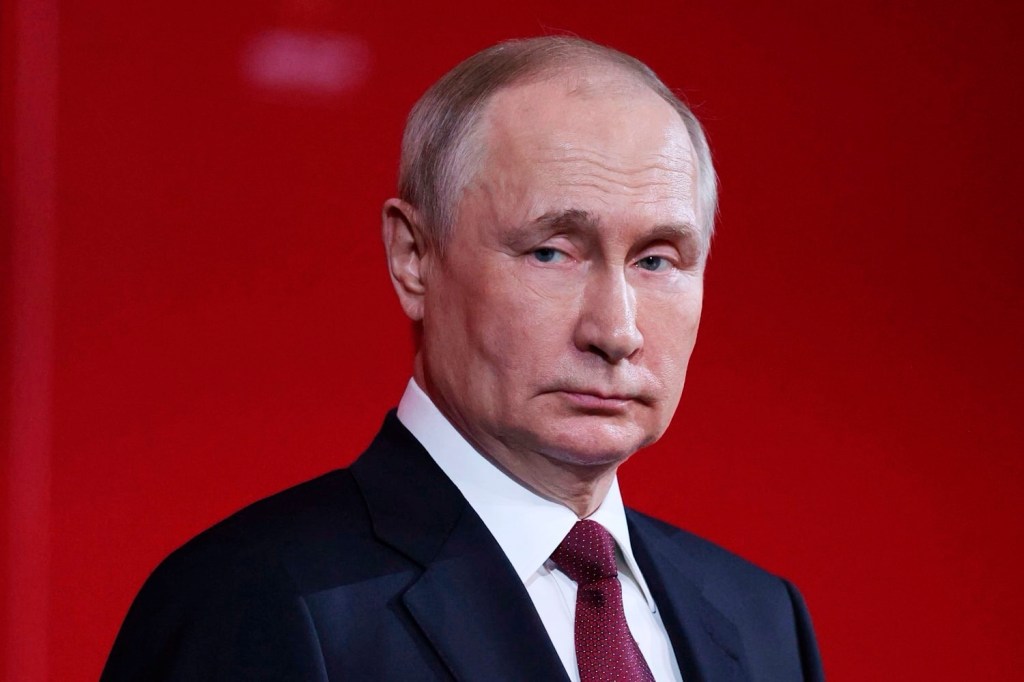
The king is dead; long live the king.
Just sayin’ . . .
Brendochka
5/29/25
 The Blog About Everything … and Sometimes Nothing