But I did.
On April 27th, I wrote the following concerning Steve Witkoff’s meeting in Moscow two days earlier with Vladimir Putin, special adviser Yuri Ushakov, and special envoy Kirill Dmitriev . . . and only one interpreter — theirs:
“And speaking of that last Putin-Witkoff meeting in Moscow, how does the U.S. negotiator walk alone . . . by himself . . . unaccompanied . . . into a meeting with the Russian president and two of his top advisers — Yuri Ushakov and Kirill Dmitriev — with only a Russian interpreter, and none from the U.S., present?”
[The following photos are screen shots from a CNN broadcast.]
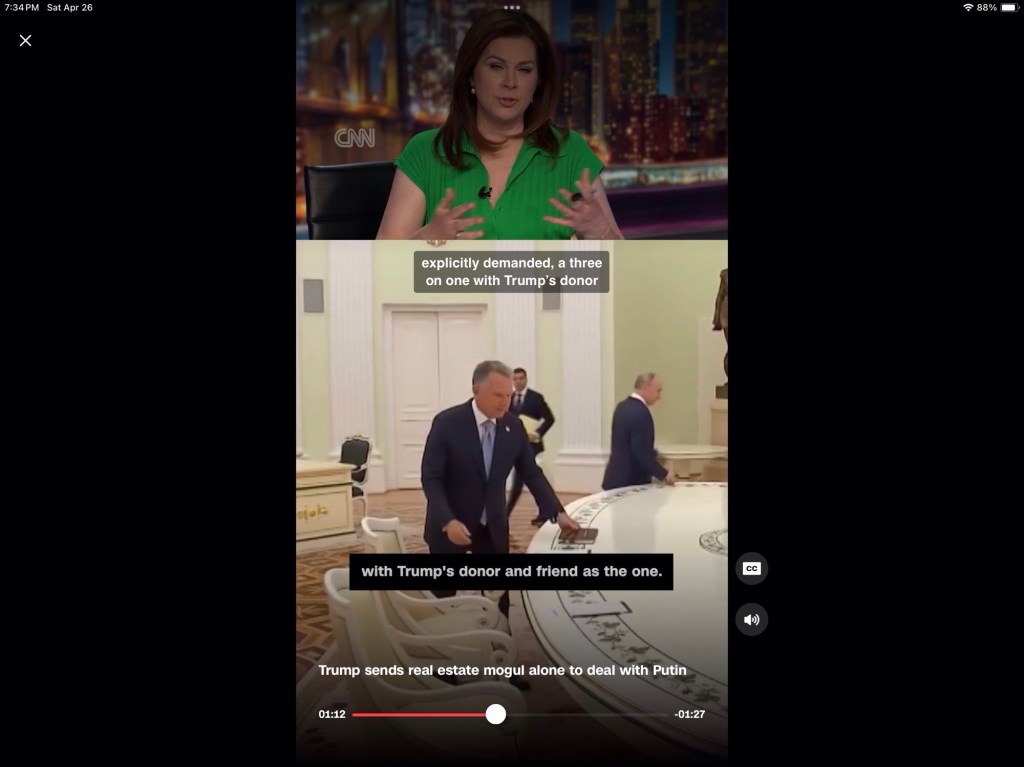
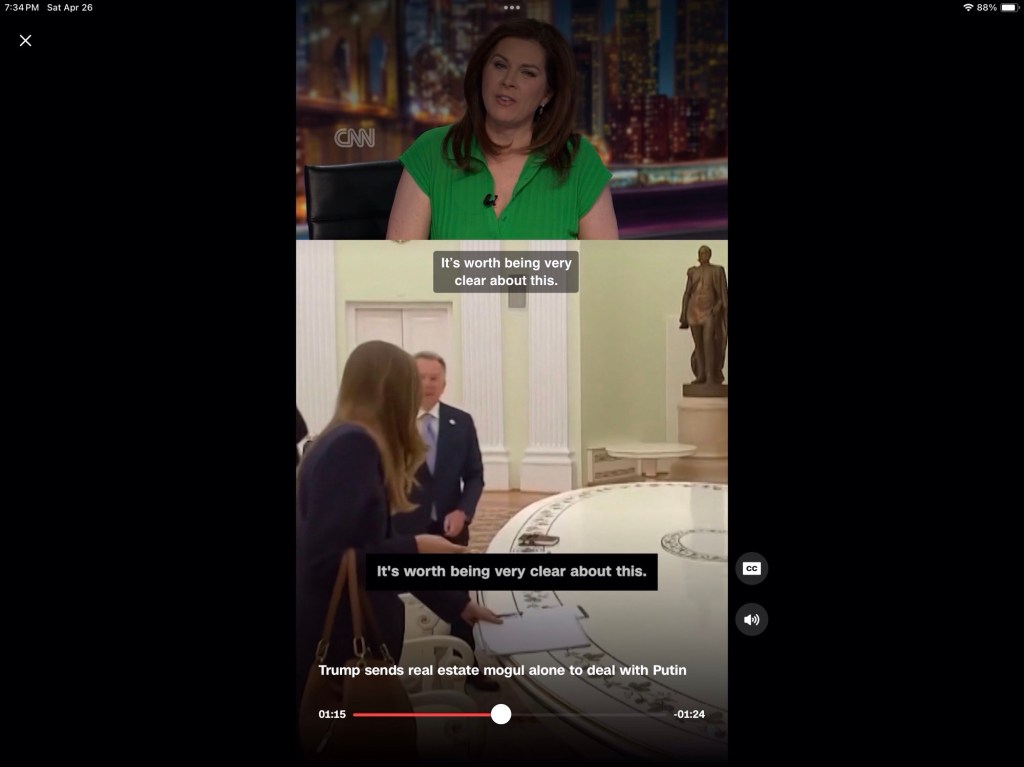
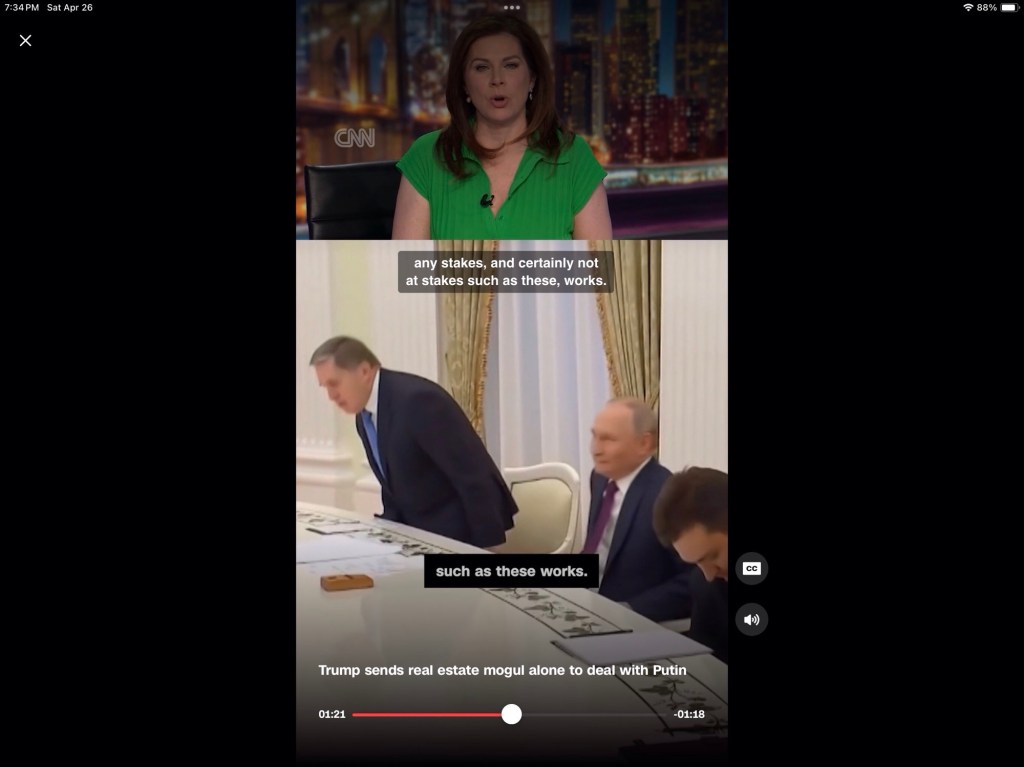
“That’s three experienced, diabolically savvy politicians against one businessman with zero background in politics or diplomacy who, like his boss, takes whatever Putin tells him as gospel.
“Can you say ‘set-up’?”
*. *. *
And now it comes to light that that was not the only occasion on which Witkoff allowed himself to be trapped in meetings with no American interpreter, or even an aide with a command of the Russian language. A U.S. official and two other Western officials with knowledge of talks held between Witkoff and Putin on February 11th, March 13th and April 11th said that Witkoff had “ . . . used their translators. If they speak to each other in Russian, he doesn’t know what they are saying.” [Keir Simmons, NBC News, May 10, 2025.]
Witkoff does not speak or understand Russian. He has no way of knowing what the Russian participants are saying to each other, or whether their interpreter is translating correctly.
*. *. *
Let me give you an example from my own experience. Many years ago — shortly after the breakup of the Soviet Union, when Russia was adjusting to Gorbachev’s programs of glasnost (openness) and perestroika (restructuring), and the West was naively pouring money into new enterprises there — two attorneys asked me to arrange a meeting for them with the Russian Trade Representative in Washington, Robert Ruzanov, to discuss an opportunity for construction of housing for the military troops who would be returning from their Eastern European postings.
Although I had never met Ruzanov, I knew that he spoke English; yet throughout the meeting, he and his aide spoke only Russian, relying on their interpreter. I, in turn, spoke only English.
The talks were proceeding nicely, until one of my colleagues mentioned the sum of $8 billion, which the interpreter incorrectly (probably inadvertently) translated as $6 billion. Without hesitating, I jumped in and corrected her, saying, in Russian, “Vosem. Vosem milyardov.” Translation: “Eight. Eight billion.”
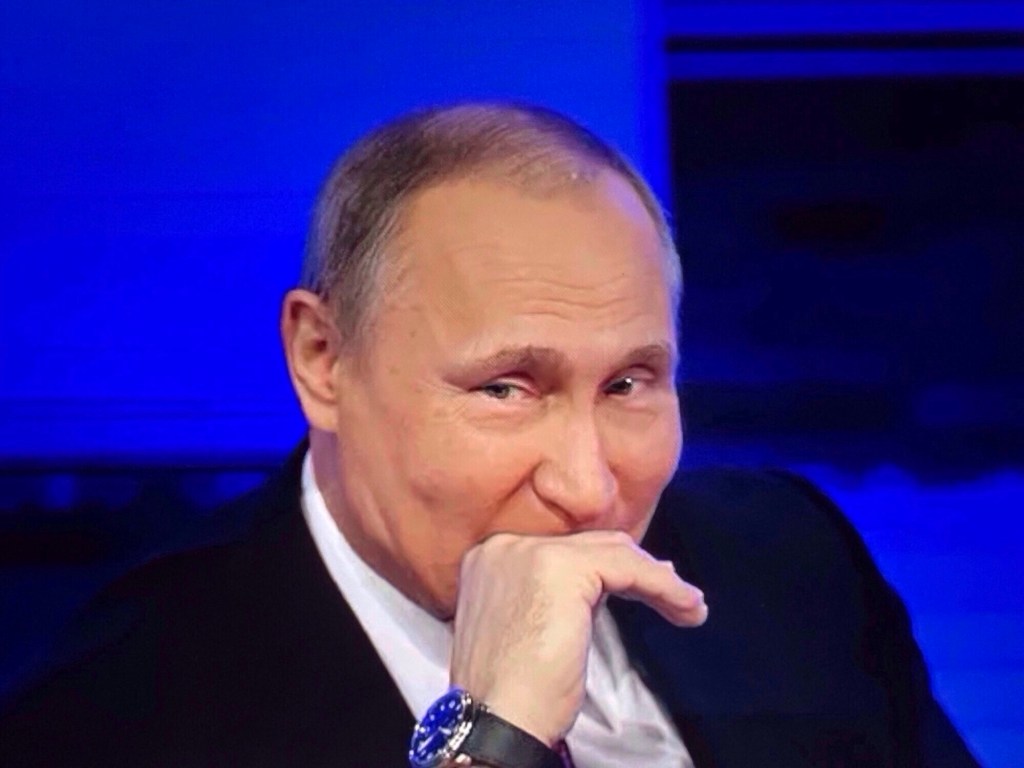
She was, of course, surprised . . . and more than a little embarrassed. I assured her — again in Russian — that it was not a problem, and explained to my colleagues what had happened, downplaying it as a simple mistake. And as I looked across the table at the Trade Representative, I saw a sly smile creep across his face as he caught my eye.
The person in the Russian Embassy who had helped me arrange the meeting had told me that Ruzanov spoke English, so quite naturally, I assumed he had also mentioned that I spoke a bit of Russian. It was simply how the game was played . . . and it still is. In diplomacy as in business, you take your advantages wherever you find them; and language differences can be a huge advantage — or disadvantage.

*. *. *
In Steve Witkoff’s case, taking those meetings without an interpreter of his own was an untenable decision on his part. According to Michael McFaul, a former U.S. Ambassador to Russia, relying on the Kremlin’s interpreter was “a very bad idea” that put Witkoff “at a real disadvantage.”
McFaul further said: “I speak Russian and have listened to Kremlin interpreters and U.S. interpreters at the same meeting, and the language is never the same. At the end of every meeting that I attended, I debriefed the interpreter to make sure we heard everything correctly, to get the ‘memcom’ [memorandum of conversation] exactly right. You can’t do that using a Russian official.” [Id.]
The memorandum of conversation, or “memcom,” is a written account of the meeting prepared for the rest of the government. Not having detailed notes of Witkoff’s meetings could create problems for other senior members of the administration, such as Secretary of State Marco Rubio and special envoy to Ukraine Keith Kellogg, as they continue discussions with the Russian and Ukrainian sides.
“How does Kellogg know what Witkoff agreed to with Putin? He only knows it through a ‘memcom,’” McFaul added. [Id.]

“Oh-oh!”
*. *. *
Vladimir Putin surrounds himself with professionals . . . the best and the brightest in their fields. If they don’t deliver the goods, they’re fired, or transferred somewhere more suited to their experience and skills. That is the one thing Donald Trump should be learning from Putin . . . and the one he can’t seem to grasp. Experience and ability don’t count in Trump’s world. He demands and rewards just one thing: total, unquestioning allegiance to him. When he should be receiving valuable advice from his so-called advisers, what he actually wants is blind obeisance . . . and never to be told he is wrong.
Well, he’s getting what he demands from his cadre of friends. The tragedy is, it’s not what the country needs.

Just sayin’ . . .
Brendochka
5/11/25
 The Blog About Everything … and Sometimes Nothing