You’d think it would be fairly simple to understand a person’s thinking on a subject as straightforward as a strong country’s unprovoked attack on another, weaker country, followed by more than three years of death, destruction, and sadistic brutality.
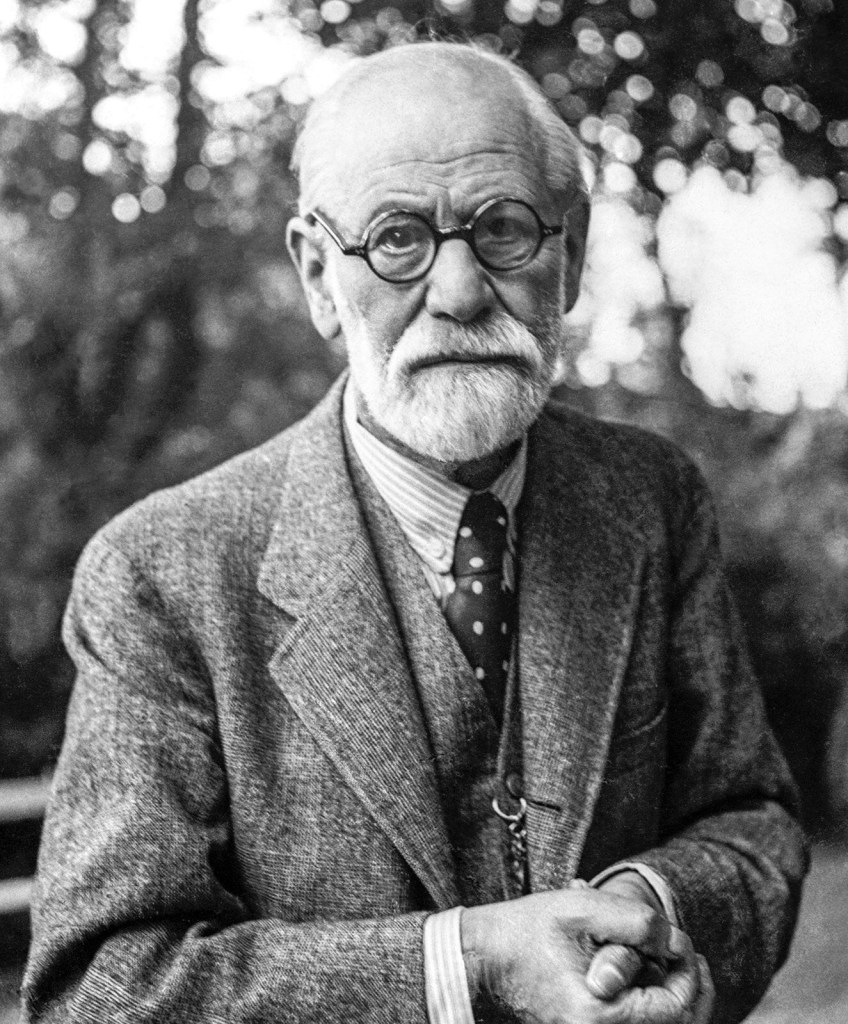
But I do believe that even Dr. Freud would be banging his head against the wall and screaming in frustration, trying to second-guess Donald Trump’s next move as he attempts to mediate a settlement of Russia’s war against Ukraine.
In all fairness, Trump himself has to be going half-mad from the failure of his efforts to deal with Vladimir Putin’s capriciousness, his outrageous demands, his twisting of facts, and his pig-headed refusal to give an inch in what he calls his desire to negotiate. Trump’s maintaining a public aura of toughness with someone he’s actually trying desperately to appease . . . well, that can’t be easy, even for one who is himself so inherently duplicitous.
But this back-and-forth, up-and-down, hot-and-cold, reactive method of persuasion is clearly not working. One day he offers Putin concessions — a return to the G7, lifting of sanctions, telling Ukraine to forget NATO. The next day, when the attacks on Ukraine continue, or when Russia breaches its own unilateral “Easter ceasefire,” Trump says he’s losing patience, and threatens to up the ante by invoking further sanctions. And so it continues.
Until yesterday, when JD Vance — who, of course, is speaking on behalf of Trump — reiterates one of their earlier threats: a withdrawal from negotiations in order to force Russia and Ukraine to deal directly with each other. At an event in Washington, he said:
“You don’t need to agree with Russian justification of the war, but you need to understand where they are coming from — making them talk of what it takes for them to end the war. [The] Russians are asking for [a] certain set of things, and we think they are asking too much. The step we need to take right now is we need Russia and Ukraine to start talking to one another. We think it’s probably impossible for us to mediate the whole process fully without at least some direct negotiations.” [RFE/RL, May 7, 2025.]

Well, that’s nothing new. Or is it? Note the last sentence: “We think it’s probably impossible for us to mediate the whole process fully without at least some direct negotiations.”
“Impossible”? For Donald Trump, the presidential candidate who promised — not only the American people, but the entire world — that he would end the Russia-Ukraine war within 24 hours of taking office? For the man whose self-proclaimed infallibility never permits the thought of “impossibility” to enter his mind?
Is he truly giving up? Or is it just another idle threat . . . a ploy that he hopes will convince Vladimir Putin that it’s time to be realistic and make a couple of concessions to bring his bloody battle to an end?

To the outsider, however, there sometimes is such a thing as an impossibility . . . and fathoming Donald Trump’s mercurial decision-making is one of those things.
Vance did have it right when he spoke of the “need to understand where they [the Russians] are coming from.” But one thing is very clear, and that is, that Trump has no grasp of the workings of Vladimir Putin’s mind . . . or of the Russian psyche in general. Nor do any of his emissaries: Marco Rubio, JD Vance, Pete Hegseth, Steve Witkoff, or any of the other businessmen he has appointed to play the roles of seasoned diplomats.
All of their billions of dollars combined cannot buy them the one thing they lack: On-the-ground experience.
And Vladimir Putin knows it.

Just sayin’ . . .
Brendochka
5/8/25
 The Blog About Everything … and Sometimes Nothing