I recently considered using the descriptor “Machiavellian” in an article about . . . well, you can probably guess about whom . . . and it occurred to me that I really knew very little about the person — Niccolo Machiavelli — who unintentionally inspired the creation of the eponymous adjective.
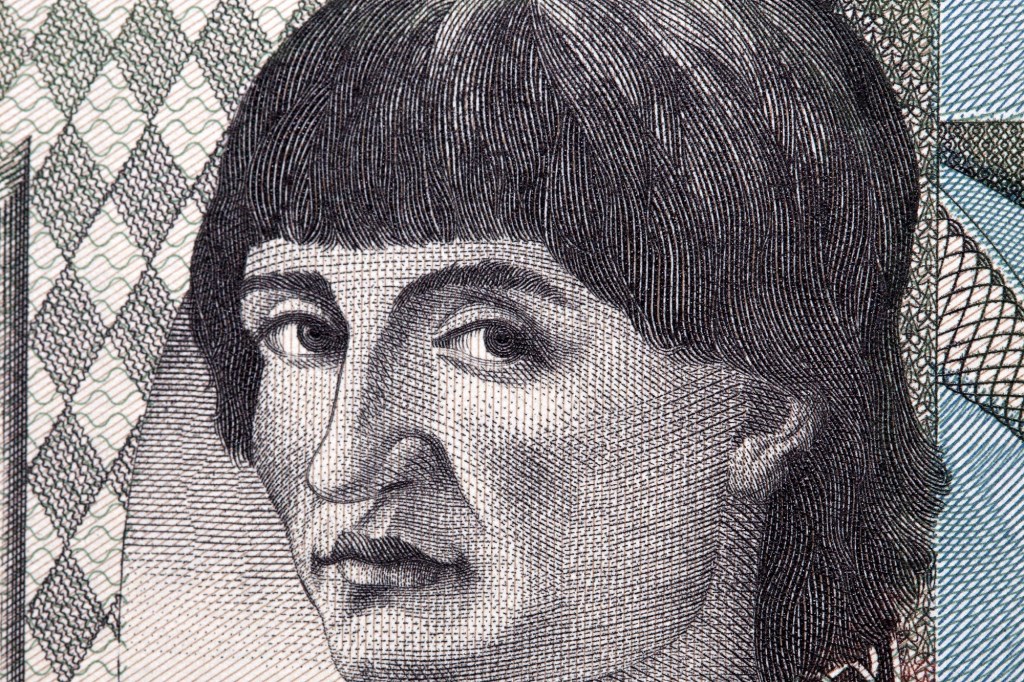
To be fair, Machiavelli lived long before the invention of the camera, so images of him are unreliable, at best. They range from this:

. . . to this:

. . . to this:

However, I was less concerned with his appearance than his political philosophies. So I did what any so-called normal person would do: I first Googled his name for general information, then immediately ordered a copy of “The Prince” from Amazon, which was delivered almost before I had hit “Place Order” on my iPad.
And while I waited a whole 18 hours for the book to arrive on my doorstep, I learned a few things by following some online links.
This much I already knew; but for the uninitiated (or the simply uninterested), Oxford Languages defines “Machiavellian” as “cunning, scheming, and unscrupulous, especially in politics.” So it seemed the perfect word to describe you-know-whom.
[For the die-hard grammarians out there, note Oxford’s use of the Oxford comma after the word “scheming” — a personal favorite of mine.]
And then I discovered that, despite popular belief that Machiavelli truly subscribed to the philosophies with which his name is unfortunately now associated, he was actually quite the liberal for his time, and a passionate defender of the republican form of government and the rule of law.
It turns out that the poor guy was seriously misunderstood.
The next thing I found was an article by one Luke Hallam on the persuasion.community site dated March 3, 2025, expressing the very same train of thought I had been following . . . and presenting it in a much more erudite manner. So, not wishing to appear to be piggy-backing on (or, heaven forbid, plagiarizing) another person’s good work, I scrapped my proposed article.
But then The Prince arrived, and I began reading. And, while still in the first few pages, I found several bits of advice that some of today’s so-called world leaders would do well to heed.
I won’t burden you with a slew of samples; but there is one that I particularly focused on, because it applies both to the autocratic leader and to the people who voted him into office. If I may . . .
“ . . . for men change their rulers willingly, hoping to better themselves, and this hope induces them to take up arms against him who rules: wherein they are deceived, because they afterwards find by experience they have gone from bad to worse. . . .
“In this way you have enemies in all those whom you have injured in seizing that principality [or, in modern terms, that presidency], and you are not able to keep those friends who put you there because of your not being able to satisfy them in the way they expected, and you cannot take strong measures against them, feeling bound to them. For, although one may be very strong in armed forces, yet in entering a province one has always need of the goodwill of the natives.” [The Prince, Niccolo Machiavelli, Fingerprint Classics, Prakash Books, 2024.]
In short, to the autocratic ruler (of any country) I would offer this reminder: “Be careful how you treat people on your way up, because you’re likely to meet them again on the way back down.”
And to the voters who put the tyrant in office: “Next time, get your heads out of your asses, and use the brains God gave you.”
I call it “Machiavellian Philosophy for Dummies.”

Just sayin’ . . .
Brendochka
4/13/25
 The Blog About Everything … and Sometimes Nothing