We’ve all heard the aphorism that those who forget history are doomed to repeat it. Conversely, remembering historic events should help us to avoid repeating the mistakes of the past . . . shouldn’t it?
In the hope that there is some truth in that, I’ve taken another little voyage in my online time machine and found a few items from previous April 11ths that might be worth noting as examples for these turbulent political times.
1814: Despite having instituted many much-needed political and social reforms during his reign, Napoleon Bonaparte blew it when he misread Russia’s intentions and staged a preemptive invasion of that inhospitable country in the summer of 1812 . . . resulting in the notorious forced retreat of the French troops as the fighting dragged on and the brutal Russian winter finished off the majority of what was left of them. As a result, Napoleon was forced to abdicate, and was exiled to the Island of Elba. [“This Day In History,” History.com, April 11, 2025.]

Shockingly, however, the cunning Napoleon managed to escape his exile, returned to Paris, regrouped, and regained his position as Emperor. But his second term in office proved more disastrous than the first, when he was again defeated — this time by a coalition army led by Britain’s Duke of Wellington at the Battle of Waterloo.
Result: Another forced abdication and exile, but farther away to the remote South Atlantic island of Saint Helena . . . where he remained until his death in 1821.
And to this day, there are leaders who haven’t learned not to mess with Russia. Astonishing!
*. *. *
1951: General Douglas MacArthur was a brilliant military leader who, in the early days of the Korean conflict, had devised strategies and maneuvers that helped save South Korea from falling to the North Korean invaders. But as the war pressed on into its second year, he convinced then President Harry Truman to take offensive action against communist North Korea. Truman feared — quite rightly — that the People’s Republic of China would then jump to the defense of its North Korean ally, and refused to escalate the war further; but MacArthur argued that there was little chance of that happening. [Id.]
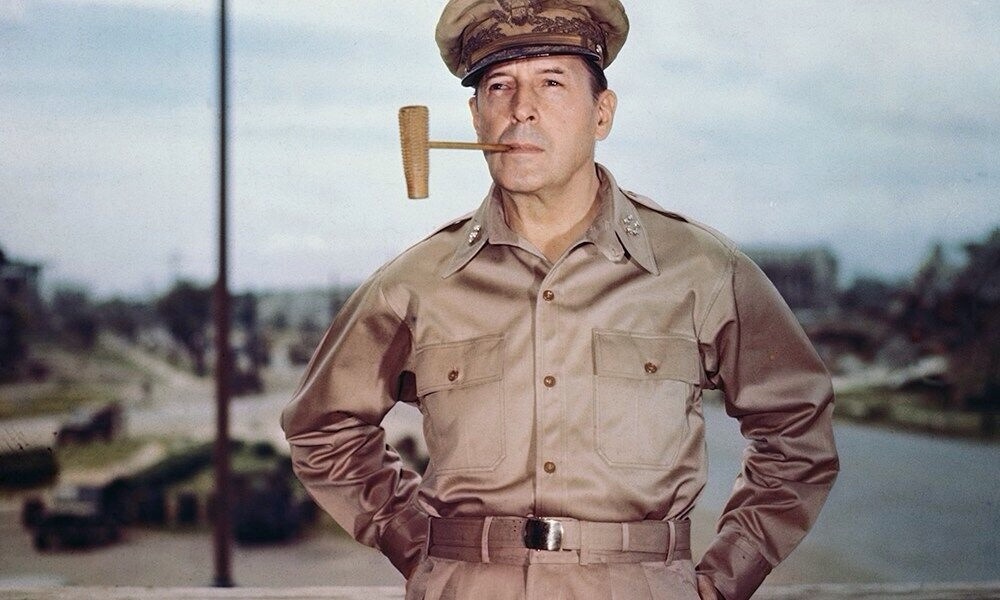
Well, he was wrong, and at the end of December 1950, hundreds of thousands of Chinese troops crossed into North Korea . . . and the rest, as they say, is well-known history.
On April 11, 1951, President Truman fired MacArthur, replacing him with General Matthew Ridgway.
MacArthur had let his ego and his blustering nature overtake reason, and led the country in a direction that brought the Korean people — and the United States — two more years of horrific war. For that, he lost his job, and his legacy was forever tarnished.
*. *. *
1979: Ugandan dictator Idi Amin is well known as one of the most violent dictators of modern times. As head of the Uganda army and air force, he seized control of the government in 1971, where he undertook a reign of terror that lasted for eight years. Finally, on April 11, 1979, he was overthrown by the Uganda National Liberation Front and fled the country.
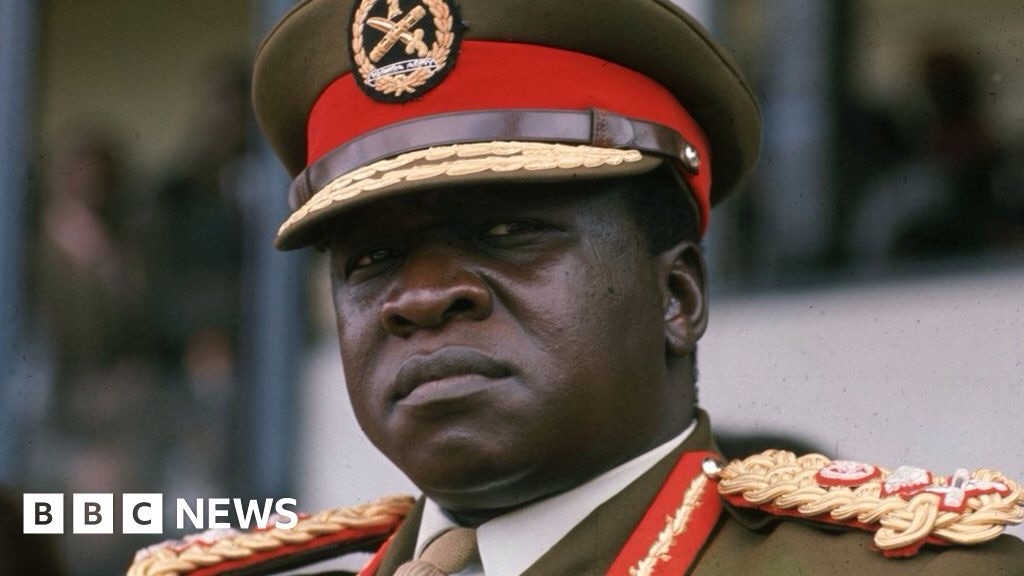
No other country wanted him, but he was finally allowed to settle in Saudi Arabia. However, once a tyrant, always a tyrant; and in an effort to regain his position in Uganda, he left his place of exile via Zaire, where he was arrested and offered back to the Saudi government, which had no further use for him. He was then sent to Senegal, but he was not welcome there either, and the Senegalese government attempted to return him to Zaire, who likewise refused him admittance. It was the Saudi government that finally relented and allowed him to live out his remaining years there, until he finally died of kidney failure in 2003. [Id.]
*. *. *
And that, dear students, is what ultimately happens to brutal, egomaniacal, narcissistic, psychopathic dictators.

Just sayin’ . . .
Brendochka
4/11/25
 The Blog About Everything … and Sometimes Nothing