They used to be the Feenstras of Saskatchewan, Canada, until they emigrated to Russia a little over a year ago.
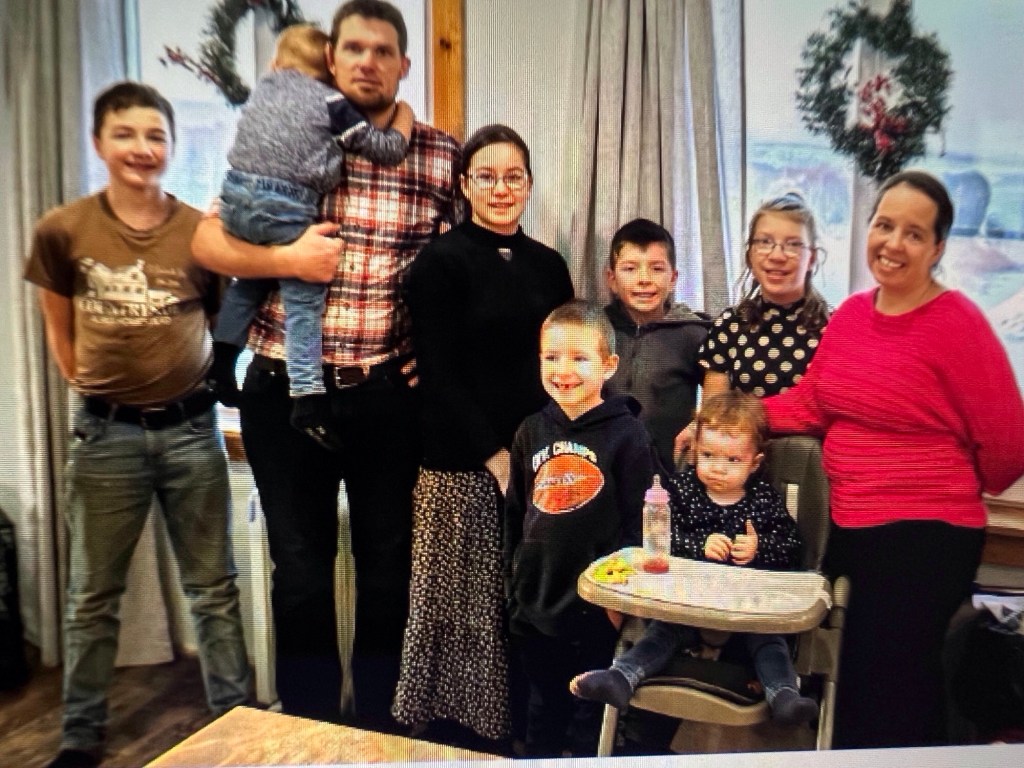
They are Arend and Anneesa Feenstra and eight of their nine children (the eldest chose to remain behind): a conservative Christian family seeking to escape the “wokeness” of the West in exchange for the religious freedom and greater opportunities they believe to be available in Vladimir Putin’s Russia.
I’ve been following them on social media and writing about them since their arrival in Russia was first made public, at a time when they encountered serious bureaucratic difficulties and weren’t sure they’d done the right thing. But they quickly recanted the complaints they had initially aired on YouTube, and over the course of a year, the roadblocks have miraculously disappeared. They are now well on their way to establishing the flourishing agribusiness they’ve always dreamed of, on 280 acres of choice farmland in Nizhny Novgorod.
But — as those who have been tracking their journey with me already know — there are many questions that are not answered in their videos, particularly as to their sudden popularity, access to a variety of social media, ever-present camera crews, ability to travel, relatively easy acquisition of building supplies and farming equipment, and — most puzzling of all — whether they’re really as happy as they appear to be with their new life, or if they’re just really adept at smiling on cue.
And now, thanks to the folks at The Christian Science Monitor (CSM), I have answers to a few of the questions . . . but far from all of them.

In the interview with CSM, Arend Feenstra said that they believe their traditional, Christian family values are respected in Russia, and that the government promotes policies that favor private family farms, whereas:
“In Canada, rural people tend to be self-sufficient. Here they’re more collective. People seemingly have very little, but they’re more willing to give. Russians don’t necessarily go to church, but they hold to traditional values.” He admits that there is still a language barrier, but that they have nevertheless “made some good friends already.” [Fred Weir, The Christian Science Monitor, March 11, 2025.]
That’s three “but”s in a row. But no place is perfect . . . right?
Arend also pointed out that it was becoming too difficult to make a living as a farmer in Canada due to rising costs and too many middlemen between the farm and the grocery store taking their share of the profits. [Id.]
When the family recently were granted their three-year temporary residency status in a well-publicized, formal ceremony in the government offices at Nizhny Novgorod, Arend spoke of the OKA Agency that had been of such invaluable help to them in working through the bureaucratic red tape associated with the process.

Thanks to CSM, we now know that OKA was created at Nizhny Novgorod in response to a decree signed by Vladimir Putin last September, easing conditions for people from “unfriendly” Western countries to emigrate to Russia. Now, it is only necessary for them to declare, supposedly in their own words, that they have “shared values” with Russia in order to obtain this status . . . even waiving the previous requirement for some measure of Russian language proficiency.
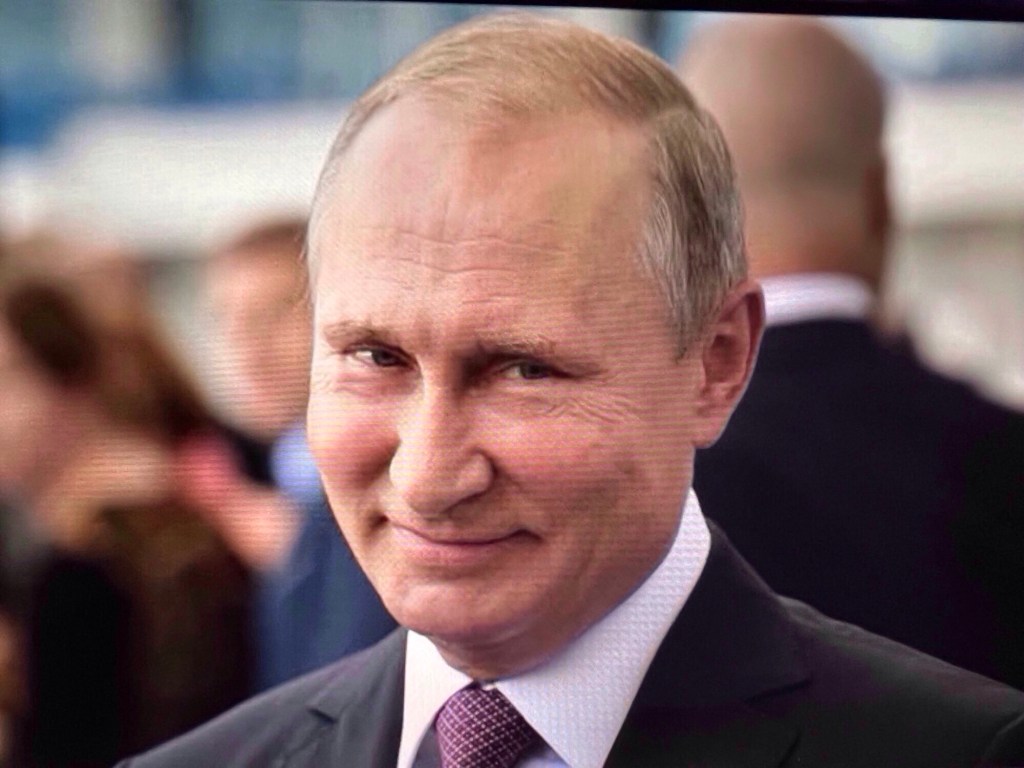
This declaration was apparently no problem for the Feenstras, who say they agree with Putin that — according to the CSM article — “society should be built around conservative, declaratively religious principles that don’t permit what Mr. Putin’s decree called ‘destructive neoliberal ideological attitudes’ of Western nations.” [Id.]
So now we know how their residency status was fast-tracked . . . though it’s still not clear to me whether their initial, very public complaints about their treatment on arrival might have influenced the changes. Or, for that matter, whether those early, unhappy YouTube videos might actually have been the impetus that launched the family’s secondary career as social media propagandists for the Russian government.
In any event, some 12 foreign families have now moved into the Nizhny Novgorod region, and OKA says they have received hundreds more inquiries. The agency is now working with a local university to develop Russian-language immersion courses specially tailored for Westerners. As Jacob Pinnecke, head of OKA, says:
“You really should speak Russian. There are lots of good jobs available, but most local companies are not set up to deal with people who can’t speak the language.” [Id.]
So first you invite the people, and only much later does it occur to you that they need language lessons. That’s like building a city in the middle of nowhere without first considering the need for roads and utilities.
*. *. *
Another question in my mind has long been about ownership of the Feenstras’ 280-acre property, since foreigners are not legally permitted to own land in Russia. And the answer that CSM obtained from Arend Feenstra really bothers me. He said that he has established a company with a Russian partner whom he says he “trusts to buy the farm.” Refusing to disclose the price he paid, he did say that “in Canada land prices have gone crazy. Russia is a vast country, with lots of good, cheap land available. And they’ve got a government that wants farmers to prosper.” [Id.]

This is when a whole new bunch of questions sprang up. Who is this partner? How did they meet? Surely, someone had to facilitate the whole transaction — quite probably through OKA. How can Arend be sure he can trust this partner? They must have signed documents; but Arend doesn’t speak or read Russian so how does he know what he signed? Can he trust the English translation?
And, most unsettling: What’s to stop the government from waiting until the farm is up and running, and suddenly deciding to nationalize it?
Absolutely nothing.
*. *. *
The CSM article went on to discuss the Russian immigration policy in general . . . and that was when those little nerve endings at the back of my neck began to tingle, and not in a good way. Because the member of the Duma (lower house of Parliament) behind the campaign is one Maria Butina.
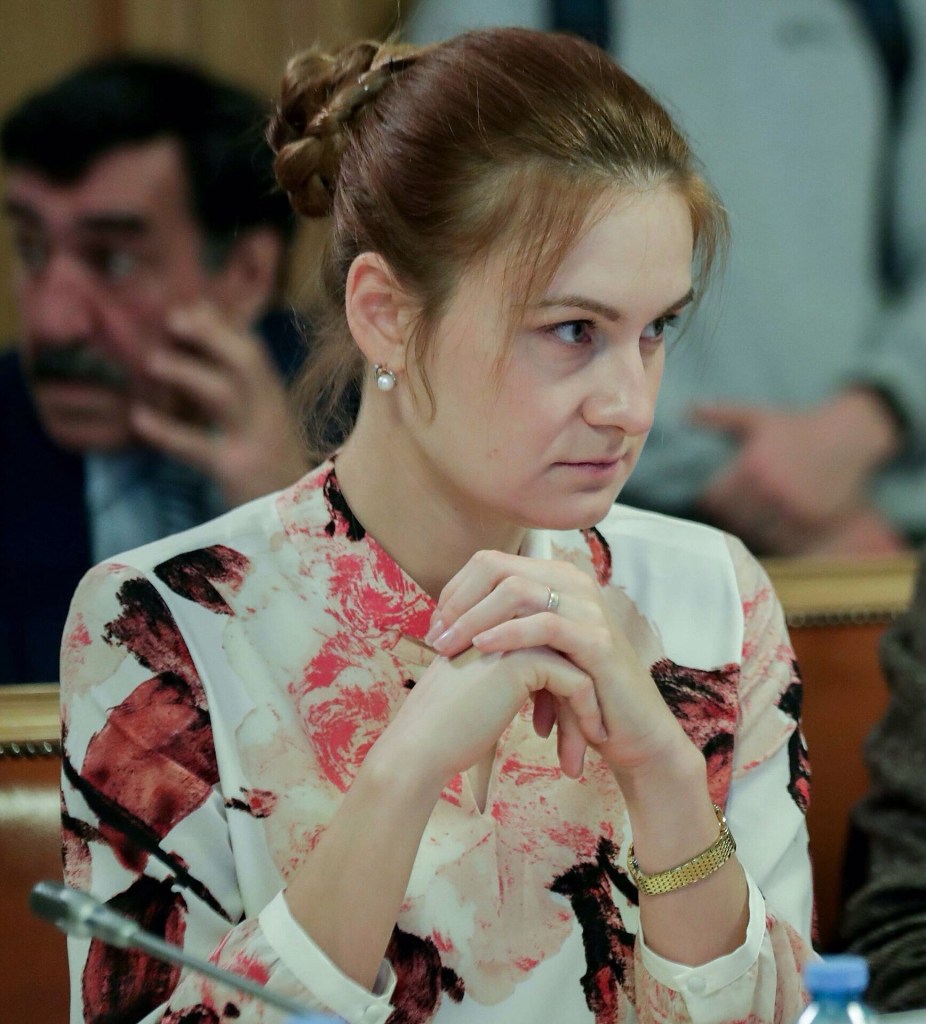
A member of Putin’s United Russia party, she engineered a quick entry into politics beginning in late 2019 upon her return home from the United States . . . where she had just served 14 or 15 months of an 18-month prison sentence, having pled guilty to felony charges of conspiracy to act as an unregistered agent of the Russian state under 18 U.S.C. Sec. 951.
Though maintaining that she was not a spy, she had attempted to infiltrate conservative U.S. groups, including the National Rifle Association, as part of an effort to promote Russian interests in the 2016 U.S. presidential election. The Senate Intelligence Committee concluded that she had attempted to persuade the Trump campaign to establish a secret back-channel communication line with Russia. [Id.]
(There’s a great deal more information on Butina available online, and it is a tale worth reading.)
And this is the woman who says that, in heading an organization called “Welcome to Russia,” she is promoting people-to-people contacts through tourism and immigration. There have allegedly been about 3,500 immigrants arriving from “unfriendly countries” in the past two years, the largest groups being from Germany, Great Britain and North America. Butina says they pay their own way there, with no subsidies from the Russian government. [Id.]
“It’s mostly families who come, with three or more kids,” she states. “It’s not asylum we’re offering. People get visas with a note saying it’s based on a presidential decree. It’s not political, it’s humanitarian. If it doesn’t work out, if they don’t like it here, they can leave.” [Id.]
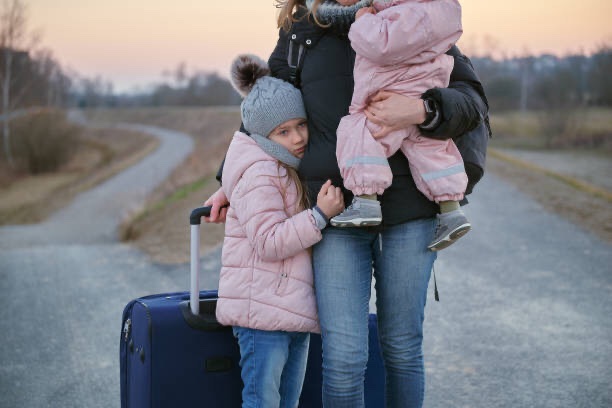
Well, of course, they can . . . with nothing but the clothes on their backs. As for that land they never really owned in the first place, the buildings, the crops, the animals . . . well, they can’t very well take any of those with them, can they?
*. *. *
Now are you beginning to understand my ongoing skepticism and concern for this family? While I continue to hope that everything works out well for them, I can’t help worrying about those eight lovely kids, and what their futures will look like.
Just sayin’ . . .
Brendochka
4/3/25
 The Blog About Everything … and Sometimes Nothing