Have you ever wondered why honey doesn’t spoil?
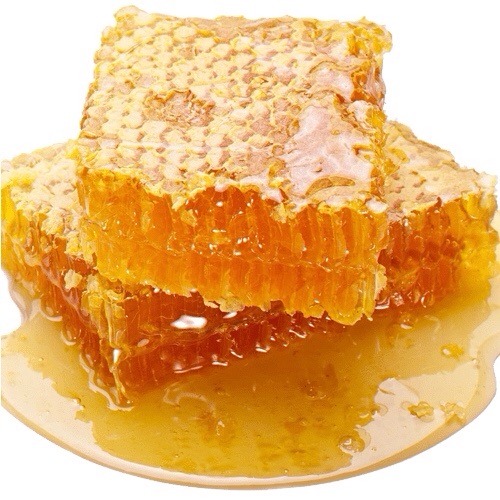
I never had, until — in a recent moment of intense boredom — I took the time to read an article explaining the science behind it. I’ll try to give you an abridged version, because I think it may be the answer to extending human life indefinitely . . . as though anyone really wants to do that in these turbulent times. But anyway . . .
The key to honey’s secret is its unique chemical makeup consisting of low moisture (around 17%) and high sugar content. “At 17%, its water content is much lower than that of bacteria or fungi. Honey also has a low water activity; this is a measure of the amount of water in a substance that is available to support microbial growth.” [Stacey Leasca, Food & Wine, March 9, 2025, citing Andy Brunning of Compound Interest, August 14, 2014.]
Okay. But how, you may ask, does the honey bees’ nectar — which is about 70% moisture — transform into the drier, viscous substance we know as honey? Well, that’s where the fun begins: it’s all thanks to those busy little buzzers:
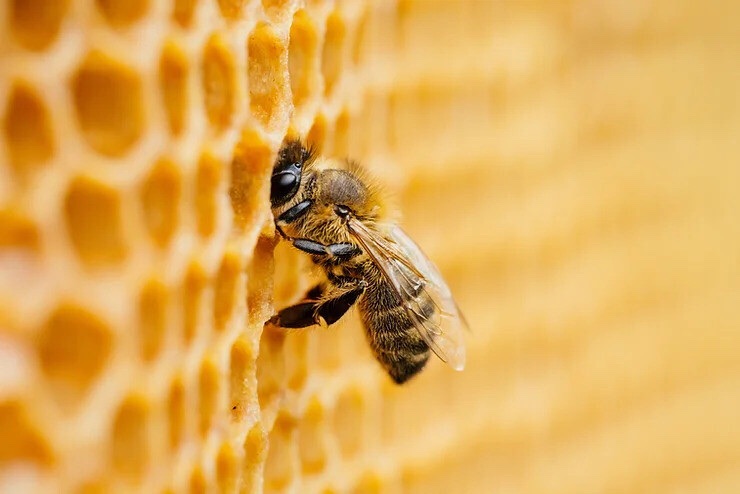
“The bees achieve this by fanning the honeycomb with their wings in order to encourage rapid evaporation of water from the nectar mixture.” [Id.]
Apparently, the continuous flapping of their teeny-tiny wings reduces the water content to the required 17 percent, which is not easy and can take up to three days to accomplish.
Well, bless their little bee hearts!
But of course, the next logical question is how these fascinating facts can help you to live longer. Certainly not by eating gallons of honey; that will just make you fat.
Consider this: Each tablespoon of honey has approximately 64 calories. Thus: 1 gallon = 256 tbsp. x 64 cal. per tbsp. = 16,384 calories.
Not to mention that, probably somewhere around the 20th tablespoon, you’re going to start to gag from all that delicious sweetness. So, no . . . eating the honey is not the answer.
Now, the human body consists, on average, of around 60% water. But what if we were able to increase our sugar intake, decrease all that water and the other liquids that are supposed to be so good for us, and flap our arms continually for three days at a time, until we are dehydrated to the same 17% level as honey? Would we then also be resistant to bacteria, fungi, and the other microbial growths that make us sick? Is it just possible that — as with the preservation of fruits, vegetables and meats by dehydration — we could live for hundreds of years in a parched state?
But, more importantly, would we want to . . . if we looked like this?

All right . . . so this wasn’t one of my brightest ideas. But it was an interesting little lesson in both entomology and nutrition. And didn’t it take your mind off of all the other world news for just a little while?
You’re welcome, and happy weekend.

Just sayin’ . . .
Brendochka
3/29/25
 The Blog About Everything … and Sometimes Nothing