Way, way, w-a-a-a-y back when I was a schoolgirl in New Hampshire, communication was simple. In some rural areas, you still placed phone calls through an operator employed by the telephone company; and you might even have a “party line” that you shared with another local family whom you may or may not have known. Our town was advanced: we had dial phones and private lines. But you could only talk to one other person at a time.
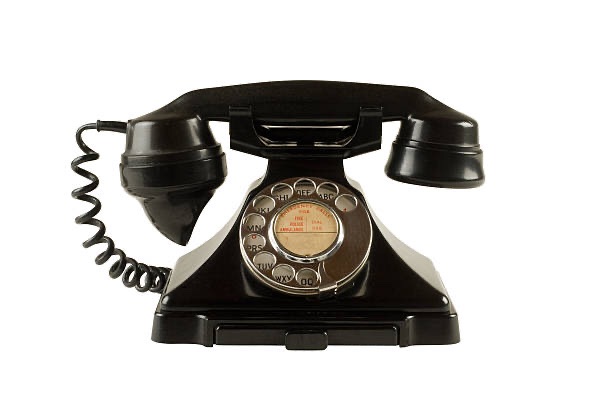
On one particular evening after dinner, I was on the phone with one of my classmates reviewing a homework assignment, when we suddenly heard two distinctly male voices overriding our conversation. We listened for a moment, then started calling out, “Hello? Hello? Who’s on this line?”
At first there was silence; then one of the two males responded: “Well, who are you?”
After a minute of back-and-forth, it turned out that they were two boys from our school. We introduced ourselves, had a good laugh and a nice chat, and chalked it up to “crossed wires.” I can’t explain the cause of the mix-up; it was a simple technical glitch — the sort that happened in those days.
It wasn’t the result of some idiot’s royal fuck-up of a classified, high-level, supposedly secure government “chat” concerning an imminent military aerial attack on an adversarial country.

Well, that’s exactly what hit the fan this week in Washington when a conference over an usecured Signal chat app, scheduled to include Secretary of Defense Pete Hegseth, Director of National Intelligence Tulsi Gabbard, CIA Director John Ratcliffe, National Security Adviser Mike Waltz, and even Middle East special envoy Steve Witkoff . . . who was in Moscow for meetings with Vladimir Putin when he joined the call! These were the people at the very top of the national security food chain. But somehow a number had been added to the approved list of participants . . . that of an international journalist, no less.
Jeffrey Goldberg of The Atlantic initially wasn’t sure whether the invitation he received to join the chat was legitimate. Once he realized that it was, and understood the substance of the conversation as having national security implications, he did the only thing he could do: he reported what had happened, without publicly disclosing any classified information. And had someone in the administration been wearing their big-boy panties and taken grown-up responsibility for the blunder, it probably would have ended there.
But this was Washington, where the first impulse is always to deny one’s own culpability, and the second move is to find a scapegoat. So the “Washington Blame Game” began, together with the denials.

Along with a lot of “he-said-she-said,” and people claiming that no classified matters were discussed during the call, the White House and the Pentagon tried to toss a few buckets of whitewash on the whole thing by declassifying everything that could conceivably have been considered classified at the time of the call. But that was another huge mistake, in more ways than one.
Now, Senate Armed Services Committee Chairman Roger Wicker and Democratic panel member Senator Jack Reed are asking for an Inspector General report on the Signal chat for the committee to review, along with a classified briefing from a senior official. Wicker said that the information discussed in the chat was “of such a sensitive nature that, based on my knowledge, I would have wanted it classified.” [Natasha Bertrand, Zachary Cohen, Betsy Klein and Shania Shelton, CNN, March 26, 2025.]
And an (understandably) anonymous Defense Department official has said: “It is safe to say that anybody in uniform would be court martialed for this. We don’t provide that level of information on unclassified systems, in order to protect the lives and safety of the servicemembers carrying out these strikes. If we did, it would be wholly irresponsible. My most junior analysts know not to do this.” [Id.]
Well, perhaps those junior analysts should be running things in D.C. Because Pentagon spokesman Sean Parnell continued to argue: “These additional Signal chat messages confirm there were no classified materials or war plans shared. The Secretary was merely updating the group on a plan that was underway and had already been briefed through official channels. The American people see through the Atlantic’s pathetic attempts to distract from President Trump’s national security agenda.” [Id.]
Right . . . blame the media.
But, as they used to say in the Old West . . . “them’s fightin’ words.“
And so, seeing clearly that the American people were being lied to in order to conceal the total ineptness of the current administration, the folks at The Atlantic did what they do best: they came out fighting, and told the truth. They printed portions of the chat, clearly demonstrating the classified nature of some of the information while redacting portions they felt were too sensitive to publicize.
And then, inevitably, we heard from Donald Trump, who — some eight years after his first election to office — is still relying on the same stale, boring, paranoid retorts. He said, “It’s all a witch-hunt.” [Id.]
And from the equally trustworthy White House press secretary, Karoline Leavitt, we received a social media post claiming that: “The Atlantic has conceded: these were NOT ‘war plans.’ This entire story was another hoax written by a Trump-hater who is well-known for his sensationalist spin.” [Id.]
By the way, you’ll be relieved to know that Ms. Leavitt has assured the American people that Witkoff was receiving the texts in Moscow — in freakin’ Moscow! — on “a secure line of communication [provided] by the U.S. Government, and it was the only phone he had in his possession while in Moscow.” [Id.]
Oh, well . . . I feel much better now.
*. *. *
At this point, I would normally offer a little summation, but I’m sure it isn’t necessary . . . this story has been at the top of the news all week. And if you’ve read this far, you’ve undoubtedly figured out for yourself that we are in deep doo-doo, folks.

Just sayin’ . . .
Brendochka
3/27/25
 The Blog About Everything … and Sometimes Nothing