With Ukraine constantly in the headlines, it seems only natural that I have been reminiscing about my visits there in the summer of 1993, while working in the Moscow office of a U.S. humanitarian aid foundation. And one of my most vivid memories is of the difficulties involved in traveling by train from Moscow to Kyiv at the time of Ukraine’s new-found independence . . . not nearly as difficult as today, of course, but still not easy. So I thought I’d recycle the tale of what, in retrospect, was one hell of a good time.

*. *. *
Things had changed in just a few weeks.
The day after Christmas of 1991, the Soviet Union had ceased to exist. In its place were now fifteen independent nations that previously had been Soviet Republics. And in the summer of 1993, most were still in the process of establishing their chosen forms of government, legal codes, and the institutions required to administer them. Ukraine was one of those fifteen nations, and as part of its development had established Embassies in various countries around the world . . . including neighboring Russia. It had also created official crossings along its nearly 7,000 miles of border abutting seven countries . . . also including Russia.
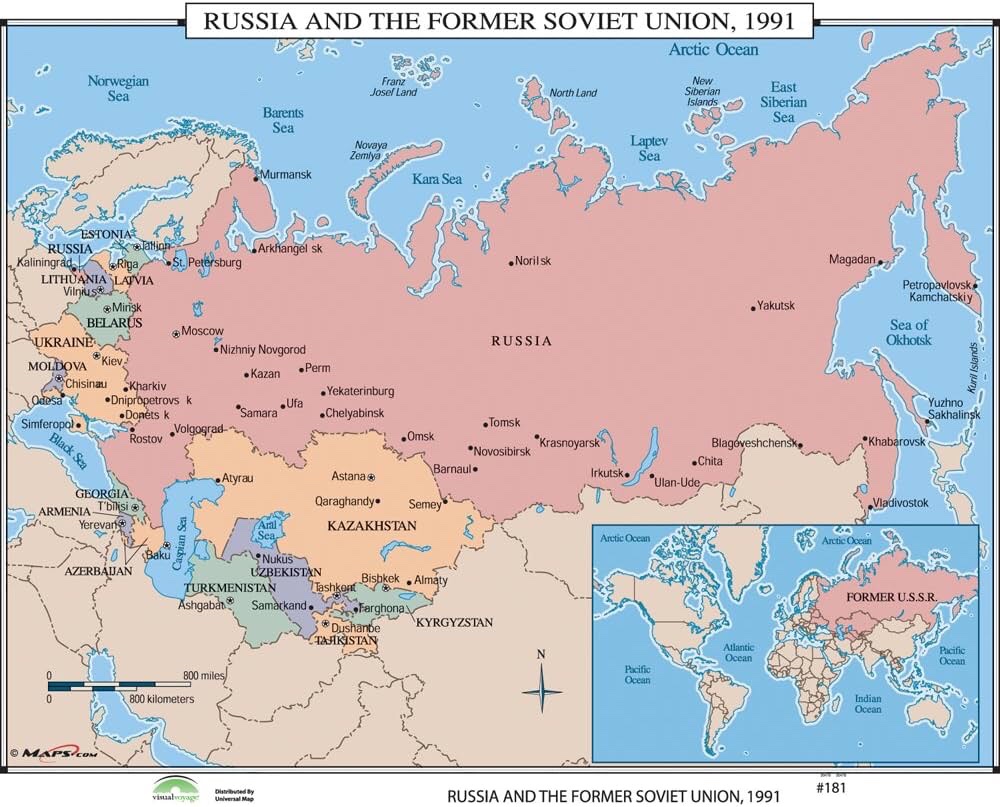
When I arrived in Moscow in May of 1993, much of this work was still in the process of being completed by the Ukrainian government, and my first train trip to Kyiv was easy and seamless. But by the time I was planning my second visit there, it was a whole new ballgame. There was now a Ukrainian Embassy in Moscow, and so I called to inquire whether I would need a visa to cross the border as a U.S. citizen with an American passport. It took a while to find someone who would even attempt to answer that question, and when I did, I was told that people with U.S. passports did not require visas to cross into Ukraine. Good news.
It was especially good news because this time I would be traveling with two American companions. Scott was working with the Foundation in the U.S., assisted by Michelle. Neither of them spoke Russian, and would be relying on my limited translation skills during the trip.
The fun began when we arrived at the Kyivsky Train Station in plenty of time for our scheduled evening departure. There was a woman taking tickets and checking I.D.s, and when she looked at our passports, she asked, in Russian, “But where are your Ukrainian visas?” Stretching my linguistic ability to the max, I explained to her the details of my call to the Embassy and what I had been told about not needing visas with U.S. passports. And she said, quite authoritatively, “Nyet!” I had apparently been given bad information, and her instructions were to see visas from everyone — Americans included.

I also explained that we had to leave that day as we had meetings scheduled the following morning with Ukrainian government officials and could not postpone our departure. She asked how we would get back into Russia, and I said we could get our return visas in Kyiv. She then asked what we would do about the border crossing. At that point, I moved a little closer to her, smiled conspiratorially, and whispered, “Well, that’s the Ukrainian government’s problem, not yours. Right?” Something from her lifetime of Soviet upbringing must have clicked into place. She smiled, handed our passports back to us, and said, “Khorosho” — “Fine.” And we boarded, three foreigners en route to Ukraine without visas. What a great start!
It got even better when the same lady who had taken our tickets showed up as concierge on the train and offered us tea. She obviously wore two hats for her job with the railroad, and I wasn’t crazy about this one, to say the least. She knew we didn’t have visas. What was going to happen when we reached the border? She would be blamed, unless she had a plan in place. This did not bode well for us, but it was too late to do anything about it now. We were already underway, captive on the train for the next 14 or 15 hours.
Michelle and I were sharing a two-bunk sleeper compartment, and Scott had a single at the far end of the same car. I was glad of the company, and we all sat up late in the “girls’ dorm,” swapping stories from our life histories, eating the food we had brought with us, and drinking good Russian tea, before finally kicking Scott out to his own quarters and locking our door. We had dressed comfortably for the trip, and something told me that Michelle and I should sleep in our clothes that night. I was later to be grateful for that decision.

The movement of the train soon lulled us to sleep, and it was around dawn when we were awakened by the screeching sound of brakes being applied and a whole lot of rattling and clanking going on. We had arrived at the border. Suddenly our door — the carefully locked door — was unlocked and slammed open with great force. Michelle and I both bolted upright in our bunks and were confronted by a very tall, very young, heavily-armed Ukrainian border guard, who stuck out one hand, palm up, and demanded, “Passports.”
Uh-oh. The moment of truth had arrived. Thank goodness we were spared the indignity of having to face it in pajamas!
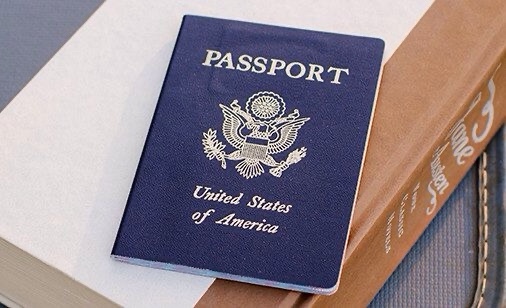
I told Michelle to hand over her passport and to say nothing. Suddenly, I found myself in charge. Yeah, right. He was the one with the sidearm, not I. And he knew it. He also knew — compliments of the ticket-taker-cum-tea-service lady — that I spoke some Russian, and that we had no visas. But he dutifully scanned through our passports before saying to me, “Where are your Ukrainian visas?” Once more, I went through the whole story of the telephone exchange with the Embassy in Moscow. Then the following dialogue — in Russian — ensued.
Guard: “But you must have visas.”
Me: “No, they told me we didn’t need them with American passports.”
Guard: “But you must have them. How will you go back to Moscow?”
Me: “We will get them in Kyiv.”
Guard: “No, you must get them in Moscow.”
Me: (Looking dramatically at my wristwatch): “But it’s too late.”
Guard: (Repetitiously): “No, you should have gotten them there.”
Me: (For the umpteenth time): “But they told me we didn’t need them.”
Guard: “Well, they told you wrong.”
That was when my patience ran out. I recalled what someone had told me years before, in an entirely different context: that you have as much power as you can make other people believe you have. So — from my still-seated position — I slammed my hand on the small table attached to the wall between our bunks, making the water bottles and glasses do a little dance, and angrily declared, “Well, that’s not my fault, is it?!!”

And there stood one very surprised border guard, wondering who this tough-talking, unintimidated, Russian-speaking American woman might be. At best, I probably reminded him of his mother; at worst, I could have been the First Lady of the United States for all he knew. He clearly had no idea of what to do next. So he did what came naturally: he passed the buck. Taking two steps backward into the corridor, he beckoned to someone farther along the car, and suddenly we had two young, tall, well-armed border guards in our little compartment. They began whispering between themselves, and all I could catch were what sounded like “psst-psst-psst-Americans,” and “psst-psst-psst-no visas.” Then the second guard looked at me and asked, “You will get your visas in Kyiv?” to which I replied, still with supposed authority, “Yes; I already said we would.” Shaking an index finger at me, he came back, “You be sure?” And as I waved a hand dismissively toward the door, I replied, “Yes. Now you get out!”
And by some miracle, they did just that.
Of course, I had known all along that they were just waiting for me to offer a bribe (undoubtedly to be shared with the tea lady who had tipped them off), and I was prepared to pay if all else failed. But when I didn’t offer, they backed off as any schoolyard bully would have done. But I also realized that they had had the power to put us off the train in the middle of nowhere. Thank God they were young and inexperienced!
When they were gone, Michelle finally exhaled and asked what had just happened. I shrugged and told her we would get our visas in Kyiv. No worries.

After more rattling and clanking sounds, the train started forward, and Michelle and I looked at each other and in unison exclaimed, “Scott!” He had been on his own, with no visa, and not speaking a word of Russian. As we rushed out to the corridor to find him, he was walking toward us, grinning from ear to ear. He asked if we were all right, and I said we were fine — that I had managed to talk our way out of it. But how had he gotten through it? Still smiling broadly, he replied, “Oh, I just kept babbling at them in English until they gave up and went away.” There’s frequently more than one way out of a tough situation, and Scott had found his.
P.S. For the remainder of the trip, we saw no more of the tea service lady. Perhaps, being Russian and not Ukrainian, she was dropped off at the border.
*. *. *
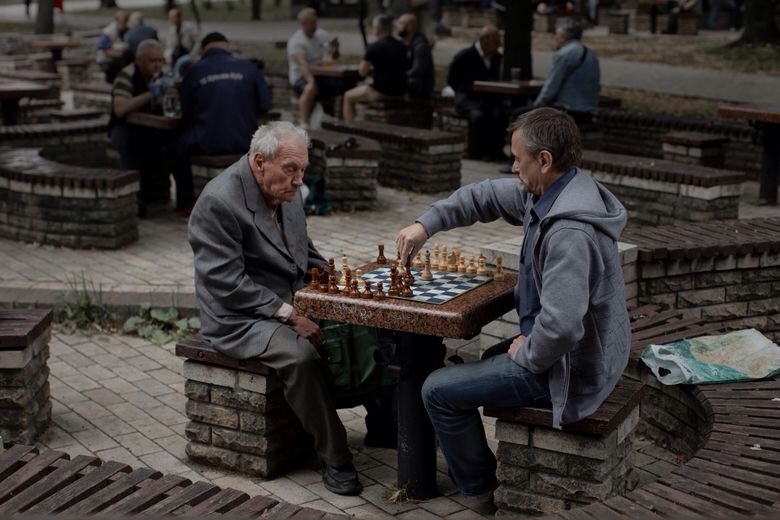
But as clever as Scott had been on the train, he nearly got us into big trouble in Kyiv. On an afternoon when we had some spare time between meetings, we decided to go for a stroll through a nearby park. We were delighted to come across two elderly gentlemen playing chess at a permanently-affixed stone table — a classic scene, just as you see in practically every movie about Russia. I talked to them for a few moments, introducing us as American visitors, and leaving with a traditional Russian farewell, “Vsevo khoroshevo” — “All the best.”
A little farther on, we came to the banks of the Dnieper River, and followed it for a while, enjoying the sound of the rushing water. And then we found ourselves at the edge of the park, on a quiet street alongside a large office building. Turning right, in the general direction of our hotel, I wondered what the building was used for, saying I was feeling an eerie vibe from it. Of course, Scott and Michelle laughed at me. So when we saw a local lady walking toward us, I stopped her and asked, “Excuse me, do you know what this building is?” Her facial expression changed dramatically as she looked all around and over her shoulder. Then she whispered, “KGB.” I just mumbled a quick “Thank you,” as she hurried on her way. I was right about that vibe, and didn’t hold back from rubbing it in.
But Scott had an idea of his own. When we reached the corner and looked at the side of the building, we saw the name clearly engraved above the entrance: Komitet Gosudarstvennoi Bezopastnosti — “Committee for State Security.” KGB. Suddenly calling out “Take my picture,” Scott went charging up the tall staircase to the landing at the entrance and struck a pose, shouting for one of us to snap a photo. Knowing that it’s never a good idea to photograph a government building in that part of the world — and especially the offices of an intelligence agency — I yelled at him to get the hell out of there and refused to photograph him. But he decided this was fun, and wouldn’t budge. Finally I convinced Michelle that we should just walk away, and after a momentary pause he grudgingly gave up and joined us.

And as we left, I noticed a car parked just yards from us, with two men seated in it. Just sitting . . . and watching. And I knew we had been spotted by KGB security. I quietly pointed them out to Scott and Michelle, both of whom finally realized that I hadn’t been joking and that we all needed to behave ourselves. The Soviet Union may have broken apart; but the KGB was, unfortunately, still very much alive. Needless to say, we had no further trouble with Scott on that trip.
In two days we had wrapped up the business side of our visit — my last one ever to Kyiv — and headed back on another long train ride to Moscow, this time with our return visas safely in hand. Scott and Michelle left for home a couple of days later, and I returned to what had become my “normal” life in Moscow.
*. *. *
As I said, the bureaucratic difficulties of those days of transition were minor in comparison to the agonies faced by the people of Ukraine since Vladimir Putin’s first invasion of 2014 and his unrelenting war of attrition now in its fourth year. I have been able to look back and laugh at those long-ago experiences.
But I’m not laughing now.

Just sayin’ . . .
Brendochka
3/24/25 (Originally posted 4/20/23)
 The Blog About Everything … and Sometimes Nothing