For one thing, it is the 108th anniversary of the day on which Tsar Nicholas II of Russia abdicated, leaving the largest country in the world in the hands of a provisional government that had no idea what it was doing.
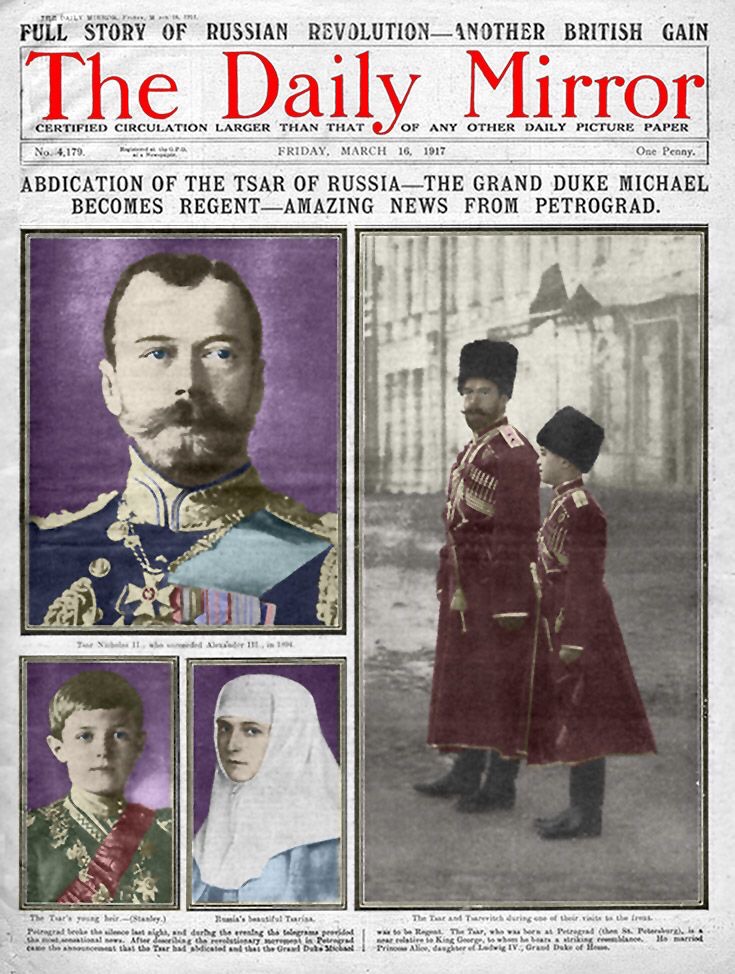
But according to the records of 1917, that actually occurred on March 2nd. And they should know . . . right?
So what happened to those other 13 days? Was there some sort of time warp? Did extraterrestrials take over Earth and change things around? Did the whole world do a two-week Rip Van Winkle thing?
Nope — it was none of the above. It was just Russia being behind the rest of the world, as usual. While everyone else had long since caught up with the Gregorian calendar (introduced in 1582 by Pope Gregory XIII), Russia in 1917 was still using the old Julian calendar.
Thus, what we now refer to as the Russian February Revolution actually took place — according to the people who actually lived through it — from March 8th through the 12th.
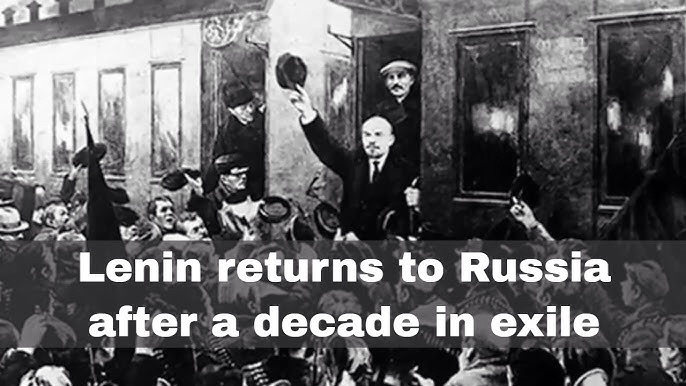
Of course, those events led up to the ultimately successful Bolshevik Revolution of November (October?) 1917, ushering in the 70-plus years of hell known as the Communist era of the USSR (Union of Soviet Socialist Republics).
*. *. *
But what about the two-calendar issue . . . what was that about?
Well, the Julian calendar was introduced by — who else? — Julius Caesar in 45 B.C.E., and was based on the solar cycle, rather than the former lunar cycle calendar. And for some 1,600 years, it served its purpose . . . until some learned advisors of Pope Gregory XIII discovered an error regarding the leap years, plus an 11-minute glitch in the current year, adding ten extra days more than they needed by that time. [“Julian & Gregorian Calendar Systems,” Study.com.]
Considering that the Russians continued to use the Julian calendar for another 300-plus years, that probably accounts for the extra three-day difference. It was actually the Bolsheviks — finally doing something useful — who instituted the use of the Gregorian calendar in 1918.
I have to wonder, though: What happened to all those Russians whose birthdays fell during that 13-day gap? Did they lose out on the gifts and cakes? Did they celebrate twice? Or did they simply remain the same age for another year? My guess — based on the way the Bolsheviks did things — is that they were all issued new documents with revised birth dates . . . a process that undoubtedly took at least a couple of years, further complicating their family celebrations in the interim.
*. *. *
If you’re wondering precisely what the difference is between the two calendars that caused all of the hubbub, it’s two-fold:
Julian Calendar: The leap year occurred every four years, without exception; and the average year length was approximately 365.25 days.
Gregorian Calendar: The leap year rule was a bit more complicated. The years divisible by 4 are leap years, except for years divisible by 100 unless also divisible by 400. And the average year length is approximately 365.2425 days.
Now, aren’t you glad you asked?

Just sayin’ . . .
Brendochka
3/15/25
 The Blog About Everything … and Sometimes Nothing