Well, that didn’t take long.
Two days ago, on March 11th, delegations from the United States and Ukraine met in Jeddah to discuss possible means of ending Russia’s brutal war against its neighbor. Following the meeting, it was announced that Ukraine had agreed “to enter into a ceasefire and enter into negotiations to end this conflict in a way that is enduring and sustainable.” [Paul Adams, BBC, March 11, 2025.]
Donald Trump added that, “Hopefully President Putin will agrees to that also.” And from Secretary of State Marco Rubio we heard: “The ball is now in Russia’s court.” [Id.]
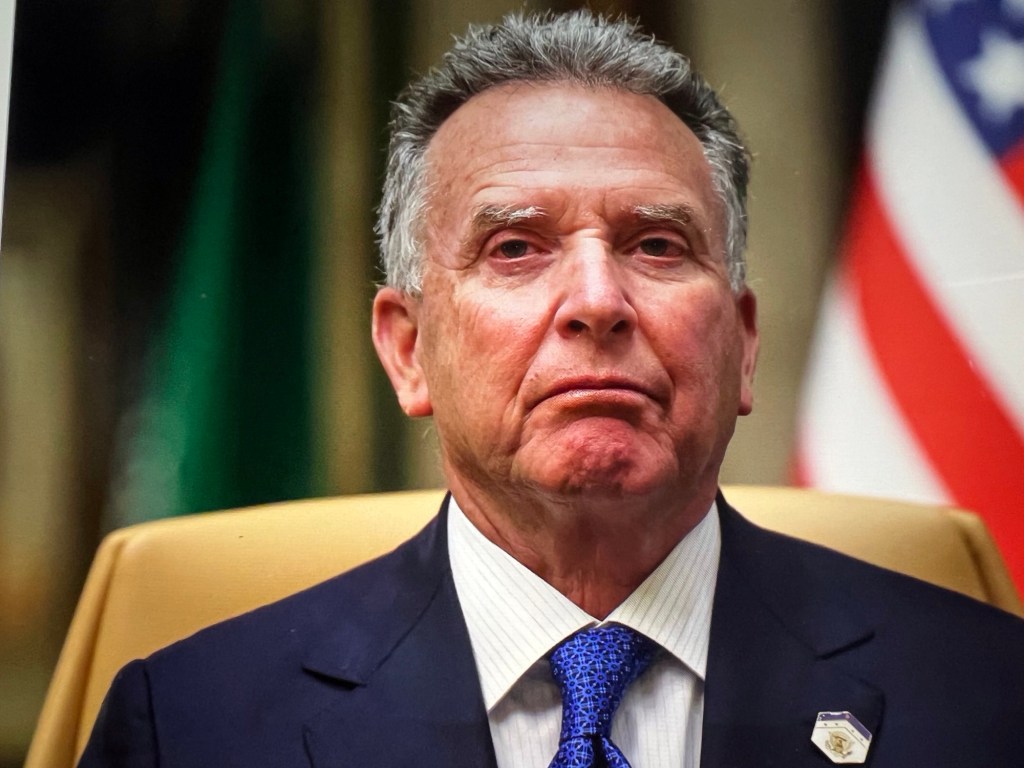
A U.S. negotiating team — headed by White House envoy to the Middle East (and apparent Russia expert-come-lately), billionaire real estate developer and investor Steve Witkoff — was immediately scheduled to leave for Moscow.
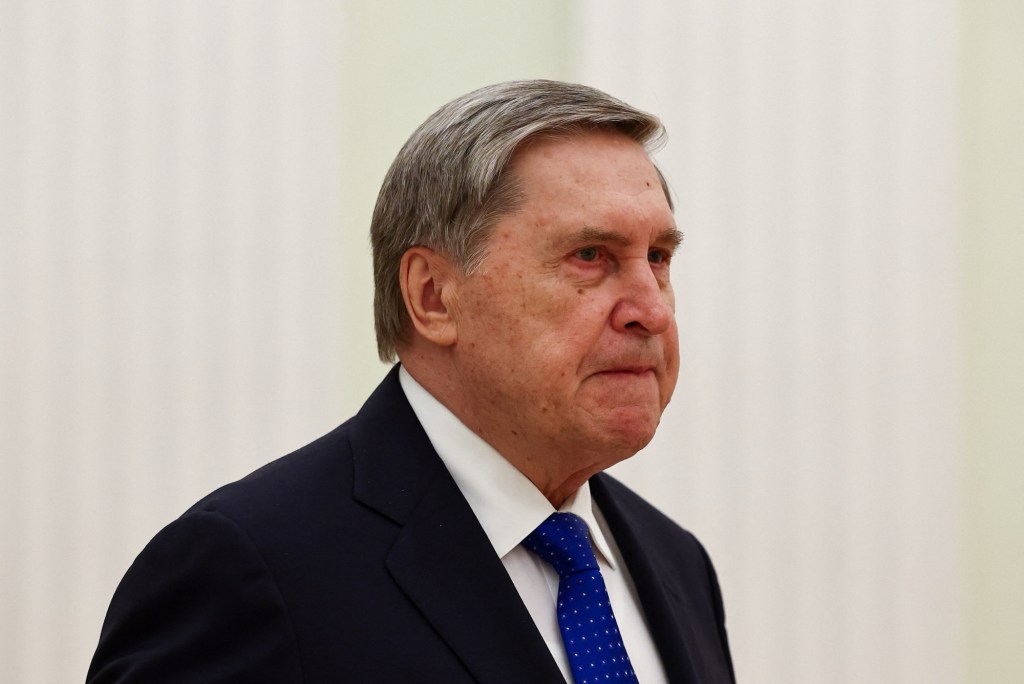
A key provision of that agreement in Jeddah was a 30-day ceasefire to allow time for negotiations to begin between the U.S. and Russia. But today, barely two days after the Jeddah talks and while the U.S. delegation was en route to Moscow, the world heard from Yuri Ushakov — Vladimir Putin’s advisor on foreign policy issues and former Russian Ambassador to the United States — that Putin has rejected any temporary ceasefire on the grounds that it would only serve to allow Ukraine time to recover militarily:
“I have stated our position that this is nothing other than a temporary respite for the Ukrainian military, nothing more. It seems to me that no one needs any steps that [merely] imitate peaceful actions in this situation.” [RFE/RL, March 13, 2025.]
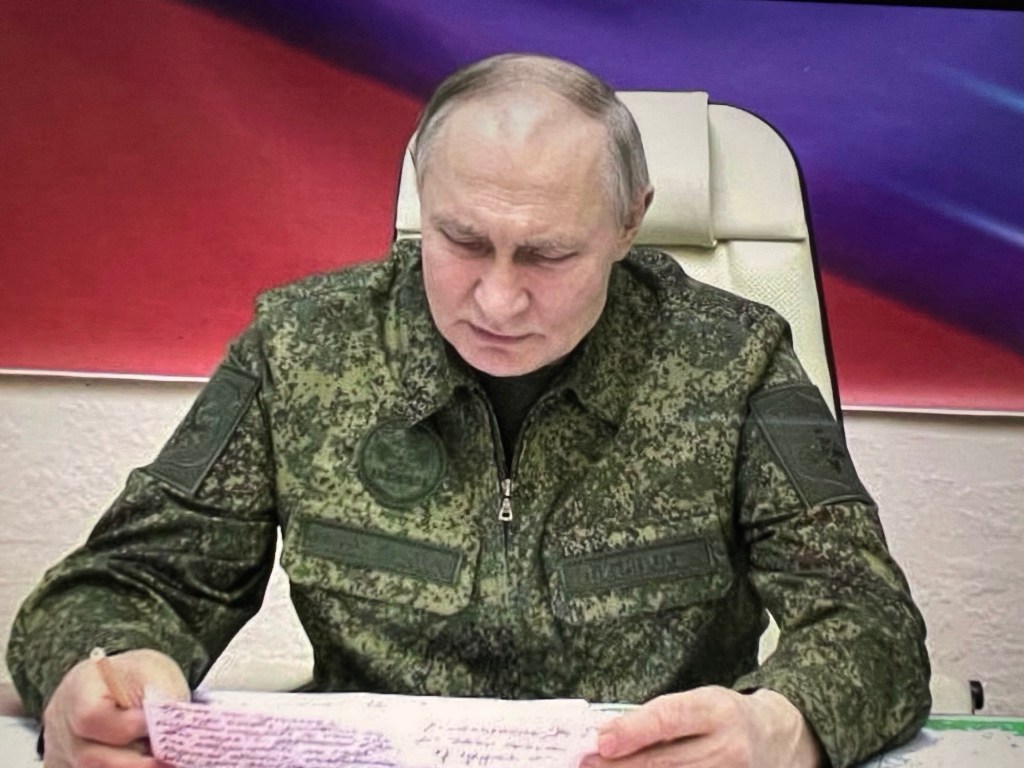
And today, Putin himself held a news conference in which he said he has “reservations” about any such short-term ceasefire. While he described the U.S. proposal as “great and correct,” he went on — not unexpectedly — to say:
“We agree with the proposal to cease hostilities but we have to bear in mind that this ceasefire must be aimed at a long-lasting peace and it must look at the root causes of the crisis.” [Lauren Kent, Anna Chernova, Daria Tarasova-Markina, Ivana Kottasova, Katharina Krebs and Matthew Chance, CNN, March 13, 2025.]
Obviously, he continues to identify Ukraine as the “root cause” of his “special military operation,” as well as the earlier 2014 invasion and continuing occupation of the Crimea Peninsula — a territory both geographically attached to Ukraine and ceded to it by then-Soviet Premier Nikita Khrushchev in 1954.
*. *. *
Putin expressed particular concern about the effect of any ceasefire on the Russian region of Kursk, a small part of which has been occupied by Ukrainian forces since August of 2024, and which Russia has been fiercely — and with some success — attempting to reclaim. He asked:
“What will we do with this area in the Kursk region — if we stop military actions for 30 days, does this mean that everyone who is there will leave without a fight? Should we release them from there after they have committed a lot of crimes against civilians?” [Id.]
Notably missing from his comments was any mention of the atrocities committed by Russian forces against Ukrainian civilians over the past three years. But . . . oh, well . . .
And he continued:
“[Kursk] is completely under our control and the group that invaded our territory was completely isolated. . . . How will other issues be resolved along the entire contact line, which is almost 2,000 kilometers [1,240 miles]?” [Id.]
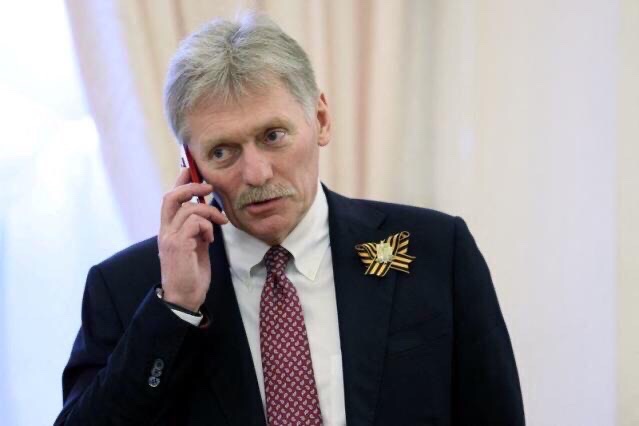
And then — never to be sidelined for long — in rushed Kremlin spokesman Dmitry Peskov with a clarification, assuring the world that Ushakov’s remarks about a ceasefire should not be seen as Russia’s rejection of the U.S. proposal, but that Moscow is awaiting further, direct information on the proposal before coming to any decision.
Don’t these people talk to each other before going public?!!
*. *. *
Of course, the subject of NATO is also still on the front burner, with Moscow continuing to insist that the presence of troops from NATO countries in Ukrainian territory — whether under their individual countries’ flags or the flag of NATO — would be an impossibility. In the words of Russia’s Foreign Ministry spokeswoman, Maria Zakharova:
“For us, it is absolutely unacceptable to deploy units of the armed forces of other states in Ukraine under any flag, whether it be a foreign contingent, military bases, or some peacekeeping operations . . . [and Russia would respond] with all available means.” [Id.]
And in an equally enigmatic tone, U.S. Secretary of State Marco Rubio, when asked on Wednesday about the possibility of European troops acting as peacekeepers in Ukraine, responded:
“There’s different ways to construct a deterrent on the ground.”

*. *. *
So, in a nutshell, it’s politics as usual. As for the negotiations . . .
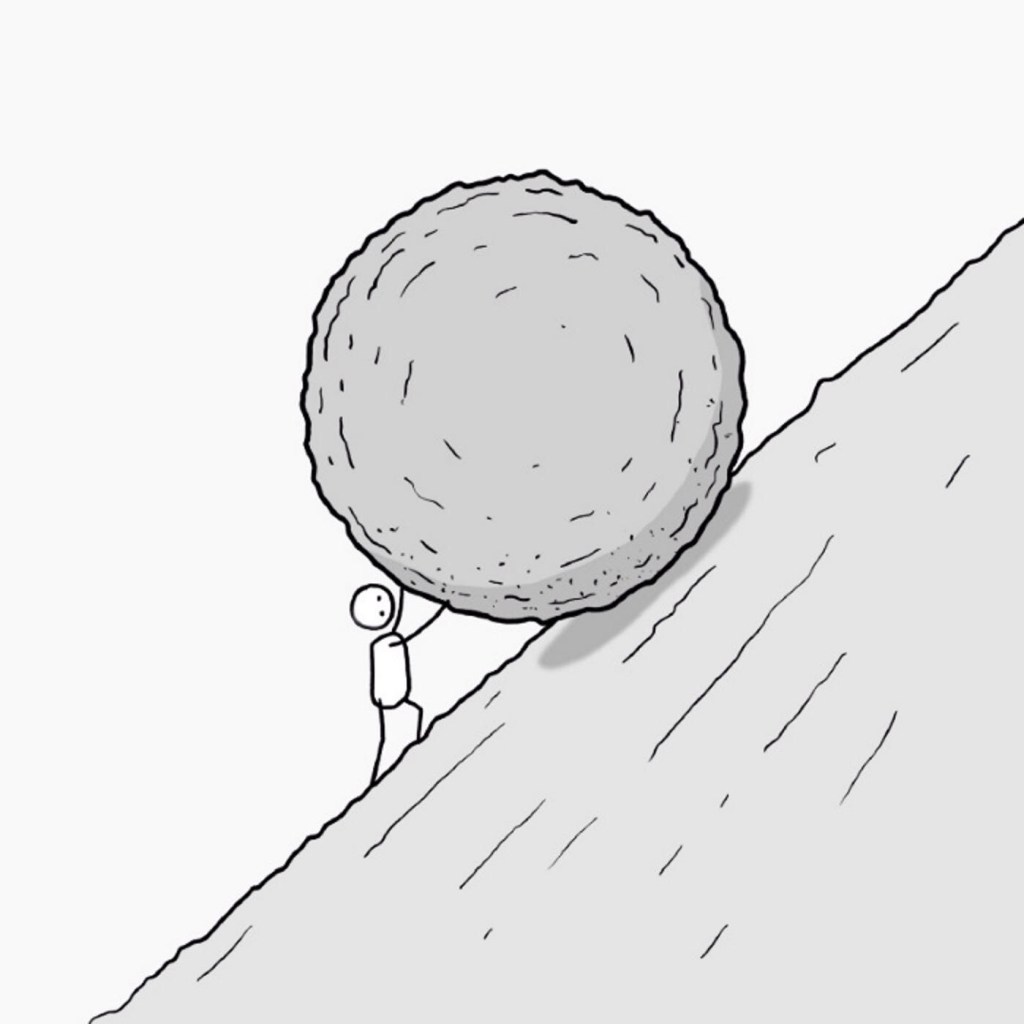
“Let the games begin.“
Just sayin’ . . .
Brendochka
3/13/25
 The Blog About Everything … and Sometimes Nothing