I call him Cassius, because . . . well, because he looks as though he might be plotting Caesar’s murder.
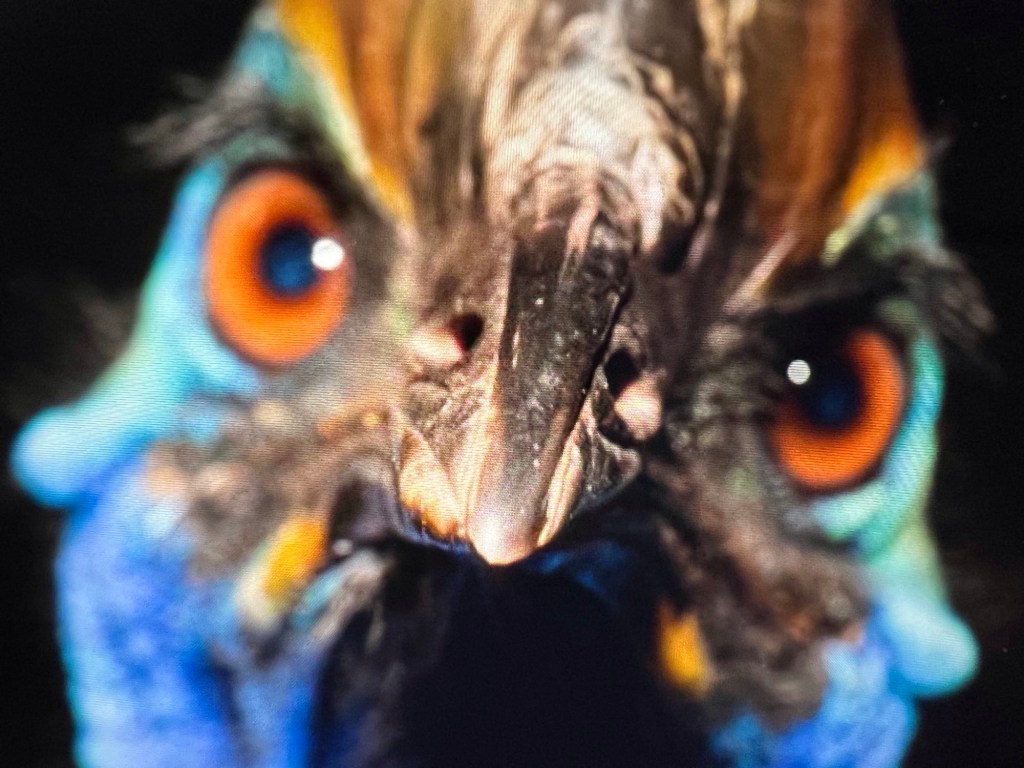
All right . . . enough Shakespeare, enough Cassius and Brutus and stabbing in the Forum. This is about the star of tonight’s show.
I just happened across an article about “the only animal Australians are afraid of” . . . and it turns out to be a bird. Granted, a very large bird, with a fearsome beak, terrifying horns, and talons that will not just scare the crap out of you . . . they’ll rip it out.
Now, from everything I’ve read, and heard from people who have been fortunate enough to visit Down Under, Australians are a hardy lot. They have to be, because they share their beautiful country with some very exotic — and really frightening — wildlife, including every kind of poisonous snake and spider known to mankind (that last one being my personal worst nightmare) . . . and, as though that weren’t enough, they’ve even made up a fictitious creature they call the Drop Bear.
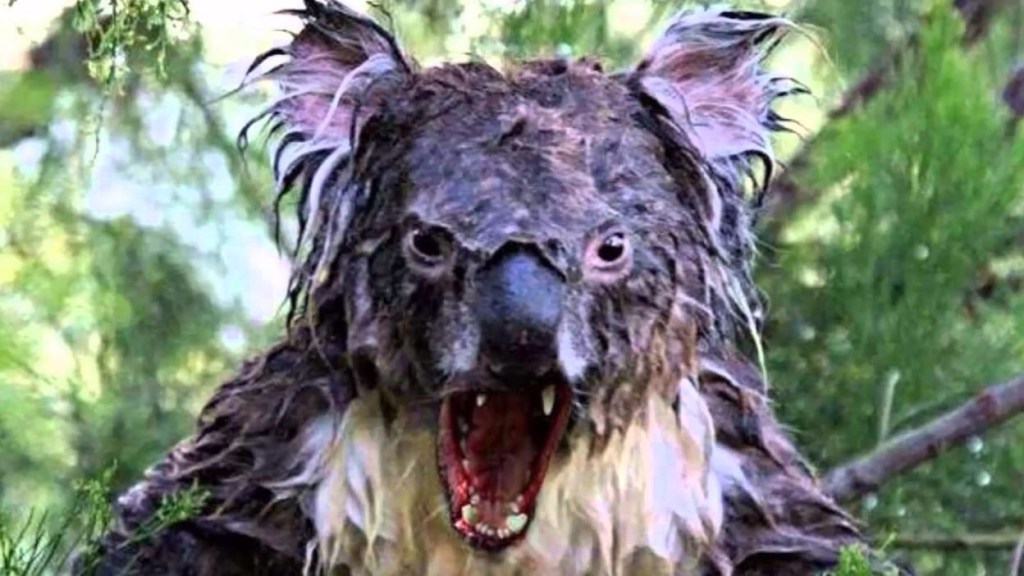
But the one they’re said to be most afraid of is today’s subject: the cassowary. Like its better-known cousins, the emu and ostrich, the cassowary is flightless; but don’t ever try to outrun it, because it can clock up to 30 miles an hour on foot.
They tend to prefer life in the deep rainforest, away from humans (and who can blame them for that?). They’re very family-oriented: like penguins, the females lay the eggs and then leave the rest up to dad; the males incubate the eggs and raise the hatched chicks. I rather like that idea.
They’re frugivores — the animal kingdom’s equivalent of the human “fruitarian” — consuming dozens of fruits each day and then pooping out the seeds, which then scatter and regrow. So they’re very good for the Australian ecosystem. But they’re not above grabbing a burger if you happen to have stopped by McDonald’s on the way to the forest.
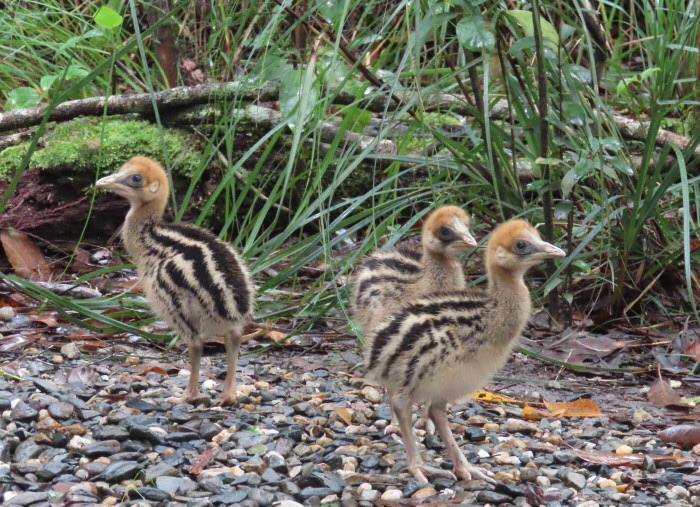
Don’t let the cuteness of the chicks fool you, either; they will grow up to be just as dangerous as their parents, but apparently only if they feel threatened . . . or hungry. According to Peter Rowles, founder of the Community for Coastal & Cassowary Conservation (C4, for short), “Many more cassowaries die from humans than humans die from cassowaries.” [Lilit Marcus, CNN, February 24, 2025.]
A 2001 Journal of Zoology study said that humans offering food to cassowaries accounted for 75% of the dangerous encounters between man and bird. “The feeding of cassowaries appears to change their natural behavior, making them bold and aggressive,” according to author Christopher P. Kofron. He added that “in the single fatal attack, the victim was trying to kill the cassowary.” [Id.]
Clearly a case of self-defense. That’s at least somewhat comforting, don’t you agree?
Oh . . . apparently you don’t! Well, okay, then.
*. *. *
One of the world’s largest birds, the cassowary looks like a leftover from a prehistoric age. It’s as tall as a person, has glossy black feathers and piercing eyes, walks (and runs) on two feet, can weigh up to 140 pounds, and has a large, dagger-like claw on each foot.
Andrew Mack spent five years studying the cassowaries in the wild in Papua New Guinea. He says, “There’s just something primeval about them. They look like living dinosaurs.” [Id.]
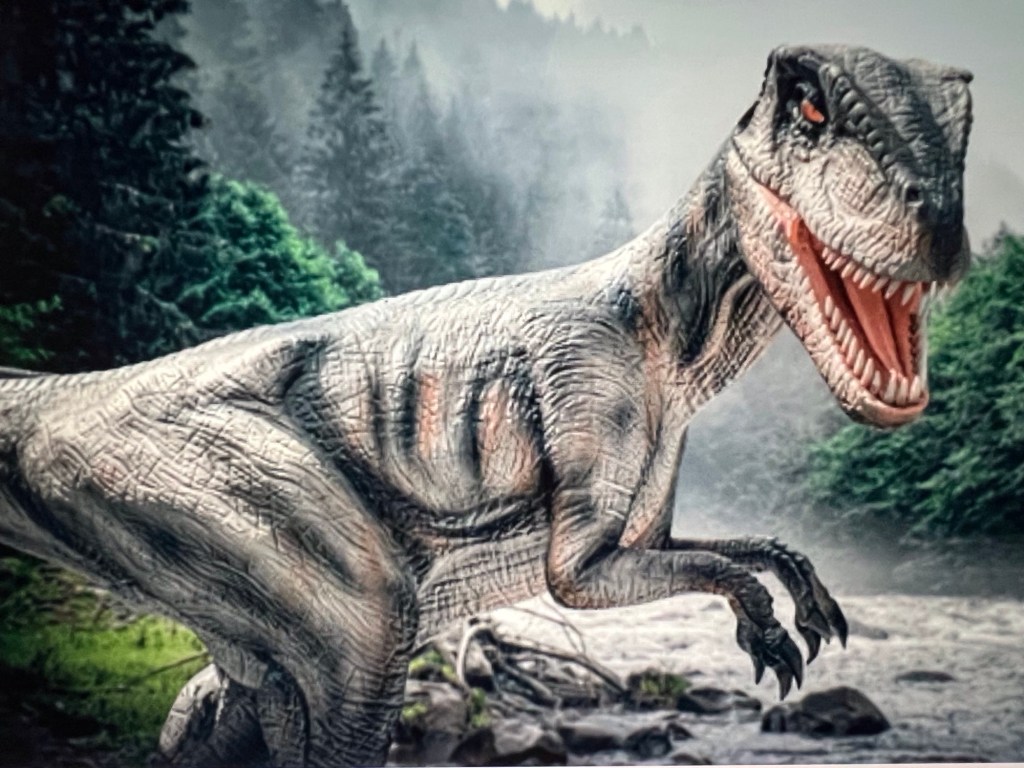
So if you happen to be strolling through the Australian rainforest one day and run across one of Big Bird’s ancient kin, what do you do? Peter Rowles’ advice is this:
“If you encounter a cassowary in the wild, first thing is put your hands behind your back. Be as boring as you can be, so you’re not attracting that cassowary’s attention. Move behind a tree. Just blend into the environment. Don’t scream and yell and wave your arms around. If you’ve got food in your hand, put it in your pocket, put it behind you, put it out of sight. It’s better to do that and be boring than to be seen as a potential source of more food.” [Id.]
Uh . . . yeah. Good advice. However, I tend to be more the run-around-screaming-and-waving-my-arms sort when suddenly confronted by something that looks like this . . .
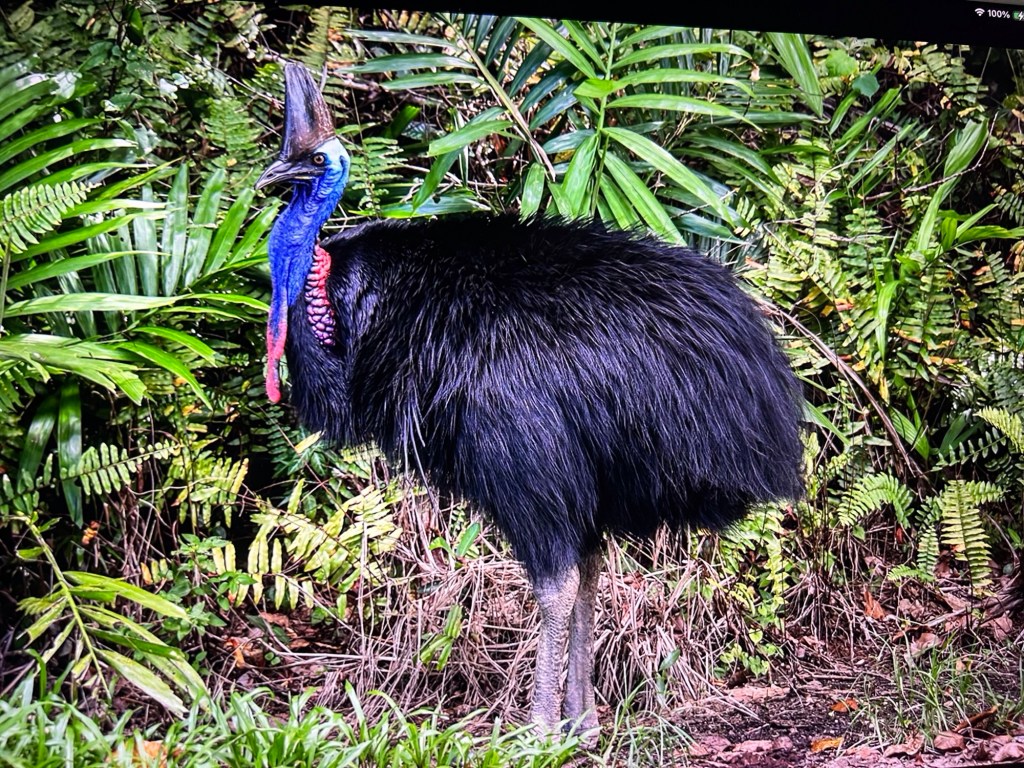
. . . and isn’t in a cage in a zoo. So maybe I’ll just stay out of the rainforest, if that’s all right.
*. *. *
While boning up on this extraordinary creature, however, I began thinking of the late, great Ogden Nash and what he would have made of our friend Cassius; and I suddenly had an urge to break into verse (of a sort). I could never hope to compete with his brilliant wit, but here’s what came to my mind in the wee hours of the morning:
If you encounter a cassowary,
You’ll see that it looks very scary.
Its beak is long, its talons deadly,
Its disposition . . . not so friendly.
So my advice, and you should try it,
Is hide behind a tree, be quiet;
Don’t run around or shout or squeal,
Or you might be that bird’s next meal.
See? I told you I was no Ogden Nash. But be honest . . . it took your mind off the daily news for a few minutes, didn’t it?
And these days, that is a very good thing.

Just sayin’ . . .
Brendochka
2/25/25
 The Blog About Everything … and Sometimes Nothing