The last time I looked in on the Feenstras in Nizhny Novgorod, they were hard at work, both inside and outside their sprawling farmhouse. Today, however, I found them en route to Moscow for “a few days.”
Bright and early on a cold Monday morning, they all piled into the family van and headed out on the 365-mile trek to the capital, primarily to attend an agricultural exposition, but also to take a break from the farming and construction work and just “be tourists for a while.”
As they drove . . . and drove . . . and drove . . . Arend explained that they had “rented a little house” in Moscow, and would be there from that day (Monday) until Friday. There was no mention of how they had managed to make all the arrangements, or how a family of ten — still without a source of income and living on their savings from Canada for the past year — were able to afford five days in expensive Moscow.
I marvel at their ability to navigate through life in a strange country, with an unfamiliar language, and strict — often ambiguous and contradictory — laws on every imaginable subject. It is obvious that they have all the assistance they need, as well as that ever-present photographer, who most likely also acts as interpreter and guide.
But navigate they did, finally arriving at their rented house, in a gated residential community on the outskirts of Moscow.
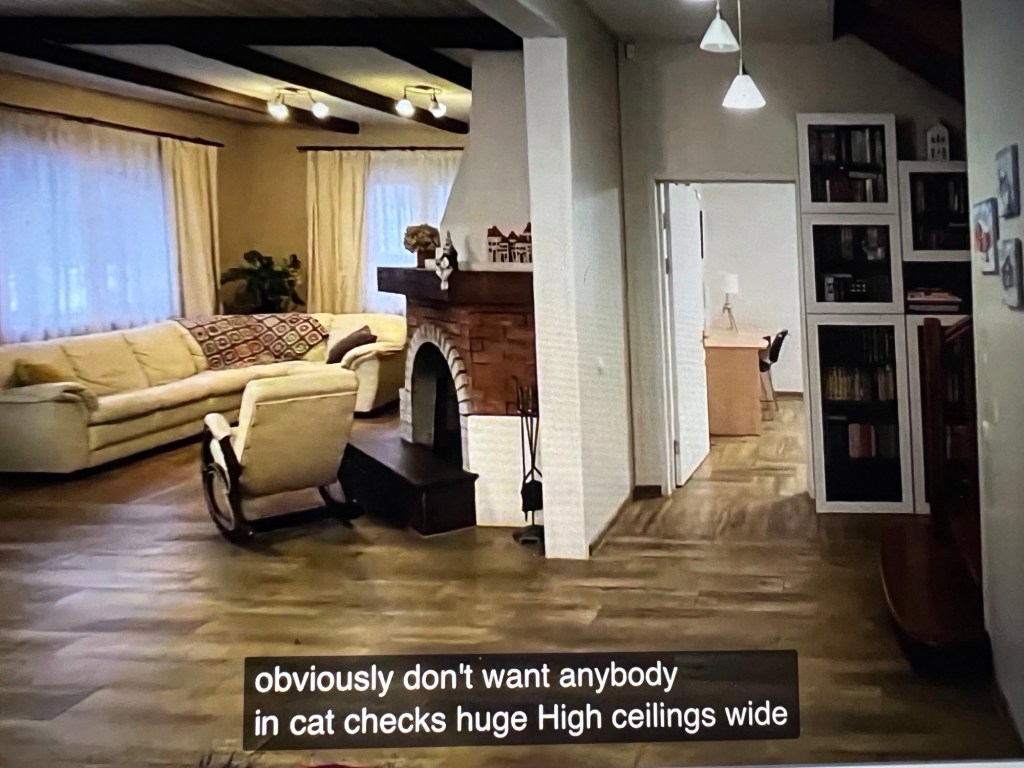

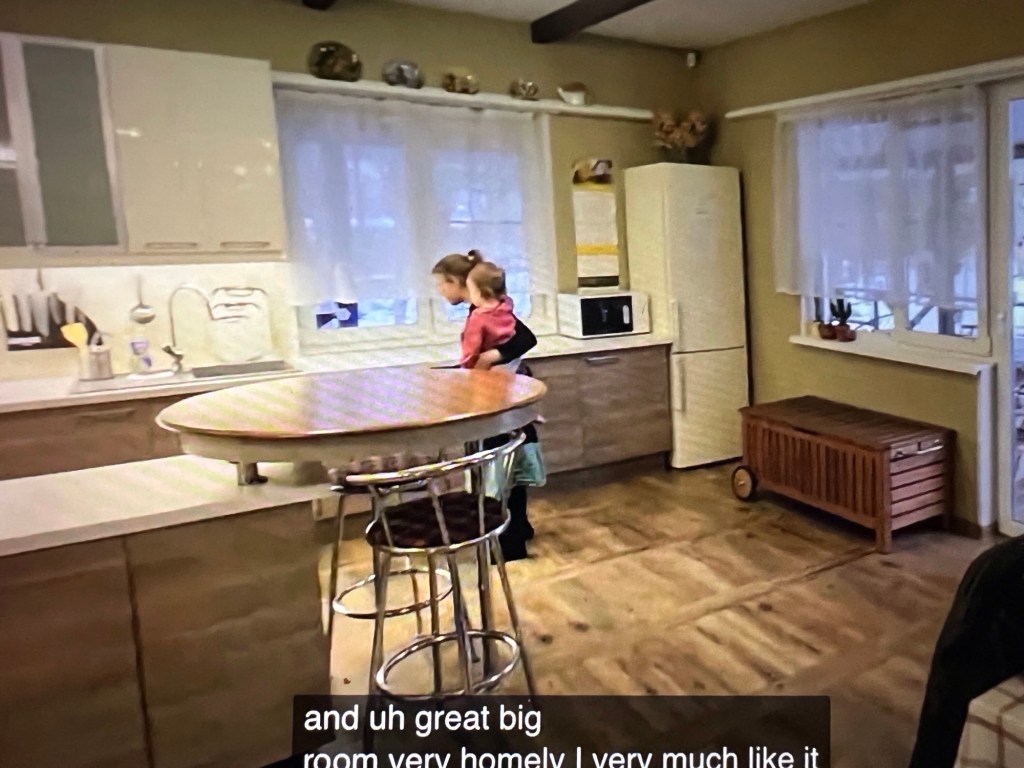
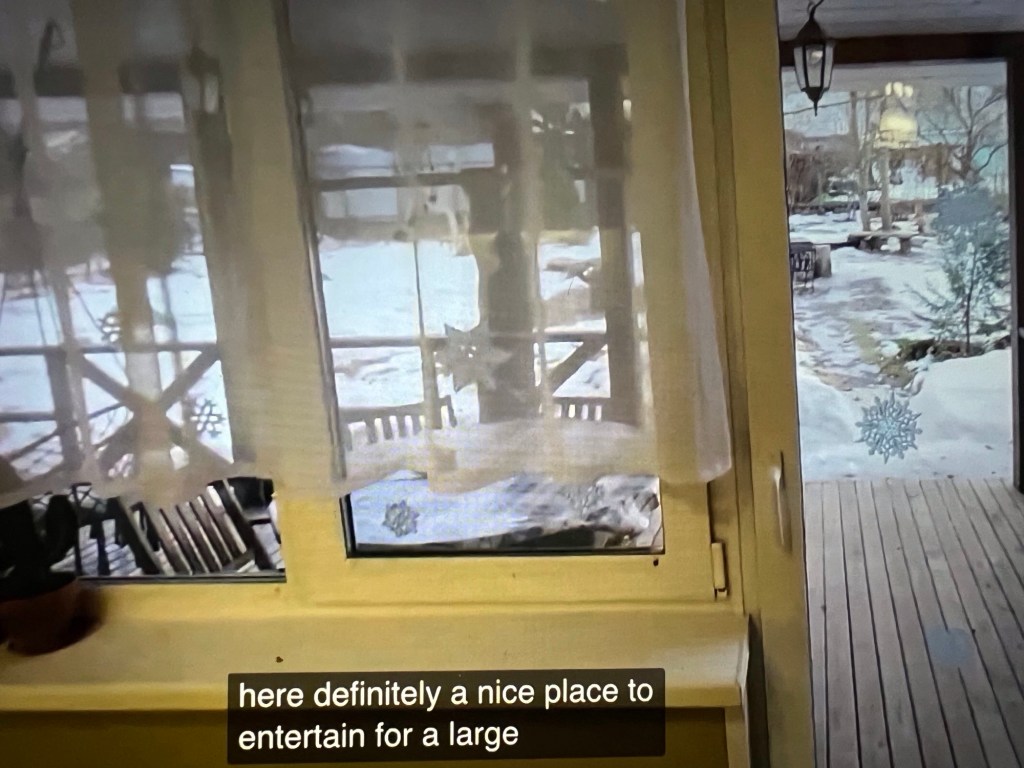
After a night’s sleep in what they described as a terribly overheated house (actually a common thing in Russia), they headed out the next morning for the agricultural expo, which was the main purpose of the trip to the city. They had a long walk from their neighborhood to the nearest train station, but managed to find it, figure out the ticket machine, and board the train to their destination . . .


The Crocus City Hall??!!!
Wait just a minute, please. That was where the horrendous terror attack that killed 145 people took place on March 22, 2024. “How is this possible?” — I wondered. It is still closed, and a decision as to when — or even if — it will reopen has yet to be announced.
Well, a little research into the multi-purpose location shows that it is only the music venue that was affected and is still closed. The expo center is very much in operation, and was the site of the huge agricultural display that was right up the Feenstras’ alley.

This was something they obviously found very interesting. I, being a city girl, did not, so I skipped right over most of it.
*. *. *
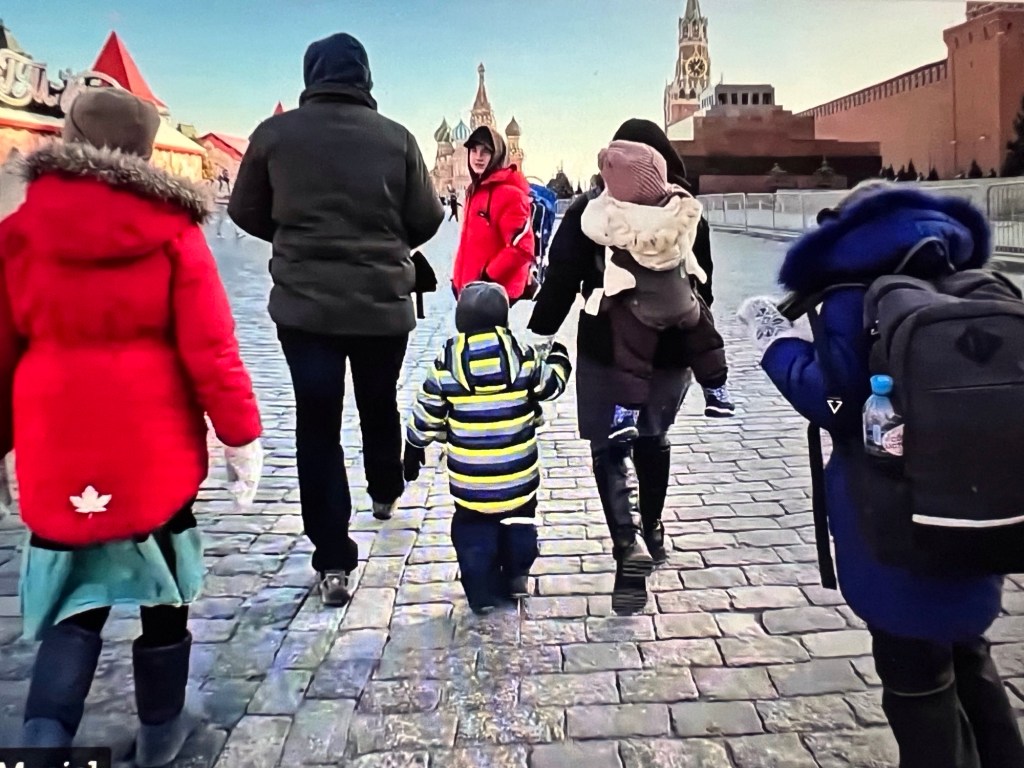
The second video of their excursion takes us on a strictly-for-fun sightseeing tour of the Red Square/Kremlin area.
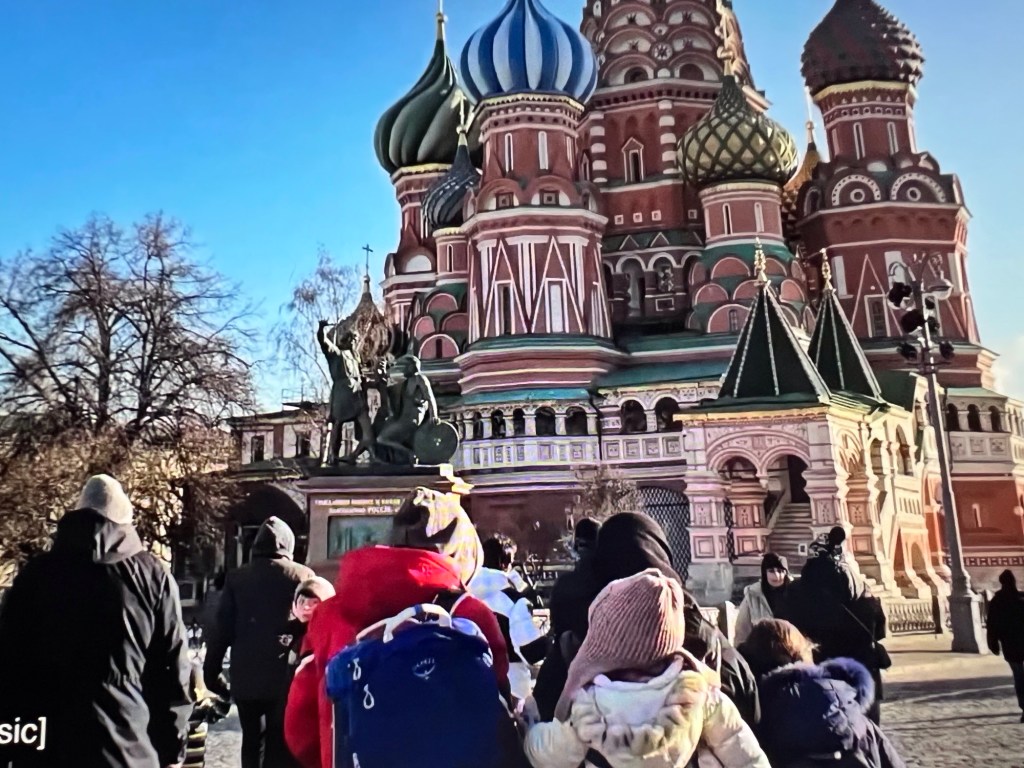
Though they did not make any reference to the Kremlin itself, they did wander at length through adjoining Red Square, taking in the architecture of St. Basil’s Cathedral, for whose creation the architect is said — according to legend — to have been ordered blinded by Tsar Ivan IV (Ivan the Terrible), so that he could never recreate it or anything equal to it in beauty.
Along one long side of Red Square (which is actually a very long rectangle) is GUM shopping mall. Arend kept commenting on the beautiful architecture and interesting “monuments” and “memorials,” though apparently without knowing what they were (for example, the Tomb of the Unknown Soldier outside the Kremlin wall); and he referred to the famous GUM as “some sort of indoor market.”
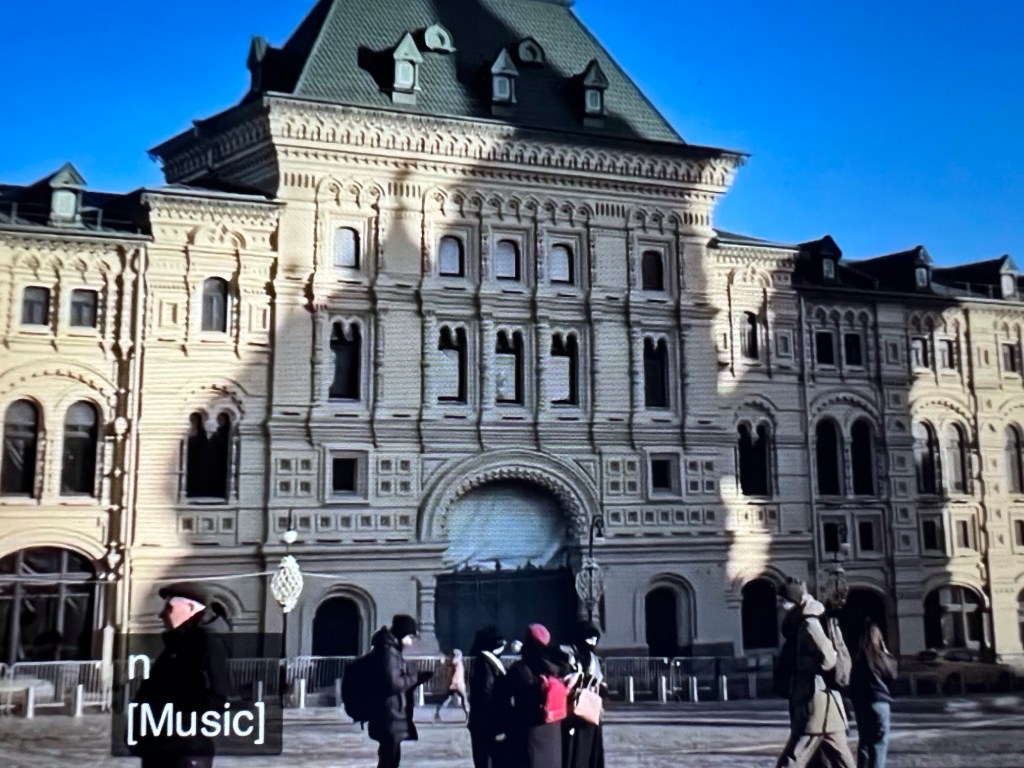
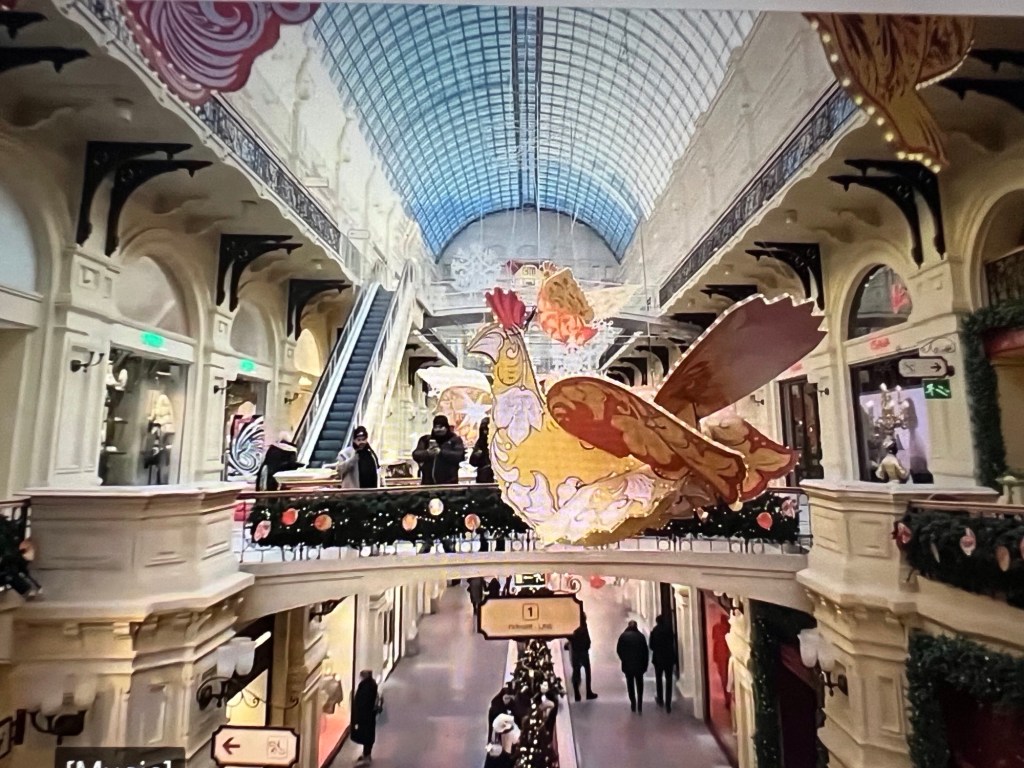
“Some sort of market,” indeed! In the days of my travels to Moscow (late 1980s to mid-‘90s), it was a musty old indoor mall, still lined with Soviet-era shops but beginning to upgrade to serve the new generation of Russian “biznessmen” and their arm-candy wives and girlfriends. Today, it is totally revamped and lined with high-end Western and Russian retailers, affordable only to the elite . . . though most of the Western shops have probably fled the country since the Russian invasion of Ukraine.
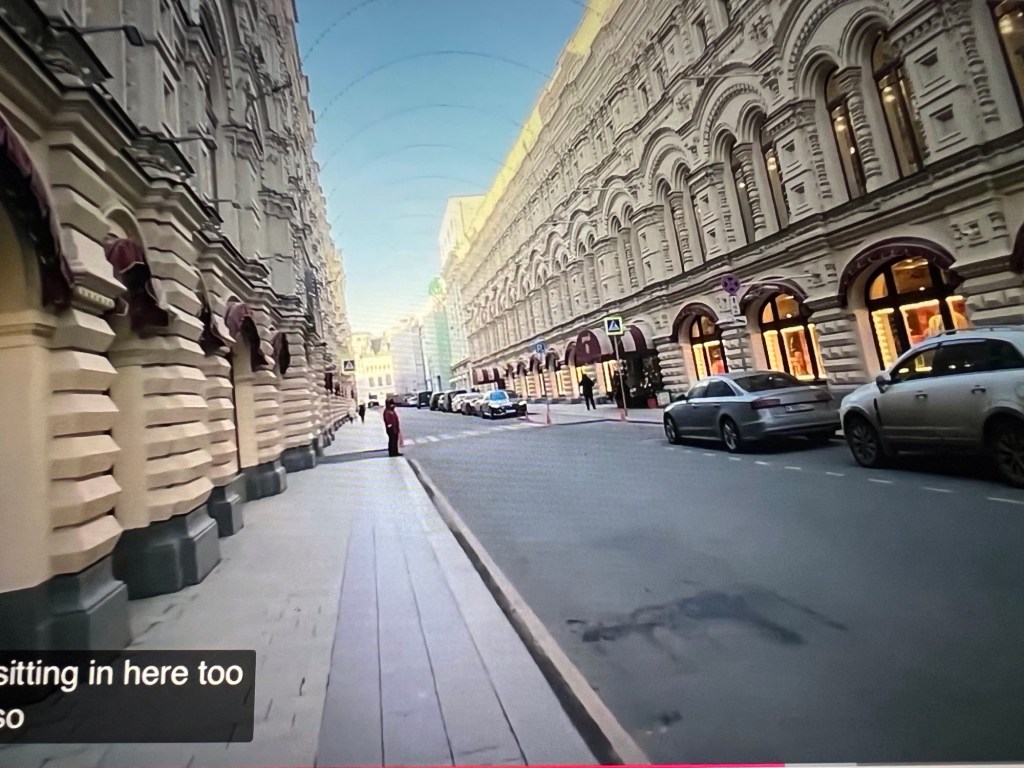
Next was a stroll down a long street lined with more upscale shops — probably Tverskaya Street (if memory serves correctly), followed by a leisurely lunch somewhere along the way.
Throughout the tour, I kept thinking that it was a shame they hadn’t been able to brush up a bit more on Moscow history before the visit, as they would have gotten so much more from the trip. But perhaps it all came about on short notice.
*. *. *
The oddest part of the story — and the one I find totally puzzling — was when the parents, Arend and Anneesa, went out that evening, sans children, for a “date night”: a musical performance of a Russian fairy tale. That entailed the long Metro/train/walk back to the house after sightseeing, getting the kids settled for the evening, and the parents then making the entire round trip over again — uncharacteristically leaving the children alone, in a strange and dangerous city, with . . . whom?

At any rate, they (Arend and Anneesa) did return to the city center and were able to find their way to the theater, where the sign read «Poslednyaya skazka» — “The Last Fairy Tale.” They filmed the outside and inside of the theater but not the performance (probably not permitted), and then . . .
End of story. Exiting the theater after the performance, Arend mentioned that it was about 9:00 or 9:30 p.m., and they were going to get something to eat before finding their way back to their family, because he was “starving.”
And that was it; tour over.
*. *. *
Some personal observations:
Central Moscow looks nothing like it did when I was last there (in 1994) — it’s all bright and shiny, clean and polished, and very expensive-looking. At least, the parts of it the Feenstras saw. It could be any European city: tall, modern, steel-and-glass buildings mixed in with the beautiful old architecture; flashy cars; expensive shops and gourmet restaurants; well-dressed people.
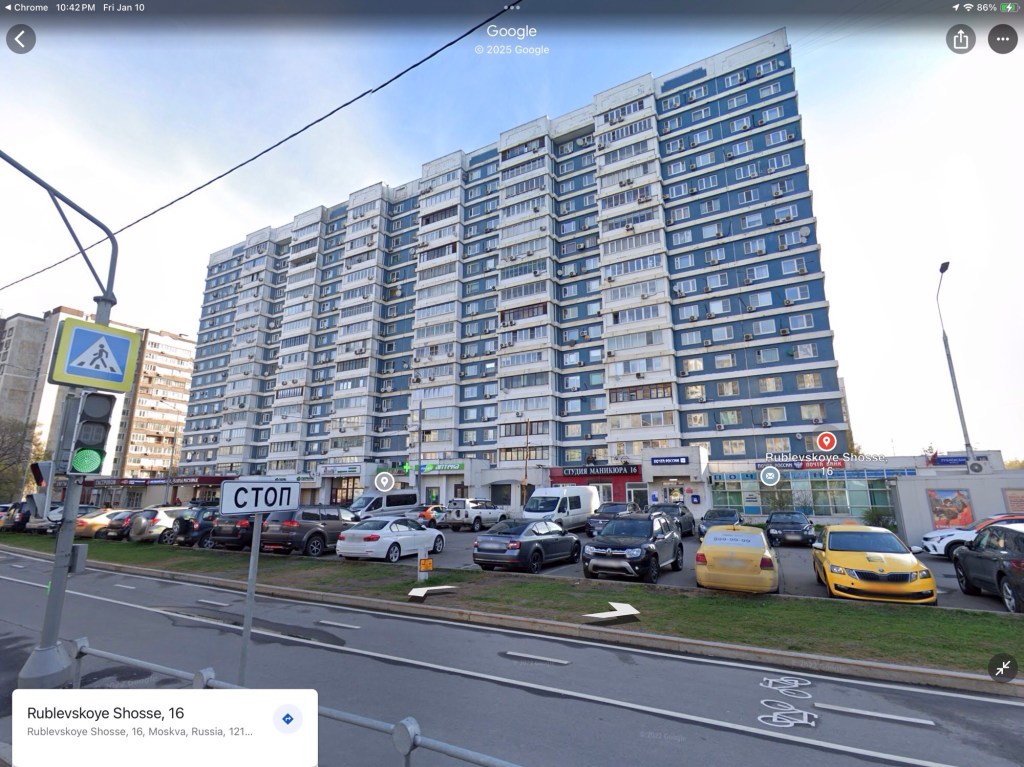
There was nothing shown of the lesser neighborhoods, the old Soviet-era apartment buildings, sad little shops, muddy sidewalks from the winter melt. But there wouldn’t be any purpose in showing those, would there?
As a matter of fact, other than the agricultural expo, there seemed to be no purpose in any of it. They’d been to Moscow before. They hate city life. The drive was long and tiring, and they lost five full days of work on their house and farm buildings, which are still works in progress.
As a piece of propaganda to attract more prospective emigre families, however, these videos could be useful. Is that what they are? Just another bit of the price Arend, Anneesa, and the eight little Feenstras are paying for being allowed to live and build their farm in the workers’ paradise?
I’m sorry to say, that’s what it seemed to be. I hope I’m wrong.

Just sayin’ . . .
Brendochka
1/30/25
P.S. As I was finishing this piece, I took another look at the day’s news and saw that several regions in Russia — including Nizhny Novgorod — had been struck yesterday by Ukrainian drones. In Nizhny, a drone apparently fell onto a fuel and energy complex in an industrial area, but no injuries or major damage were reported.
Luckily for the Feenstras, they live in the countryside, away from any likely targets. But Putin’s war against Ukraine is drawing return fire, and getting too close for comfort.
I wish the family well.
 The Blog About Everything … and Sometimes Nothing