I was just a tiny tyke when World War II ended in 1945, but there are a few images — sort of mental screen shots — that managed to implant themselves in my young mind: movie newsreels of Japanese soldiers, U.S. war planes, and “Herr Schicklgruber,” (as Adolph Hitler was often referred to); the banner in my grandparents’ front window with a star for each son and son-in-law fighting overseas; and, at long last, dancing happily around the apple tree in our front yard when my mother shouted out the news to my older sister that the war in Europe was over.
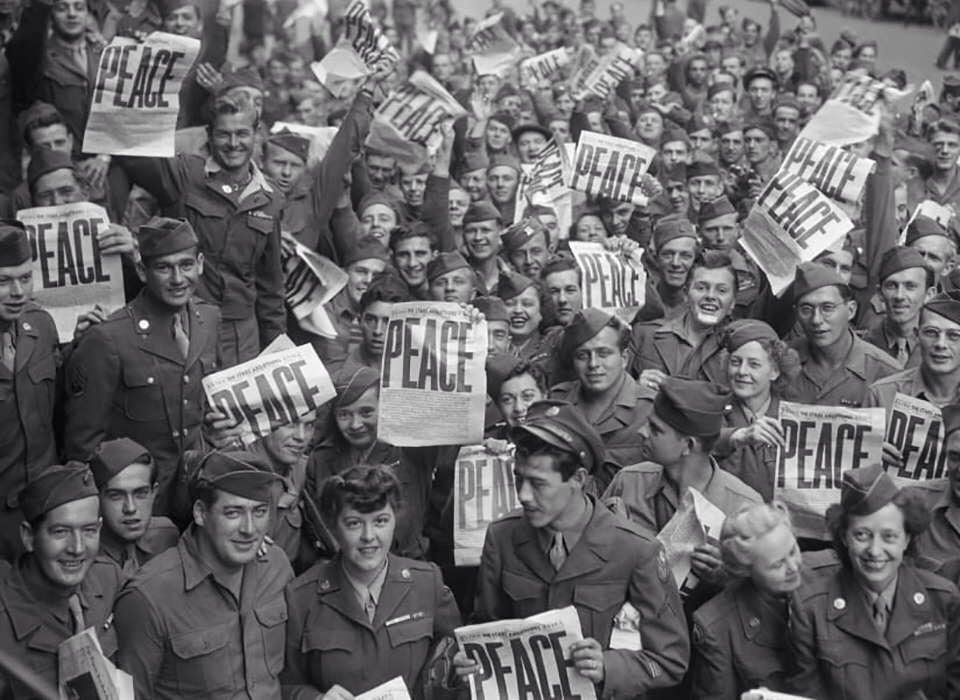
And I recall rationing of staples like butter and sugar; saving our newspapers for the paper drive; and everyone driving more slowly in order to save gas and reduce wear on the car’s tires.
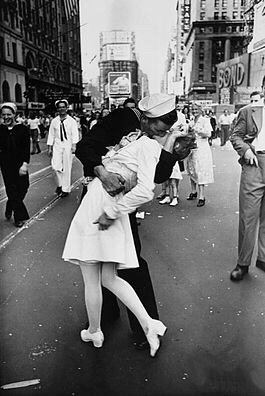
And wondering whether it might have been my seaman uncle in this famous picture from Times Square on V-E Day. (It wasn’t.)
But as I recall growing up through the 1940s and ‘50s, I remember other things . . . feelings, mostly. Like the comfort of knowing that our neighbors, in addition to our families, were looking out for us kids. And being taught that studying hard would lead to better jobs and better lives in the future. And the absolute belief that our parents and teachers knew what was best for us — even when we were being punished for some infraction of the rules.
And the respect and compassion that adults had for one another . . . and for themselves. You didn’t strike out in anger because someone disagreed with you; you didn’t call another person a scumbag, or a liar, or a thief — unless you had absolute proof that the person was indeed a thief. And you didn’t make fun of another individual’s looks, or disabilities or shortcomings, or their political or religious beliefs. Because that would have been mean, and meanness was bullying, and bullying was unacceptable.
Of course, there was no internet then, and no social media to hide behind. If you had a gripe with someone, you had to confront that person and discuss it face-to-face, or avoid them completely. It took guts to stand up to someone . . . and even more to call a truce.

The world I grew up in had heroes: real ones, like Franklin Roosevelt, Winston Churchill, and Harry Truman. We trusted our leaders to honor their pledges, and to take care of our world for us . . . and they did. Their self-interests were secondary.
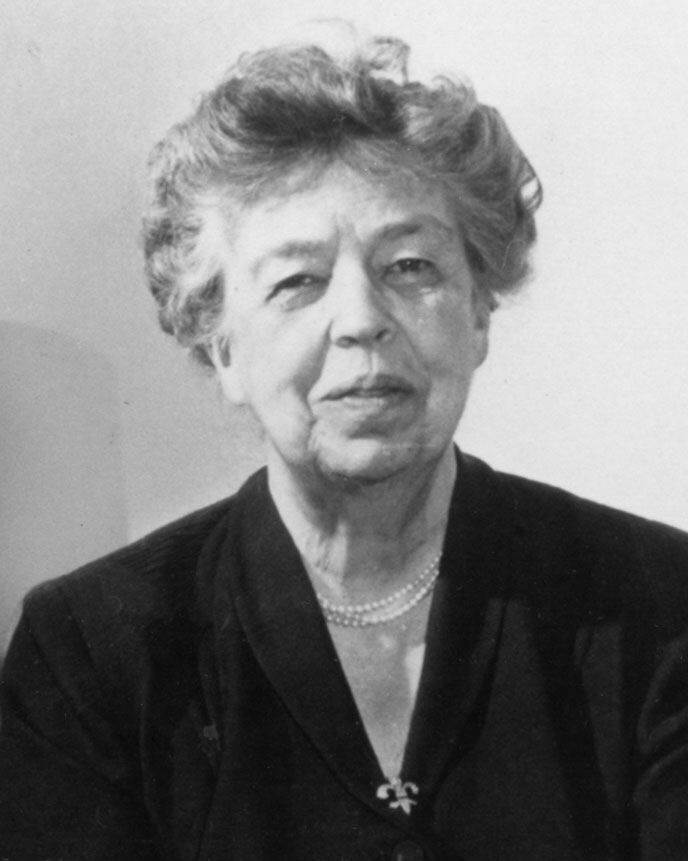
Even our fictitious heroes were the good guys: Superman, the Lone Ranger, and any character played by Gary Cooper. Our movie heroines may have been a bit unrealistically portrayed as frail, pure and chaste; but our real-life heroines were strong and smart, like Eleanor Roosevelt, Amelia Earhart, and Golda Meir.
*. *. *
I suppose a nostalgic longing for the “good old days” is a normal part of growing older. And life was never perfect — not in any generation, or any century. But if I had to choose one aspect of my childhood and early adulthood that is missing now, and that I would give anything to bring back, it would be this:
Respect.
Because without it, we are not truly human.
Just sayin’ . . .
Brendochka
1/13/25
 The Blog About Everything … and Sometimes Nothing