What was the world like before the advent of the internet, hand-held devices that are smarter than we are, and that miracle of connectedness: social media? I can hardly remember.
But in some parts of the world, all of that accessibility to information and communication has proven a hindrance to the sort of control a government might need to exercise over its citizens. Take Russia, for example.
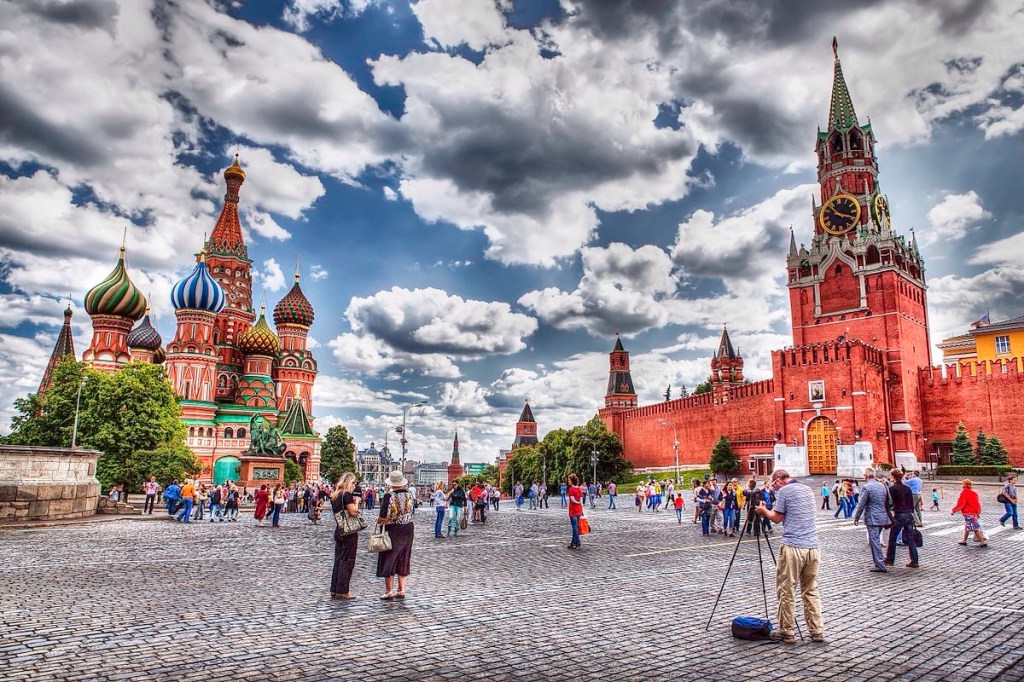
Yes, that’s the place. That’s Red Square above, with St. Basil’s Cathedral on the left, and one side of the massive Kremlin Wall on the right. Beautiful, isn’t it? And oh, so misleading.
Because behind those impenetrable walls sits a man who for the past quarter-century has gradually tightened the reins on the Russian people until life for most has again begun to feel like a replay of the old Soviet days: more restrictive laws, people being thrown into prison simply for saying the wrong thing, friends and relatives turning against each other. And now, a giant roadblock on the information highway.
Unless you know the right people, of course.
Tuesday’s news brought word of the “de facto” blocking of YouTube traffic in Russia, down to a mere 20 percent of its “normal” levels, according to a Telegram post by Mikhail Klimarev, director of the non-profit Society for the Protection of the Internet. That post also stated that Russian authorities had begun deliberately slowing down the service in July of this year. [Current Time, December 23, 2024, as reported by RFE/RL, December 24, 2024.]
And in the city of Surgut, a resident who spoke on condition of anonymity said that YouTube has been “inaccessible for some time. I first noticed YouTube becoming frustratingly slow in the summer, now it is simply impossible to open.” [RFE/RL, December 24, 2024.]
Russian authorities, of course, have said the problems were caused by Google’s failure to upgrade its equipment. Anonymous sources in the Russian government have said otherwise, as have YouTube’s own representatives. [Id.]
Vladimir Putin reinforced Moscow’s claims last week, and further addressed the subject at his annual call-in news conference on December 19th by demanding that YouTube and its parent company, Google, obey Russia’s laws and not use the internet as a tool to “achieve [the U.S.] government’s political goals.” [Id.]
But how to explain the fact that other social media platforms, such as Facebook and X, are also blocked in Russia? I suppose those were due to the providers’ equipment malfunctions as well.
*. *. *
And even more puzzling is the question of how, just last month, my blog — which is posted on Facebook — was read by two individuals from Russia. That was only the third time in two years that that has happened. I’ve had viewers from all over the world — various countries throughout the Americas, Europe, Asia, Africa, the South Pacific — though not from the penguins in Antarctica. And only three times from Russia, with just the one time since the media “blackout.”
The feedback I receive on my blog lists only the country of the viewer, and not the specific location. That’s okay . . . I don’t want to invade anyone’s privacy. I’d just like to know who’s been reading me in Russia . . . and how they’ve managed it.
Unfortunately, I know I can’t expect an answer. I just thought I’d ask.

Just sayin’ . . .
Brendochka
12/27/24
 The Blog About Everything … and Sometimes Nothing