Traditionally, royalty has always married royalty; and this has been especially true in the royal houses of Europe. There’s nothing strange about that — it’s a class thing.
But there are problems that, over the centuries, are inevitably going to arise when an heir to one throne has to wonder whether his feelings for, say, the daughter of another country’s monarch might actually be . . . well . . . almost incestuous.
Case in point (though happily not a case of impropriety):

In yesterday’s news, it was announced that Grand Duke Henri of Luxembourg, age 69, following a reign of 24 years, has renounced the throne of his country in favor of his son, Prince Guillaume, age 43. There was no scandal; Henri is not known to be ill. He is merely following in the footsteps of his late father, Grand Duke Jean, who passed the torch — or scepter — to him on Christmas Eve of 1999.
In his speech to the people of Luxembourg this week, Henri said:
“When I look back today, after almost 25 years, I do so with deep gratitude and humility. It has been a period during which Luxembourg has made much progress, and I am pleased to have been able to be part of that journey with you.” [Chris Benson, UPI, December 25, 2024.]
Tradition.
And as I looked at the article, and at the accompanying picture of the retiring monarch, my eye saw — not a Grand Duke of Luxembourg —
but a long-deceased King of England: George VI, father of the late Queen Elizabeth II.
“Now, that’s just plain spooky,” I thought.
So I immediately went into research mode and Googled old King George, and this is what came up — just as I had recalled:
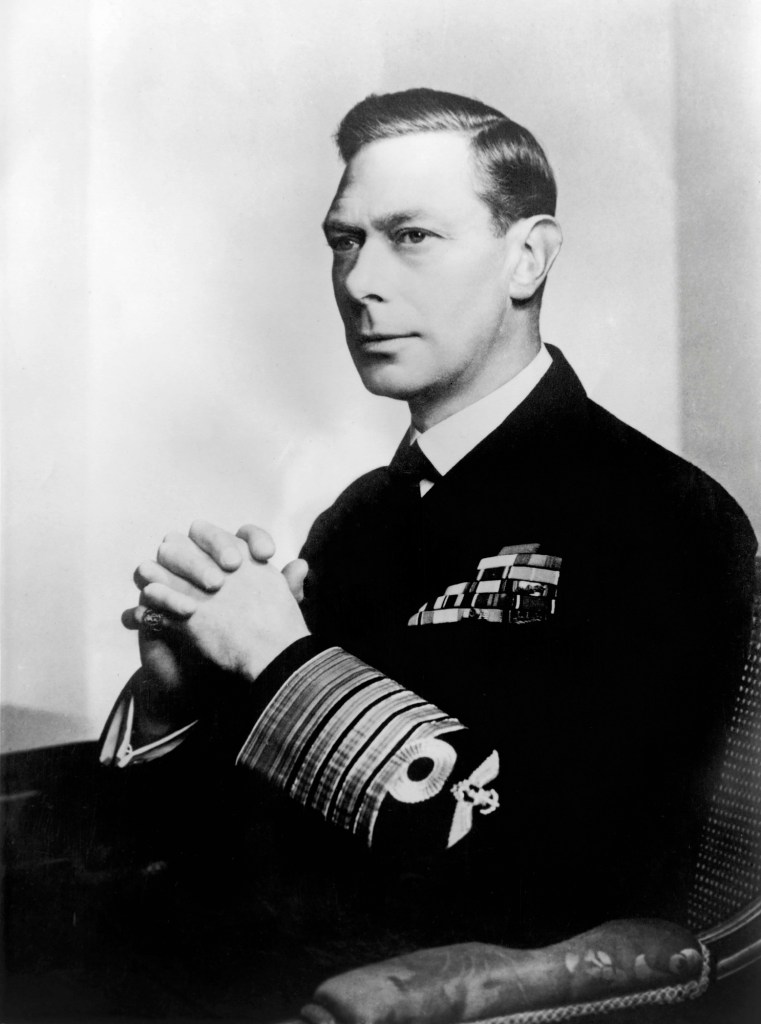
Brothers by another mother? Not quite. But it turns out that they are (or were, since George is no longer with us) indeed related. In fact, Henri and Elizabeth were third cousins twice removed, being related because they “share a descendant from Christian IX of Denmark.”
Now, Christian IX was married to the much better-known British Queen Victoria. And their descendants today rule over the lands of Belgium, Denmark, Luxembourg, Norway, Spain, Sweden, and the United Kingdom.
But let us not forget another of Christian and Victoria’s grandchildren, whose offspring would no doubt also still be ruling if their monarchy hadn’t been overthrown by that notorious revolutionary, Vladimir Ilyich Ulyanov — better known as Vladimir Lenin — in 1917. And that grandson was the last Tsar of Russia, Nicholas II:
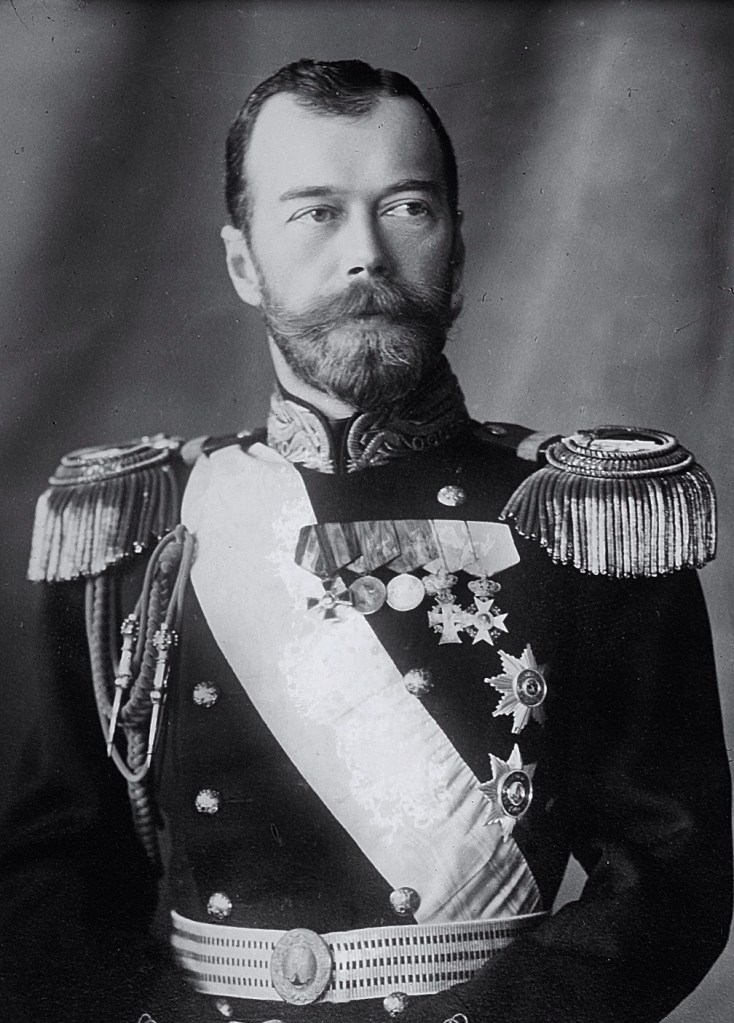
In fact, here are “Nicky” and his cousin, England’s George V, together during happier times:

Not incidentally, it was George V’s refusal to give political refuge to the Tsar and his family at the time of the Russian Revolution that led to the ultimate slaughter of Nicholas, the Tsarina Aleksandra, their five children, and members of their household staff by Lenin’s Bolshevik revolutionaries.
I guess no one ever told George that blood is thicker than water.
*. *. *
And now take a look at the second in line to the British throne today: young George, the eldest child of William and Catherine:
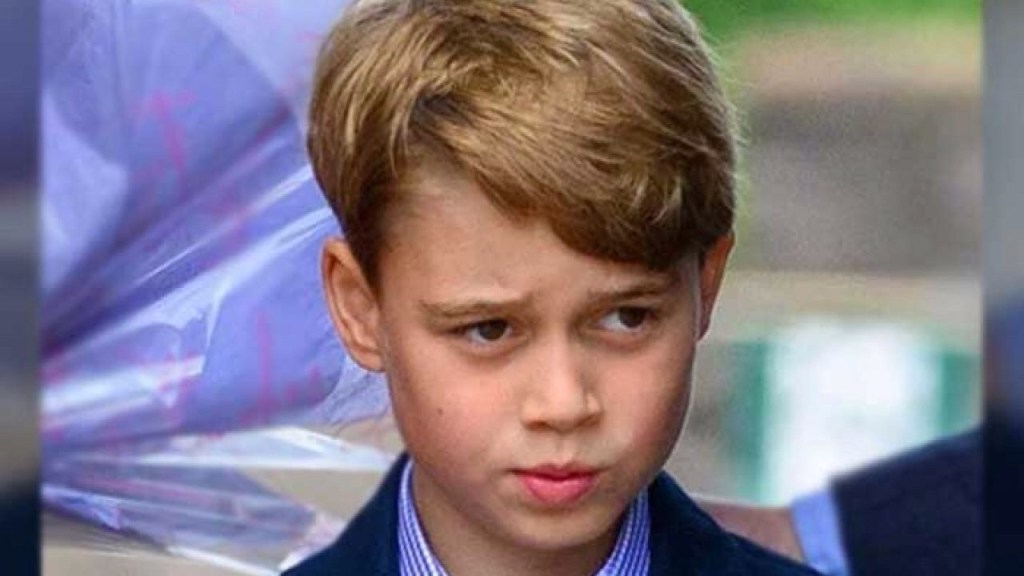
Genetically speaking, at least, the past is indeed prologue.
Just sayin’ . . .
Brendochka
12/26/24
 The Blog About Everything … and Sometimes Nothing
Don’t know about Grand Duke Henri of Luxemburg, but after years at school in British Commonwealth schools, and a Scottish grandmother I do know that Queen Victoria was NOT married to Christian IX of Denmark. Queen Victoria’s husband was in fact Prince Albert of Saxe-Coburg Gotha.
Am reading your most interesting blog regularly!
LikeLike
Thank you for your comments, Jillian — I stand corrected (as much as I hate making factual errors). I misread a family tree, which actually showed that Christian’s daughter, Alexandra, was married to Victoria’s son, Edward VII. I was off by a generation. Thanks so much for setting me straight, and for reading.
LikeLike