In the Bible, young David slew the mighty Philistine giant, Goliath, with a slingshot and stones.

Perhaps it’s a dim, distant memory of that parable that strikes fear in the heart of today’s Goliath — Russia’s Vladimir Putin — at the thought of the much smaller nations surrounding his country . . . most of whom are members of NATO and/or the European Union (EU) . . . adding yet another adjoining country to their alliances.
Why else would he continue to insist that, in addition to his proposed land grab, Ukraine must give up the idea of ever becoming a member of NATO or the EU if it wishes this war to end, and must also agree to a limitation of its military forces?
As recently as Sunday, Kremlin celebrity spokesman Dmitry Peskov reiterated the often-heard mantra that peace negotiations must be based on an agreement he says was reached in Istanbul in April of 2022 — an “agreement” that remains a subject of significant debate — and on what he called “current battlefield realities.” Once again placing the blame on Ukraine, he stated:
“Our position on Ukraine is well known; the conditions for an immediate stop of hostilities were set out by President Putin in his speech to the Russian Foreign Ministry in June of this year. It is important to recall that it was Ukraine that refused and continues to refuse negotiations.” [Dmitry Antonov, Reuters, December 8, 2024.]
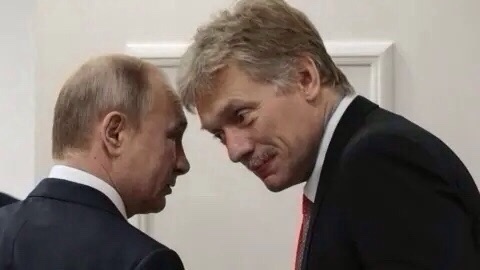
Yet it is Putin who dogmatically refuses to give an inch . . . and, in fact, who has added still another condition: that Russia be awarded Ukrainian land to which it claims a right, and not only the territory it currently occupies.
But to return to this Russian fear of NATO — which, as they consistently overlook mentioning, is strictly a defensive alliance — what is the reason for it? Putin will tell you it is a security issue, necessary to prevent Russia’s being invaded by one or more NATO countries.

Sorry . . . I had to get that out of my system.
Now let me ask: When was the last time anyone invaded Russia or its predecessor, the Soviet Union, and who was foolish enough to do that? And the answer is:
1941; Nazi Germany. It was called World War II, and we all know how that ended.
Putin will, of course, tell you that Ukraine invaded the Russian territory of Kursk this year, conveniently ignoring the fact that it was Ukraine’s first counterinsurgency after nearly three years of being decimated by Russia’s troops and advanced weaponry. Can’t really call that an invasion, now . . . can you?
On the other hand, Russia’s record is not so clean. Just since the end of World War II, they have — to some extent, at least, and for various reasons — stuck their noses . . . and their military . . . into other nations’ business. For example: **
1950 – Korea
1955 – Vietnam
1956 – Hungary
1968 – Czechoslovakia
1970 – Israel
1974 – Eritrea
1975 – Angola
1977 – Somalia
1979 – Afghanistan
1981 – Nicaragua
1991 – Georgia
1991 – Abkhazia
1992 – Transnistria/Moldova
1992 – Ossetia
1992 – Tajikistan
1994 – Chechnya
1999 – Dagestan
1999 – Chechnya (second war)
2008 – Georgia/Ossetia (again)
2009 – Caucasus/Dagestan/Chechnya
2014 – Ukraine (Crimea)
2015 – Syria
2018 – Central African Republic
2022 – Ukraine (again)
** [Source: quora.com]
That’s positively exhausting: 24 invasions begun over the course of 72 years, many of them lasting for multiple years of warfare and subsequent occupation. One might more easily ask when they haven’t been at war.
And they’re afraid of . . . what? Or whom? A peaceable boy with a pocketful of pebbles?

Just sayin’ . . .
Brendochka
12/10/24
 The Blog About Everything … and Sometimes Nothing