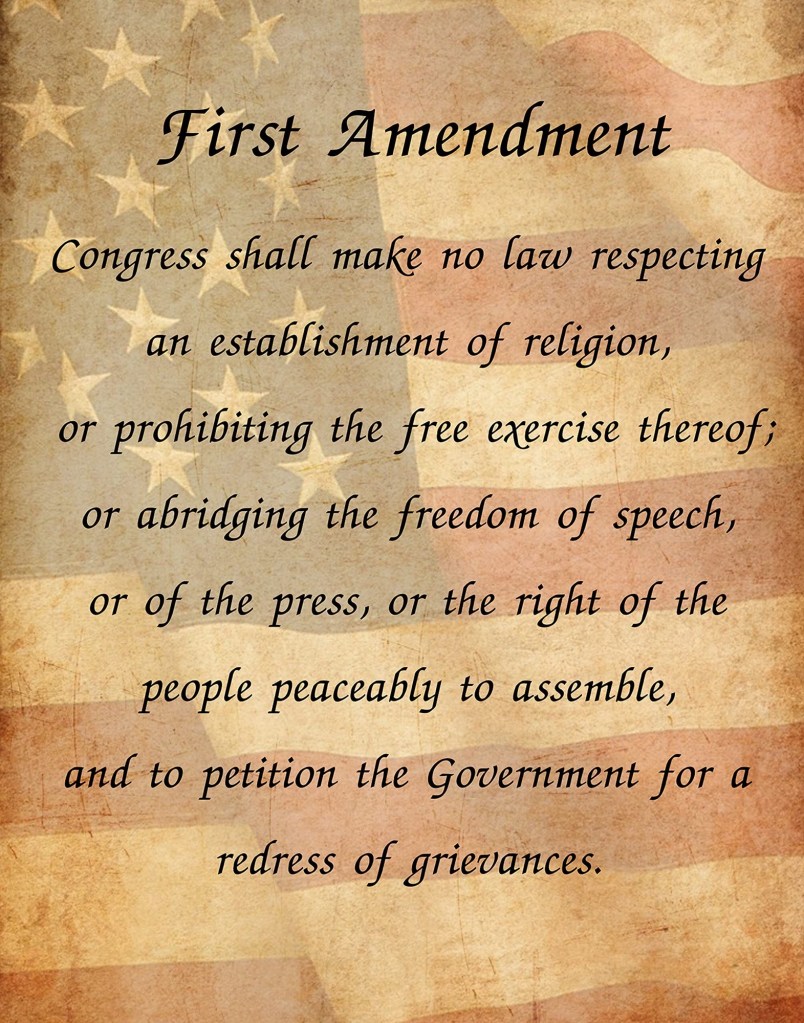
You know the one I mean — the amendment to the U.S. Constitution that protects every citizen’s absolute right to freedom of speech and freedom of the press, among other things. It’s one of every American’s most valued privileges . . . one that separates us from those countries that are ruled by the purveyors of tyranny, oppression, and censorship.
And speaking of censorship . . .
Merriam-Webster’s dictionary defines a censor as “one who supervises conduct and morals, such as an official . . . who examines materials for objectionable matter,” or “an official . . . who reads communications . . . and deletes material considered sensitive or harmful.”
What constitutes “sensitive or harmful” material . . . and what qualifies an individual to make those judgments . . . have long been the subject of controversy. In times of war, for example, protection of national secrets becomes paramount. But on a day-to-day basis, in the lives of ordinary people, we Americans treasure our ability to say pretty much what we think and feel, so long as we don’t cause harm to anyone else. There are protective laws against libel and slander, bullying, and the like; and so long as we remain cognizant of them, and don’t make up vicious lies about another person, we are free to call them anything we like . . . and vice-versa.
But are we? The advent of social media put a whole new face on the world of name-calling, and brought to the surface a level of anger and hatred previously kept submerged in most of our fellow human beings. It also provided a means of spreading that vitriol farther and faster than any known virus or bacterium could move.
So somewhere along the line it was decided that controls were needed to minimize the spread of negativity and potential damage to others. And there are valid arguments in favor of such controls . . . and equally valid arguments against them. Some people, in various parts of the world, have even chosen to go to prison rather than give up the confidential information of their online customers — people such as Pavel Durov, creator of VKontakte (Russia’s equivalent of Facebook), and more recently of the widely-used Telegram messaging service.

And speaking of Facebook . . .
*. *. *
At last, we arrive at the point of this article, beyond the review of our constitutional rights. And that point is that:
I am being censored.
I don’t know how the content controls operate at Facebook, but someone, somewhere in that vast bureaucracy has decided that some of my writing is objectionable, and — always within seconds of posting — I will receive a notice that a piece has been deleted. The “explanation,” if you can call it that, is usually something incredibly lame, such as my allegedly fishing for “likes.” There is never an indication of any actually offensive content . . . no threats, nothing libelous . . . just “outside of Facebook’s guidelines,” whatever they may be.
Now, for those of you who have read any of my offerings, it should be apparent that I put a lot of time and effort into them. I do not post pictures of my daily activities, or pets, or failed recipes, or travels — any of the fun things that could only possibly be of interest to my real-life friends and relatives. I do not care about ads for cheap goods from companies of questionable repute. I do love hearing from people with whom I had lost contact.
But what I do is write. Mostly about world events — commentaries on the day’s news — and sometimes also about random subjects that pop into my mind from time to time, like growing up in small-town New England in the ‘40s and ‘50s, or climbing a mountain in Czechoslovakia.
And sometimes I express my disdain for certain famous people — people like Vladimir Putin and his cronies. Or the occasional American political figure, who shall remain unnamed here because I don’t want this article to disappear along with this morning’s.
But who doesn’t do that? Any editorial, in any print or online publication, will be likely to outdo me in the criticism department. That is their right — and mine — as Americans, as long as we do not lie (even though the people we write about may do just that).
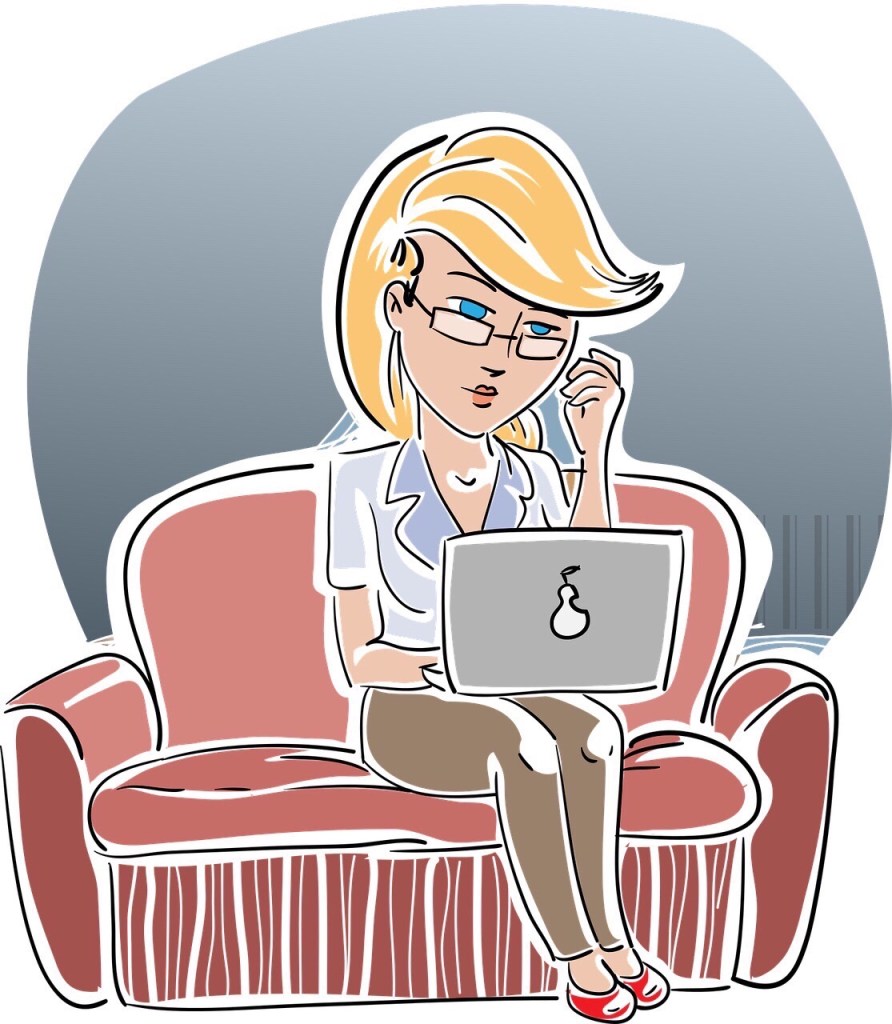
And I like to use pictures to illustrate or emphasize my points. Like this one:

So what? They’re pictures that I’ve found online, and are already in the public domain.
*. *. *
All right, then . . . I think I’ve made my point. Let me just say that, yes, I am pissed. This is not the first time it’s happened. I have had it with Facebook’s censors, and their arbitrary decisions as to what I may or may not say on their precious site. So if you don’t see anything from me for a while, it will be because I am taking time to cool down and to decide whether to carry on or drop out.
As an American, it is my inalienable right to do either.
Just sayin’ . . .
Brendochka
11/30/24
 The Blog About Everything … and Sometimes Nothing