Here’s a Halloween tale (and tail) for you.
Forget Willard; forget Ben; forget Ratatouille (the one from the movie, not the vegetable dish). Fictitious rodent characters are cute; real ones . . . not so much.
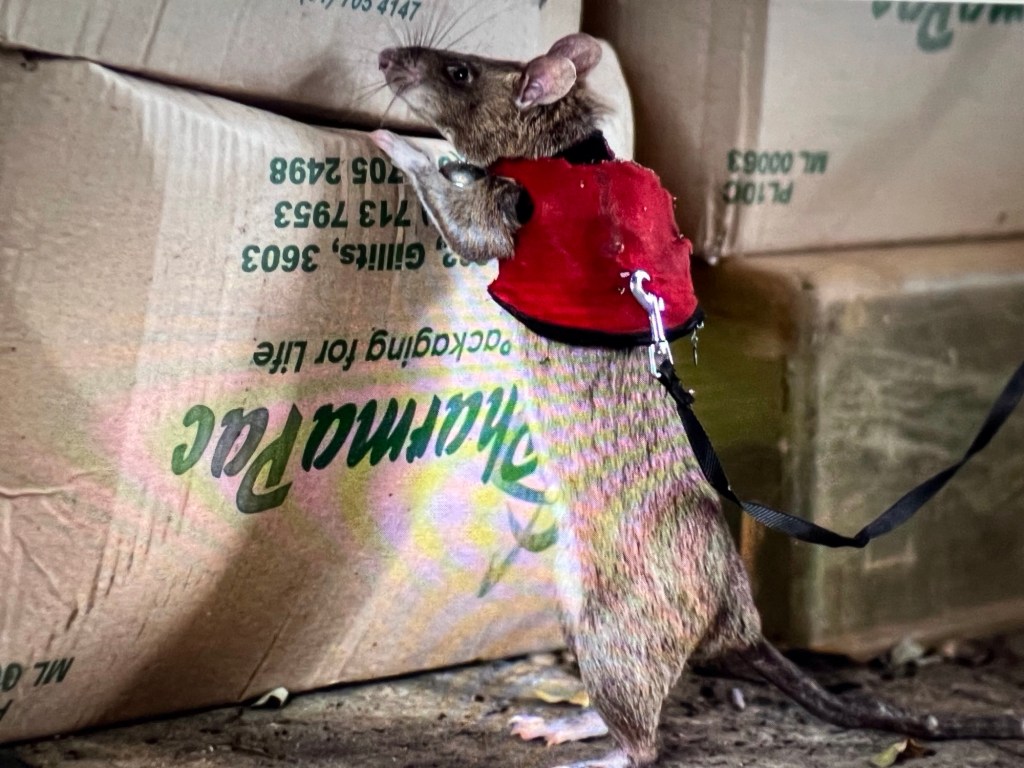
And when they’re the size of a cat . . . some of them as long as three feet, half of which is body and the other half tail . . . let me outta here!
Luckily — for the rats, at least — not everyone feels as I do. A non-profit known as APOPO, based in Tanzania, has found that these muroids-on-steroids, also known as the African or Gambian pouched rat (the pouches are in their cheeks), have such a keen sense of smell that they can be trained to sniff out landmines, tuberculosis, and survivors in the rubble of disaster zones. [Alex Rodway, CNN, October 30, 2024.]
No wonder they’ve been dubbed HeroRATs.
And now, the enterprising folks at APOPO are putting these big guys to work as crime-fighters.
Did you know — and I did not — that illicit wildlife trafficking is a $23-billion-per-year industry worldwide — the fourth largest, after counterfeit products, drugs, and humans? And little Alfred in the red vest (all right, so I decided to name him) and his fellow heroes are being trained to sniff out a variety of wildlife, and precious items such as elephant tusks, rhino horns, pangolin scales, and African blackwood. [Id.]
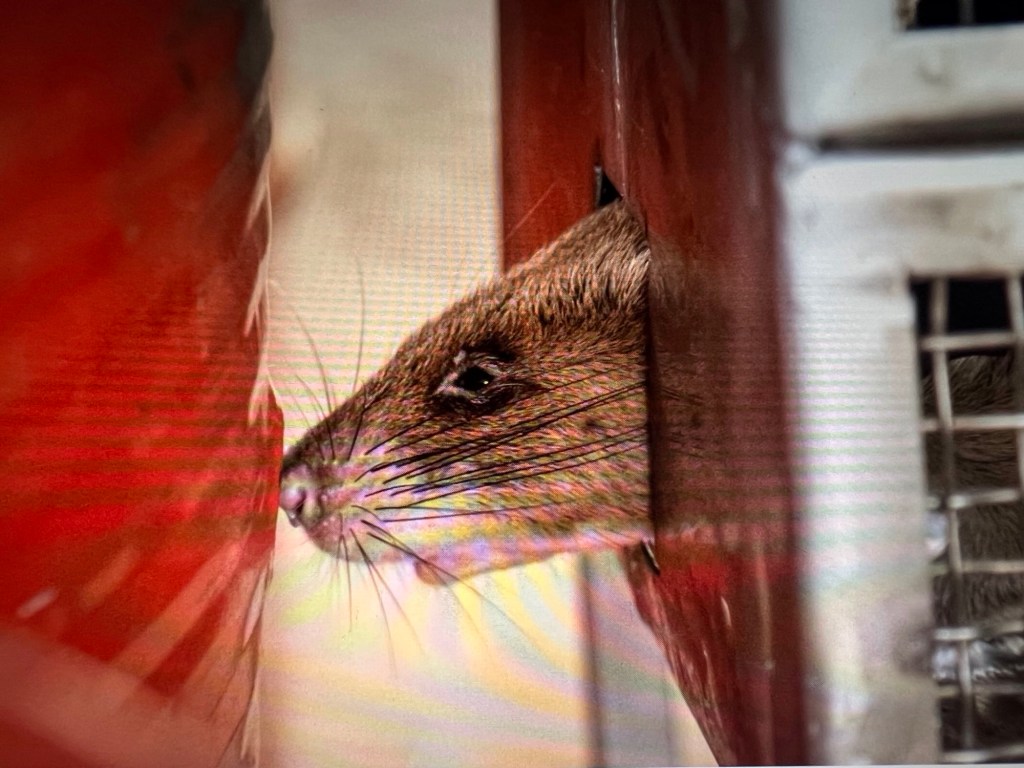
Of course, they can’t do everything that, say, a dog can do, like tracking through the Serengeti. But Dr. Izzy Szott, the behavioral research scientist who leads this project, points out that, “being ‘very small and agile,’ rats have the upper hand in a densely packed shipping container.” She also explains that, unlike dogs, rats will work with multiple handlers, and are cheaper to train, maintain and transport. [Id.]
And once Alfred (or any of his rat pack friends) identifies a target in a suspect shipment — and this is kind of cute — “it alerts its handler by using its front paws to pull a little ball attached to a custom-made, neoprene vest, which triggers a beeping sound.” [Id.]
So, obviously having conquered any traces of ratophobia (yes, that’s the real term, also known as musophobia), Dr. Szott and her team are working with these exceptional Cricetomys (of the family Nesomyidae, in case you were wondering) to help catch the criminals who would deprive the world of some of its most majestic animals, which in turn can have a devastating effect on entire ecosystems. [Id.]
It takes about a year to complete training, so with an average life span of eight years, the furry detectives are considered a worthwhile long-term investment, according to Dr. Szott. They have a routine training program from Monday through Friday, with “regular playtimes in a big outdoor kennel filled with rope toys and running wheels.” [Id.]
It’s like a Montessori School for heroRATs.
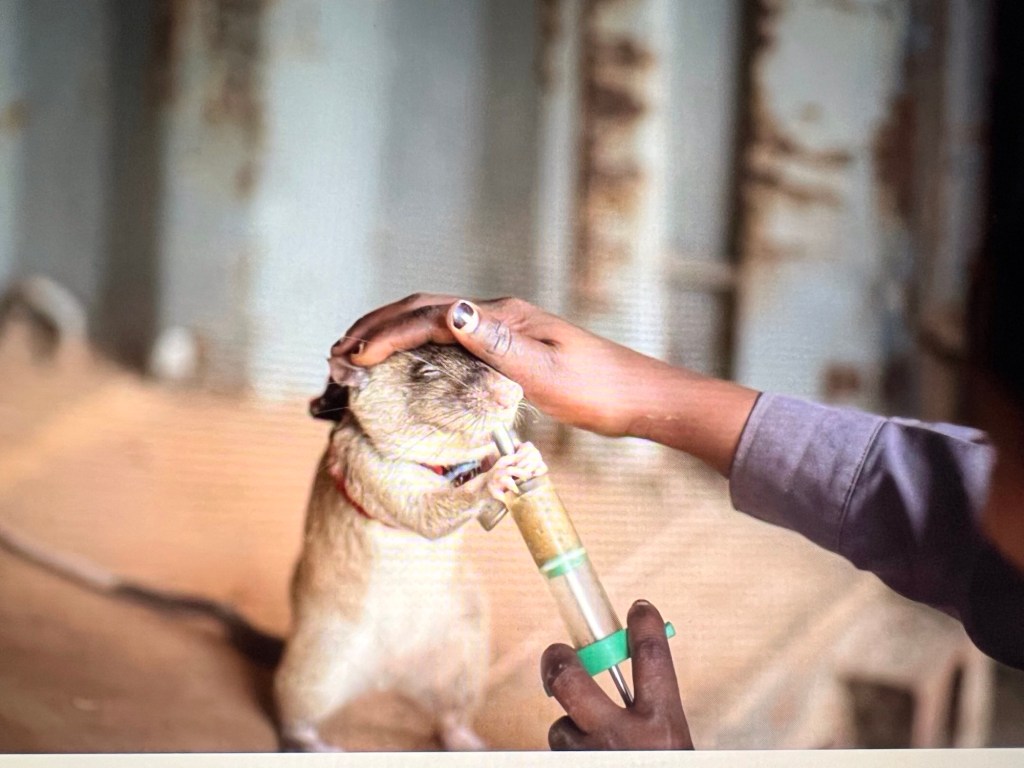
All right, that one is pretty cute, I admit. I mean, drinking through a straw and all that. But . . .
Their importation is now banned in the United States, as they have been blamed for a 2003 outbreak of monkeypox. But some people don’t pay attention to laws and regulations. And others fail to understand about wildlife. You know, like the “wild” part, and about trying to breed them as pets in non-indigenous areas. Back in the 1990s, a private breeder in the Florida Keys allowed some of these babies to escape, and they have since become invasive. But despite efforts to eradicate them in the area, they have been sighted on Key Largo and in Marathon, Florida.
Which is way too close to home to suit me. I still haven’t come to terms with the alligators down the road.
Just sayin’ . . .

Happy Halloween, everyone!
Brendohchka
10/31/24
 The Blog About Everything … and Sometimes Nothing