And there he is: a very non-isolated Vladimir Putin, looking quite dapper after three days of hosting what is now called the BRICS-Plus summit, and obviously in a jovial mood as he shares a laugh with South Africa’s President Cyril Ramaphosa.
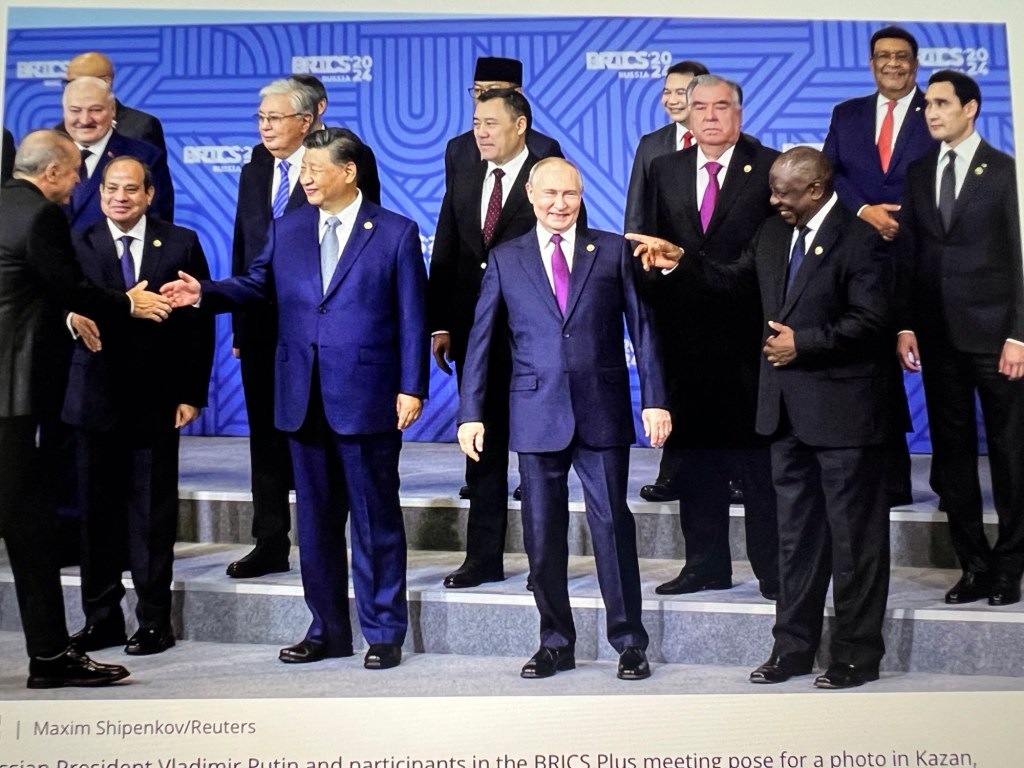
How best to categorize the accomplishments of the anti-Western bloc over the 72 hours of this year’s gathering? Perhaps it’s simplest just to repeat Putin’s own summary: that “a new multipolar world order is taking shape before our eyes.” [Fred Weir, The Christian Science Monitor, October 24, 2024.]
Russia believes BRICS, in the short term, is its way out of the economic and political difficulties created by Western sanctions imposed since its invasion of Ukraine in February of 2022. And in the long term, Putin’s goal is to quash and replace Western — and specifically U.S. — dominance. In other words, to become the sort of authoritarian world leader that he already is in Russia.
But it seems that a majority of the BRICS members, as well as the leaders of the rest of the 36 countries who attended the summit, would not go so far as to join in Putin’s condemnation of the West or his efforts toward creating an alternative global system, despite wide-spread dissatisfaction with the current U.S.-led system.
BRICS currently has nine members (or ten, depending on whether Saudi Arabia is actually a full member as yet, which seems to be debatable). The nine members of the bloc issued a lengthy, 134-point statement titled the Kazan Declaration, which spells out demands for the reform of such global institutions as the U.N. Security Council, the International Monetary Fund, and the Group of 20.
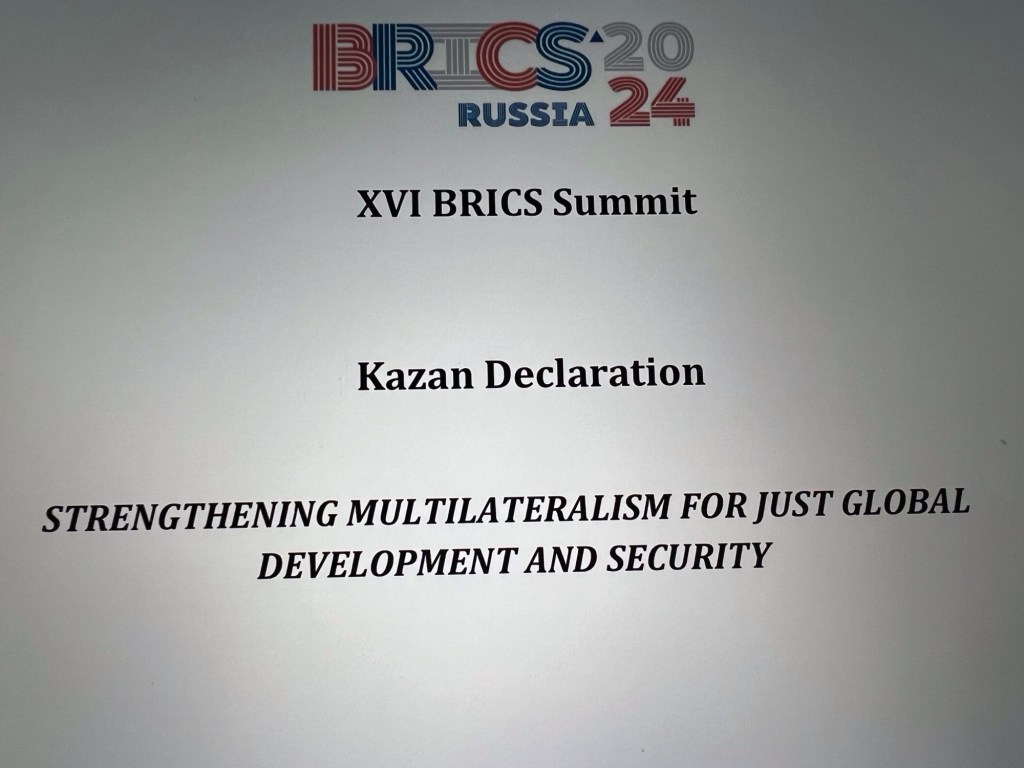
It also — and here is where many of the attendees had serious concerns — denounces the “disruptive effects . . . [of] illegal sanctions” on the world economy, and sets forth the beginnings of an alternative finance and trade system that would circumvent the use of the U.S. dollar. [Id.]
And Dmitry Suslov, an international relations expert at Moscow’s Higher School of Economics, had this to offer:
“What is driving the growth of the BRICS Plus is, first, the dissatisfaction of many countries with the U.S.-dominated world order. People are tired of the weaponization of the U.S. dollar, and there is a general sense that the U.S. order is rigged to benefit mainly Western interests.” [Id.]
BRICS, Suslov added, is intended to enable change toward a system offering “multipolarity without hegemony.” [Id.]
“Without hegemony”?!! Are we supposed to believe this is what Vladimir Putin has in mind?
*. *. *
In any event, it would appear that Putin’s brave new world is still a future dream . . . though one that he is determined to pursue. Even Alexander Ignatov of the Russian Presidential Academy of National Economy and Public Administration acknowledges that BRICS is essentially a “discussion club” where major issues are concerned, such as the creation of an alternative global currency. [Id.]
But in the meantime, one of Putin’s goals this week has been reached: that of demonstrating to the world that, despite all of the sanctions, and the arrest warrant issued against him by the International Criminal Court, he is still very much alive and in charge.
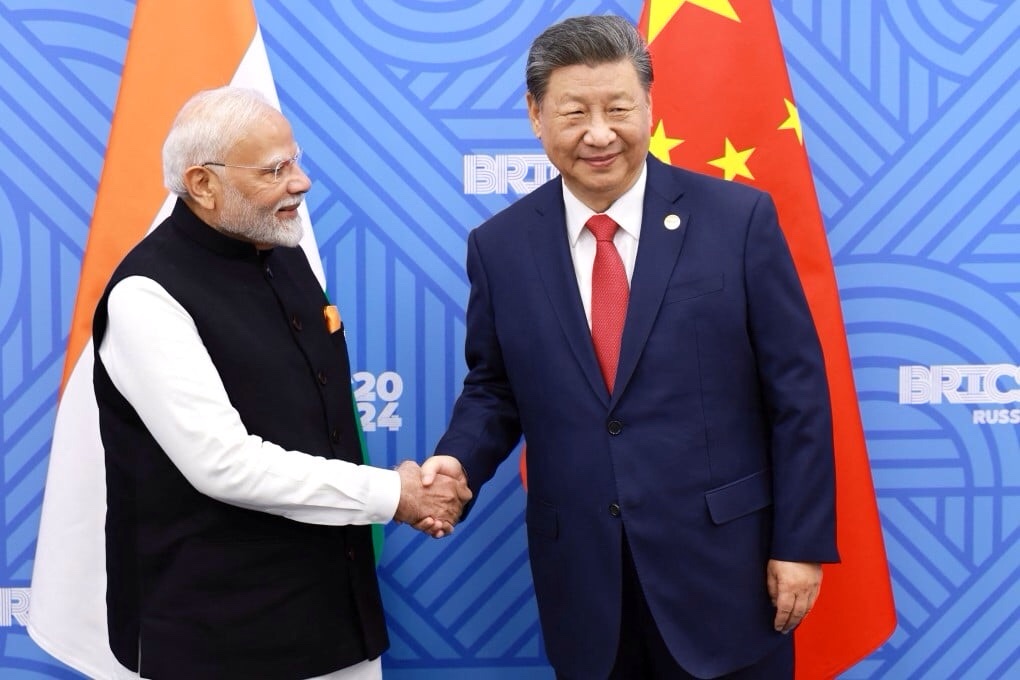
In addition, during the course of the three-day meeting, China’s President Xi Jinping and India’s Prime Minister Narendra Modi finalized — with a handshake — a deal to normalize relations along their disputed border.
And there was cause to hope for progress toward another peace treaty when Armenian Prime Minister Nikol Pashinyan and Azerbaijani President Ilham Aliyev held a sideline meeting.
*. *. *
But still hanging over Putin’s head is his “special military operation” — his war — in Ukraine. Language was included in the Kazan Declaration providing that this must be resolved by diplomatic means, and in accordance with the principles of the United Nations Charter.
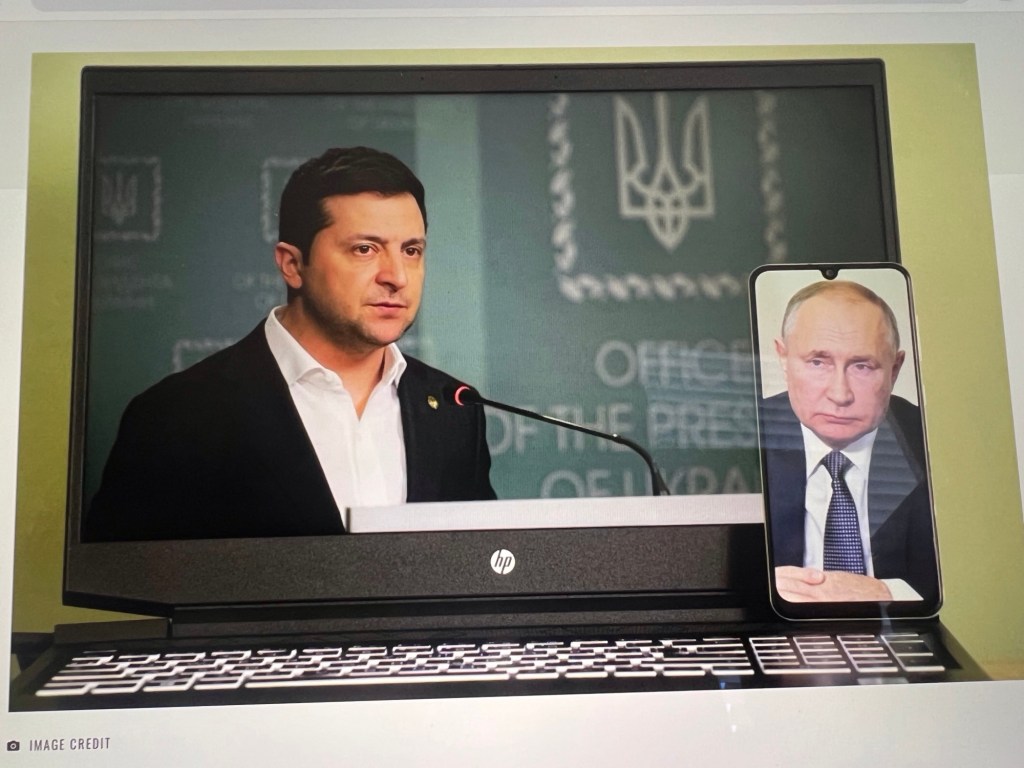
Dmitry Suslov of Moscow’s Higher School of Economics had this to say on the subject:
“All the BRICS Plus countries feel that the war should be ended as soon as possible. But while they don’t want to see Russia suffer a strategic defeat, they are not necessarily in favor of Russian victory. The point they all agree on is that the fundamental reasons for the war should be addressed, including issues like NATO enlargement.” [Id.]
Well, that’s just lovely. What wasn’t said was precisely how such an ideal conclusion could be reached.
But at least the door was left open.
Just sayin’ . . .

Brendochka
10/26/24
 The Blog About Everything … and Sometimes Nothing