I say, old chap . . . my iPad seems to have given up its citizenship here in the Colonies and taken up residence with the Royals. Because it is now correcting my spelling — which, by the way, does not require correcting — in a distinct show of preference for the British form.
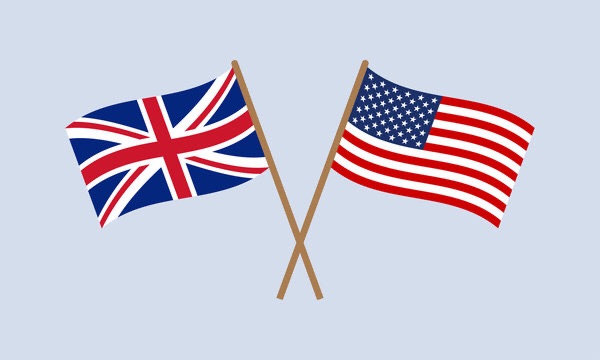
I don’t know how or why this has happened. Things had been running smoothly for years, when suddenly I found myself one day being told that words such as “civilized,” “modernize,” “criticize,” and “analyze” should be spelled “civilised,” “modernise,” “criticise,” and “analyse.”
Being aware of the perverse nature of our electronic gadgets in this 21st Century world, I immediately clicked on that little icon called “Settings,” and determined that, yes indeed, my language preference was English and my region was still the United States. So the problem had to lie elsewhere.
And then it dawned on me.

It only seems to be happening when I’m working on my blog. But why? What do I do differently there?
Actually, that was an easy one to answer: I comment a great deal on world affairs in my blog posts, referencing a lot of different sources . . . frequently including the British media. And when I quote from an article, of course I quote precisely — which sometimes means following the British spelling. And somewhere, deep down inside the brain of this very expensive little piece of equipment, is a bit of electronic intelligence that seems to have stored those words and wants me to continue using them.
And that scares the crap out of me!
It’s frightening enough when my screen displays the very words I was thinking of typing, before my fingers have even touched the keys. It not only reads my thoughts . . . it’s a better writer than I am! And that, I have to tell you, is really depressing.
But now, it even seems to be telling me I ought to change my allegiance from the country of my birth to another place — albeit a lovely place — somewhere across the pond. But that’s just not gonna happen . . . and I’ll tell you why. I mean, besides the whole “I’m an American and I love my country” thing . . . which I do.
However, there are other, more practical reasons. Such as . . .
I do not think in terms of kilometers, meters or centimeters. Or anything metric. Or pounds (a.k.a. “quid”) and pence. Or lifts, flats, bobbies, the loo, or any of the millions of other charming names you Brits have given to everyday items. I watch a lot of British TV, and I’ve picked up on such terms as “you lot,” when I would say “you folks” or “you guys.” And we don’t “sort” problems; we “solve” them, or “straighten” them out. And a criminal may have a prior “record,” not “form.” (“Form” simply means “shape” back here in the Colonies.)

And please note: To us Americans, a “mate” is someone with whom you . . . well . . . mate. More than just a friend. Much more.
Also, referring to the subway, or metro, as “the underground” brings to my mind pictures of mafiosi and other evil sorts. Or deep, dark, scary places. And “the tube” — well, that’s fallopian.
Now, I don’t want you to take any of this as criticism. In fact, I love everything British. When I visited London, I thought it was absolutely perfect, and wished I could have stayed longer and seen some of those quirky little villages and Stonehenge, etc. But I was there on business.
I love that you call sausage and potatoes “bangers and mash.” And that all desserts are “puddings” — and one of them is called “Spotted Dick.” (I’m sorry, but that just screams “social disease” to me.) And that the royal family refer to themselves collectively as “The Firm.”
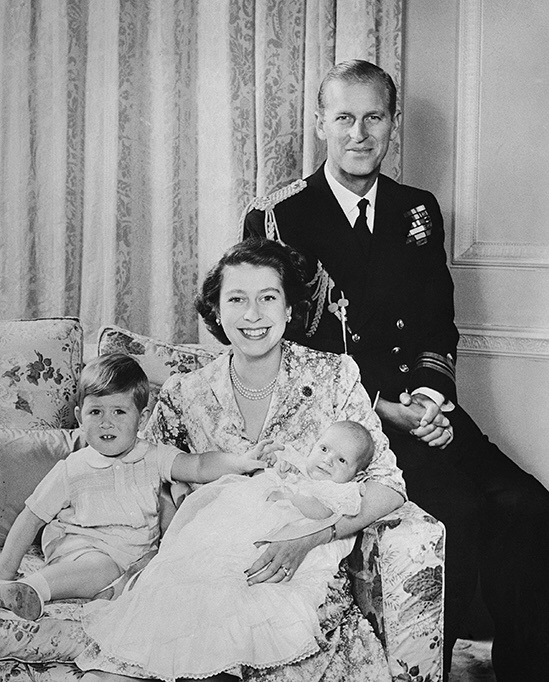
But we Americans — though we speak the same language, albeit with some notable differences — are a unique breed. We’re comprised of a whole bunch (that’s a “great lot,” to you) of nationalities and ethnicities; and our brand of English has become a strange conglomeration of all of them, with a plethora of our own made-up expressions to top it all off. And we like it that way.
And finally, I’m too old to start learning what is essentially a new language . . . especially the colloquialisms. I had enough trouble with Russian — and that was years ago, when my brain’s synapses were still firing full-blast.
I know you’ll say this is all a load of “tosh,” but . . . well, I just wanted to say that, if it’s all the same to you lot, I’m going to continue using my accustomed spelling and terminology. It doesn’t mean I love you any less. We’re still best mates, and always will be.
It’s too bad I can’t say the same for my Spell Check. Oh, well . . .
Just sayin’ . . .

Brendochka
10/14/24
 The Blog About Everything … and Sometimes Nothing