Apparently, that was the tone of the recruitment campaign dubbed “Alabuga Start,” aimed at young African women excited at the prospect of being paid a decent wage for a “work-study program” being conducted in Russia’s semi-autonomous Tatarstan region, some 600 miles east of Moscow.
Only someone seems to have forgotten to include the “study” part of the program.

It may have been pictures like the one above that enticed the 200 young women, ages 18-22, to sign on to what promised to be a golden opportunity, but turned out to be an environment akin to slave labor. According to an Associated Press investigation, the young women were met with “long hours under constant surveillance, broken promises about wages and areas of study, and working with caustic chemicals . . .” [Emma Burrows and Lori Hinnant, AP, October. 10, 2024].
Because it turned out that the so-called work-study program was, in truth, a factory for the assembly of thousands of Iranian-designed attack drones for use in Russia’s “special military operation” against Ukraine. Since the start of that war, Russia and Iran have signed a $1.7 billion deal for Moscow to import Iranian drones. And the plant at Alabuga quickly expanded from there. [Id.]
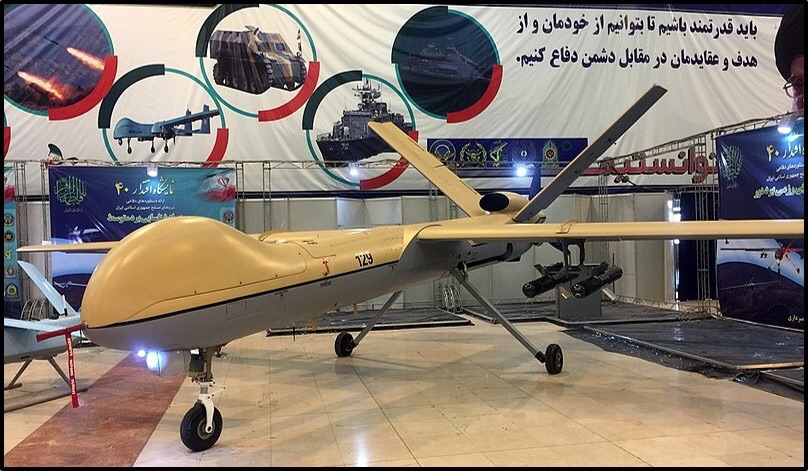
But Russia had a problem: it was facing a wartime labor shortage. It did, however, have friends in numerous African countries, such as Uganda, Rwanda, Kenya, South Sudan, Sierra Leone and Nigeria. And so the recruitment began, there and elsewhere . . . including Sri Lanka in South Asia. And it is expected to expand to other parts of Asia and to Latin America.
So you’re probably thinking there’s nothing wrong with offering jobs to people from countries with struggling economies. And you’d be right . . . as long as the jobs are what they purport to be. But what did those 200 young ladies find upon arrival from their African homes?
Well, first, they share dormitories and kitchens that are “guarded around the clock” — presumably for their safety. When brought by bus from their living quarters to the factory each day, they pass multiple security checkpoints. They receive local SIM cards upon arrival, but are not allowed to bring phones into the factory. Some of the women interviewed said they were not allowed to speak freely to outsiders, and that their messages were monitored. [Id.]

Some women described shifts of up to twelve hours, with only irregular days off. There were reports of salaries not meeting the advertised promises, and difficulties sending money home to Africa because of banking sanctions against Russia. Being able to help their families at home was one of the principal reasons many of the women were drawn to the jobs in the first place. [Id.]
*. *. *
So what can be done? According to the AP report, a spokesperson for the U.N. High Commissioner for Human Rights — noting that Moscow is a party to the U.N. Convention Against Transnational Organized Crime — said that Russia’s actions in the matter of the Alabuga program “could potentially fulfill the criteria of trafficking if the recruitment is fraudulent and the purpose is exploitation.” [Id.]
Whether action will be taken remains to be seen. Thanks to the AP’s investigation, we can hope for the best.

Just sayin’ . . .
Brendochka
10/13/24
 The Blog About Everything … and Sometimes Nothing