“Sobesednik” is the Russian word for “Interlocutor.” Now, with the designation of the publisher of Russia’s last independent print news medium, Sobesednik, as a “foreign agent,” the Interlocutor is indeed dead.
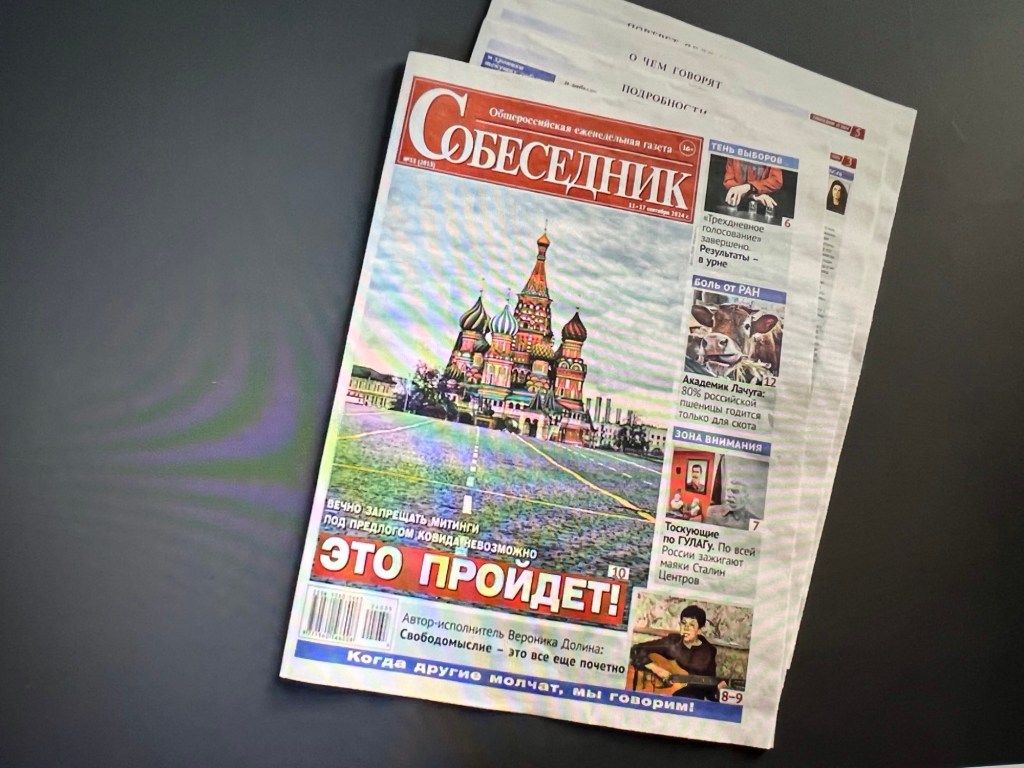
It began in February of this year, on the 40th anniversary of the founding of the weekly newspaper, when the staff were visited by a colonel from the Orwellian-inspired “Centre for Combating Extremism,” a branch of the Russian Interior Ministry. One by one, they were called into a separate room for questioning. [Lucy Papachristou, Reuters, October 2, 2024.]
The previous day, the paper had featured a two-page spread on the death of opposition leader Alexei Navalny, who had died under mysterious circumstances in a Siberian prison colony. Included were a lengthy obituary, coverage of the vigils that had been held in his honor, and a large picture of Navalny with the caption, “… but there is hope!” [Id.]
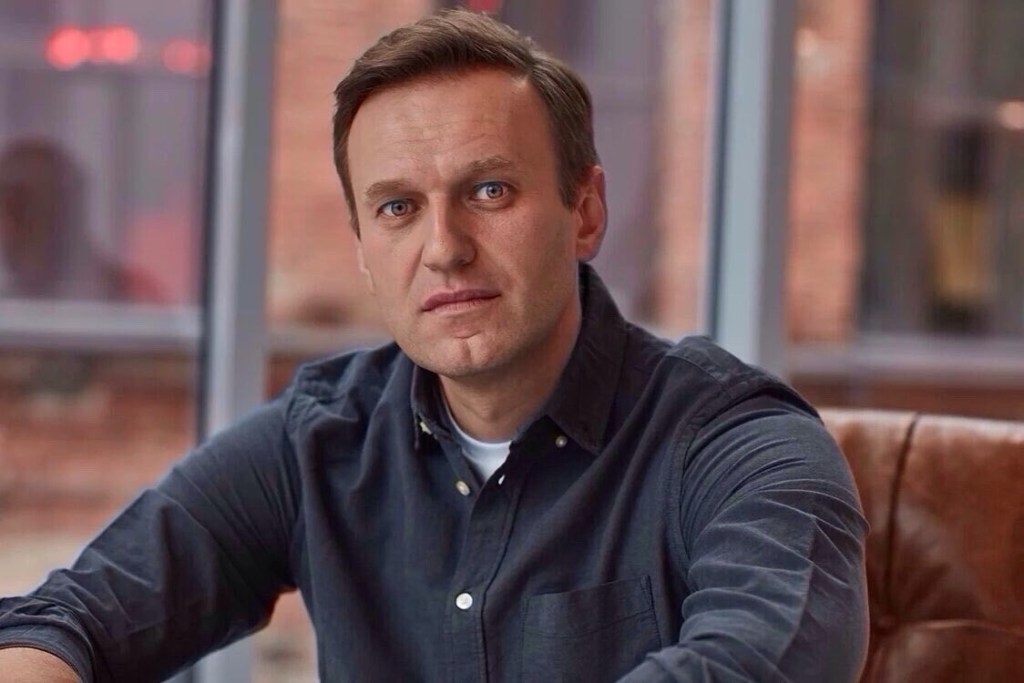
The journalists knew that the mere printing of Navalny’s name was risky, but that is what this paper did: it presented the truth.
Nothing happened, other than the confiscation of that print run, and business continued as usual, without interference . . . until September. The papers’s editor-in-chief, Oleg Roldugin, had waited in dread for repercussions, and they came when the authorities officially labeled the paper’s publisher a “foreign agent” — a moniker held over from Soviet times, which today carries oppressive reporting requirements. In addition, each article in the future would have to be prefaced with a statement that its publisher was a foreign agent.
According to Roldugin, “It would be impossible to read. The paper would have to be sold sealed and labelled ‘18+’ like pornography. Because we did journalism instead of propaganda.
”It’s impossible to carry on.” [Id.]
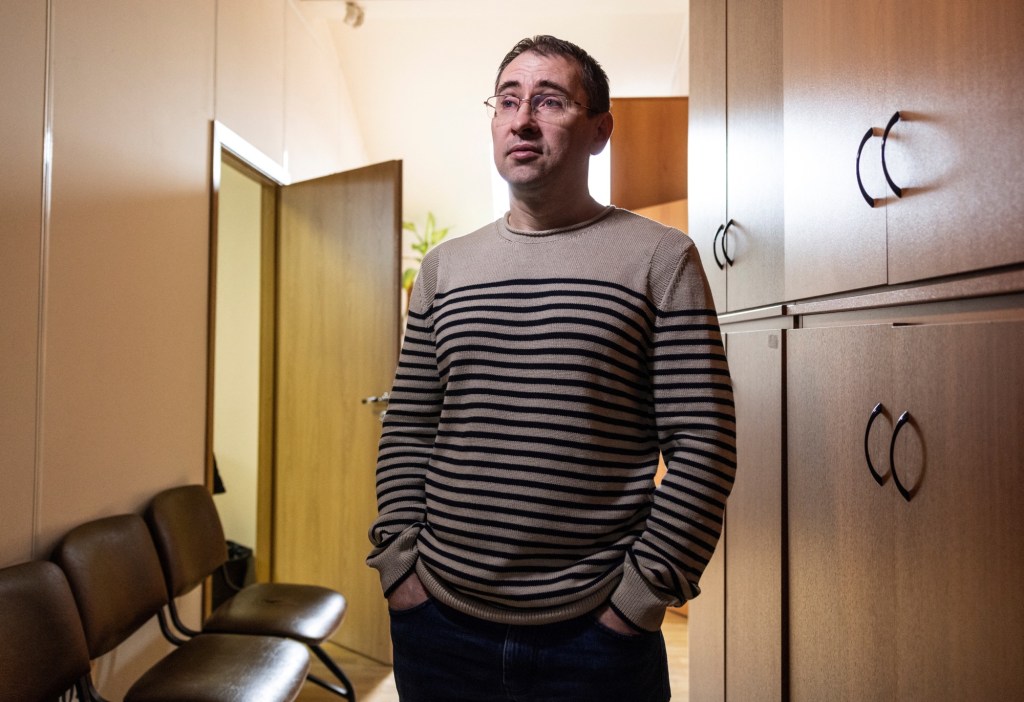
Roldugin knew that his advertisers would be frightened off; further publication was out of the question. The paper suspended publication.
This was hardly a unique event. Under Vladimir Putin’s reign, nearly all independent media have disappeared, being shut down completely or forced into exile. Only state-controlled media remain.
*. *. *
Dmitry Bykov began writing for Sobesednik in its first year, while he was still a journalism student, eventually becoming an editor and contributing an estimated 3,000 articles. He spoke of the many Russians who have read the paper throughout their entire adult lives; and the fact that now, their “constant, sincere, unobtrusive and well-informed conversation partner” is gone. [Id.]
“We were regularly sued,” Bykov continued. He said that their paper had frequently upset Moscow’s notorious previous Mayor, Yuri Luzhkov, during his years in office (1992-2010), and that lawsuits against them had become more frequent during Putin’s presidency. [Id.]
No surprise there. Vladimir Putin has no use for the truth, and has become quite adept at erasing it and dispensing with those who persist in speaking or writing it.
*. *. *
And thus fades another spark of truth and hope in Russia. The Russia that I knew and fell in love with in the early 1990s is no more. They are once again the “glavniy vrag” — the main enemy; and I weep for them and with them.
Just sayin’ . . .
Brendochka
10/4/24
 The Blog About Everything … and Sometimes Nothing