Oh, this is so not good.
At the annual session of the United Nations General Assembly in New York on Saturday, September 28th, Russia’s Minister for Foreign Affairs, Sergei Lavrov, lambasted the West with accusations of “global domination and machinations in Ukraine,” and followed up with perhaps the most virulent threats of nuclear retaliation to date.
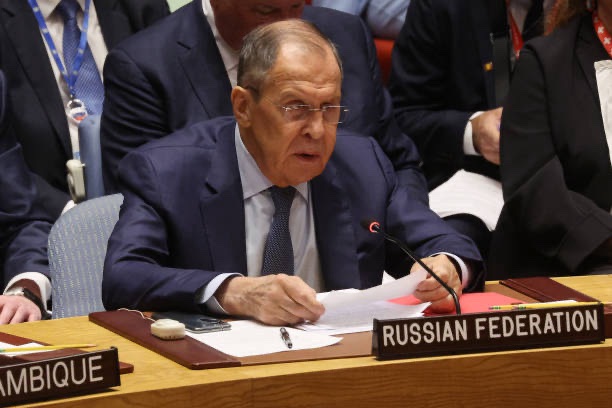
He started by accusing the West of using Ukraine as a tool to try to defeat Moscow strategically, and “preparing Europe for it to also throw itself into this suicidal escapade.” [Edith M. Lederer and Jennifer Peltz, Associated Press, September 28, 2024.]
And continuing: “I’m not going to talk here about the senselessness and the danger of the very idea of trying to fight to victory with a nuclear power, which is what Russia is.” [Id.]
At a news conference following his speech on Saturday, he added:
“Whether or not they [the U.S. and other Western allies] will provide the permission for Ukraine for long-range weapons, then we will see what their understanding was of what they heard.” [Id.]
Earlier in the week, following a meeting in the Washington White House, Ukrainian President Volodymyr Zelensky walked away with an additional $2.7 billion in military aid — but without the long-range weapons Lavrov was talking about, and without the okay to use such weapons to strike farther into Russia. Presumably, though, that option remains open.
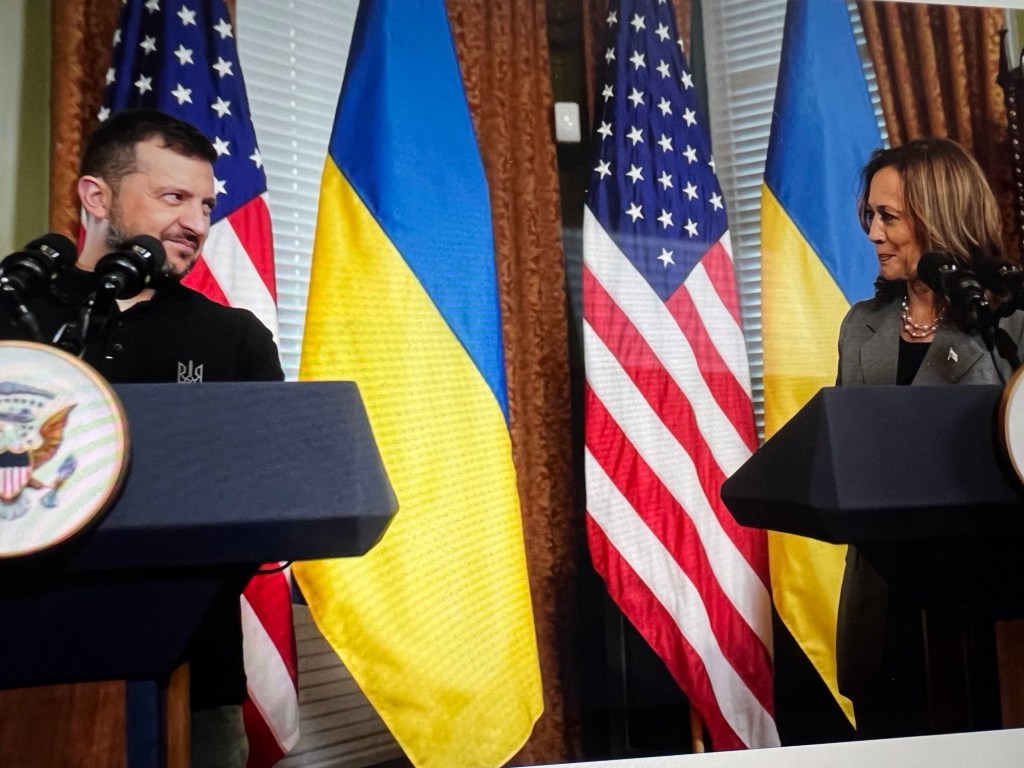
And Lavrov wasn’t finished yet. About the geopolitical and military expansion of NATO, he had this to say:
“It is now trying to take root in the south Caucusus [sic], in central Asia, creating direct threats to the security of our country. And now the same is happening in the Asia-Pacific region, where NATO infrastructure is creeping in to contain or deter China and Russia.” [Id.]
He accused the United States of seeking “to preserve their hegemony and to govern everything,” and made reference to NATO’s relations with New Zealand, Australia, South Korea and Japan; as well as the Quadrilateral Security Dialogue (commonly called the “Quad”) encompassing the U.S., India, Australia and Japan, an alliance which — he neglected to mention — had been formed as a counter to China’s growing aggression in the Indo-Pacific region.
What he also conveniently omitted was any mention of BRICS.
Conceived by Vladimir Putin, BRICS was formed in 2009 as BRIC, an acronym from the initials of the four founding nations: Brazil, Russia, India and China. South Africa joined shortly thereafter, when the name was changed to BRICS. Since then, membership has doubled to include Egypt, Ethiopia, Iran, Saudi Arabia, and the United Arab Emirates; and no fewer than 40 additional countries are said to have applied for or expressed an interest in membership.
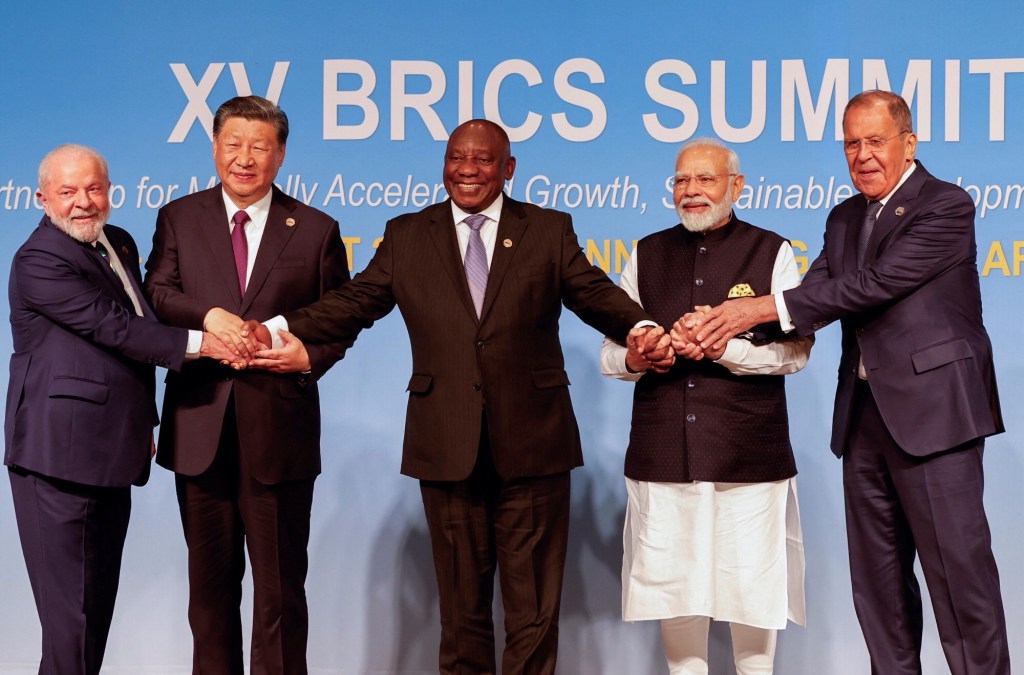
Though its original purpose was said to be directed toward identifying investment opportunities, BRICS has clearly evolved into a geopolitical bloc. According to BBC.com (Feb. 1, 2024):
“The group was designed to bring together the world’s most important developing countries, to challenge the political and economic power of the wealthier nations of North America and Western Europe.”
In other words — in fact, in Lavrov’s very own words — “to govern everything.”
But he carefully sidestepped that.
*. *. *
At some point, the U.N. photographer must have asked Sergei Lavrov for a photo op. It clearly was not the best timing, because this is what the world got to see:
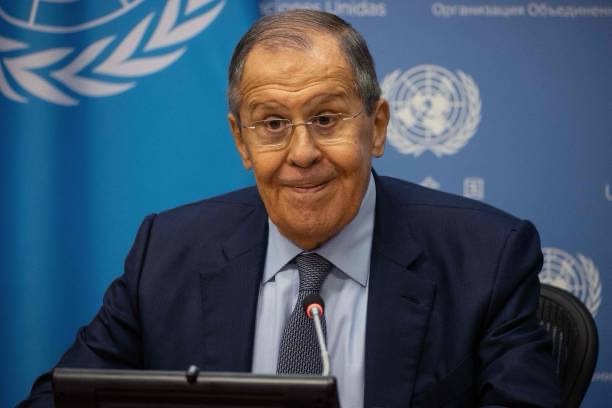
Sometimes you just don’t feel like smiling.
Just sayin’ . . .
Brendochka
9/30/24
 The Blog About Everything … and Sometimes Nothing