“War is hell.”
American General William Tecumseh Sherman is credited with having said it first, in an address to military school graduates sometime after the end of the U.S. Civil War (1861-65). And he was an expert on the subject, as the man whose troops had burned a gigantic swath through the State of Georgia from Atlanta to Savannah.
Today, 21st-Century weaponry being what it is, the hell of war has only gotten bigger and more devastatingly destructive.
Ask anyone in Ukraine.

As always, there are thousands upon thousands of innocent victims — civilians who are caught between two warring factions and become what is blithely referred to as “collateral damage.”
But there is another sort of collateral damage to be considered these days: the populations of neighboring countries, accidentally (or otherwise) the unlucky recipients of bits and pieces of weaponry that can’t read a map and don’t know where a border marks the end of one country and the beginning of another.
Drones, for example, are “smart” weapons; but they’re not infallible. And on Sunday, Romania and Latvia — both members of NATO — reported incursions into their territories by Russian drones.
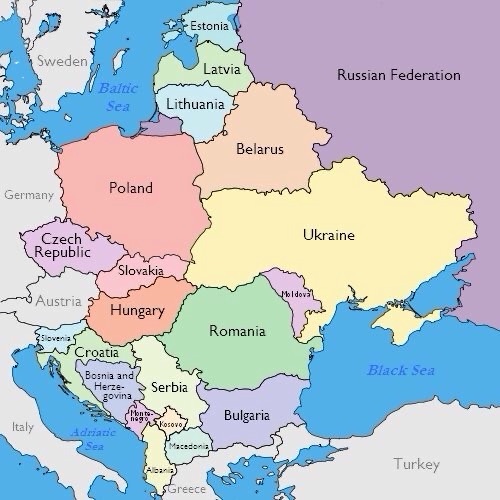
In Romania, it was reported by the Ministry of National Defense that a Russian drone had entered its territory early on Sunday as Moscow was engaged in a strike against “civilian targets and port infrastructure” across the Danube River in Ukraine. An investigation was underway as to the actual “impact zone” in an area — fortunately uninhabited — along the Romania-Ukraine border.
Luckily, there were no immediate reports of casualties or damage. But the government in Bucharest deployed F-16 warplanes to monitor its airspace, and issued alerts to the residents of two eastern regions. [Stephen McGrath and Jari Tanner, Associated Press, September 8, 2024.]
And this isn’t the first such incident. Romania has confirmed drone fragments on its territory on several occasions since Russia’s invasion of Ukraine in February 2022.
In this most recent instance, I was able to use the words “fortunately” and “luckily.” But, what if . . .? Just a few degrees in any direction, and human lives might have been lost, residential buildings and critical infrastructure damaged or destroyed . . . in a NATO country. Then what?
NATO’s outgoing Deputy Secretary-General — who also happens to be a former top diplomat of Romania — condemned Russia’s violation of his country’s airspace:
“While we have no information indicating an intentional attack by Russia against Allies, these acts are irresponsible and potentially dangerous.” [Id.]
To say the least . . .
*. *. *
Looking at the above map, it’s easy to see how a drone or a missile might travel a little farther than intended and stray across the border into Romania. But what about Latvia? It doesn’t share a border with Ukraine.
It does, however, abut Russia’s good friend Belarus, as well as Russia itself. But a drone coming from either of those countries with a target somewhere in Ukraine would have to be pretty far off-course to end up in Latvian air space. Yet that’s apparently what happened.
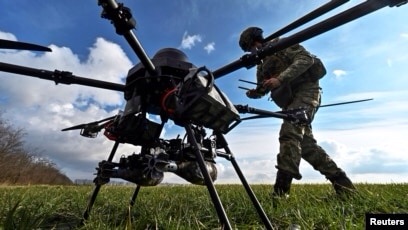
The crash site has been identified, and an investigation is underway. But Latvian Defense Minister Andris Spruds has thus far downplayed the incident, saying:
“I can confirm that there are no victims here and also no property is infringed in any way. Of course, it is a serious incident, as it is once again a reminder of what kind of neighboring countries we live next to.” [Id.]
I could tell you what kind of neighbors they are . . . but it’s not necessary. Everyone already knows.
*. *. *
And in Ukraine, Foreign Minister Andrii Sybiha said that the incursions were “a reminder (that) the aggressive actions of the Russian Federation go beyond Ukraine’s borders.” [Id.]
Indeed.
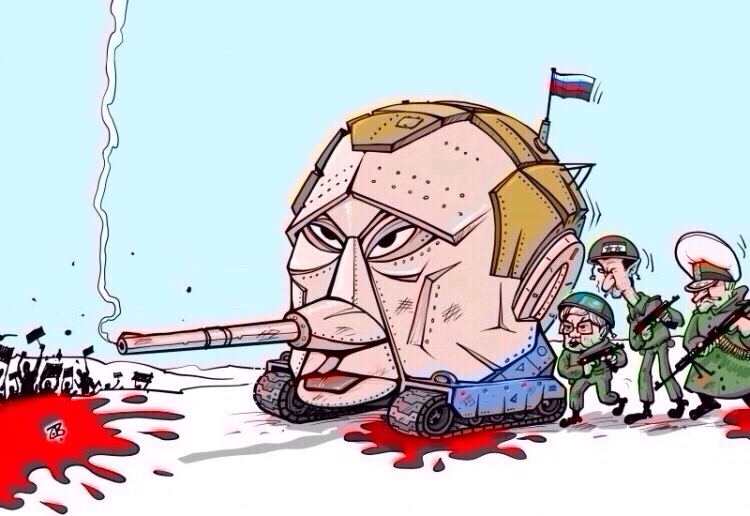
Just sayin’ . . .
Brendochka
9/10/24
 The Blog About Everything … and Sometimes Nothing