August 1993. I was preparing for my departure from Moscow, and I was — to put it mildly — pissed.
I was supposed to have had a two-week hiatus at home, then returned to Russia for the remainder of the year; but I had just been advised by Gil Robinson that the Foundation’s budget had somehow suffered a shortfall and I was to be the sacrificial lamb, to be replaced by Maya — who worked (more or less) for a much lower salary, of course. I knew where the money had gone — nothing illegal, certainly, but definitely wasteful and irresponsible. Obviously, I was not a happy camper. And there was the fact that our American Foundation would be left without an American on-site administrator. However, fighting it would have proven divisive and counter-productive, so I chose to shut up and suck it up. Stupid! Stupid! Stupid!

But enough grumbling. The fact is, I was preparing to pack it in within the next couple of weeks. And first there were things to be done: a good bit of Foundation business . . . and a couple of personal matters.
With the end of my time in Moscow approaching, I began thinking about some of the small but memorable incidents of the past months. Like the day I went for a walk in the neighborhood and saw two young women approaching with arms full of gorgeous pink peonies — one of my two favorite flowers (the other being lilacs). I stopped them and asked where I could buy some of the blooms, and they smiled, saying they hadn’t bought them, but had picked them somewhere. When they saw my disappointment, they asked where I was from, and when I said I was an American from Washington — remember, this was a time when we were much loved in Russia — one of the girls just handed me half of her armful of peonies and insisted that I accept them as a gesture of friendship. Those flowers filled my apartment with their fragrance for days, and the memory still fills my heart with joy. The world could use more peonies.
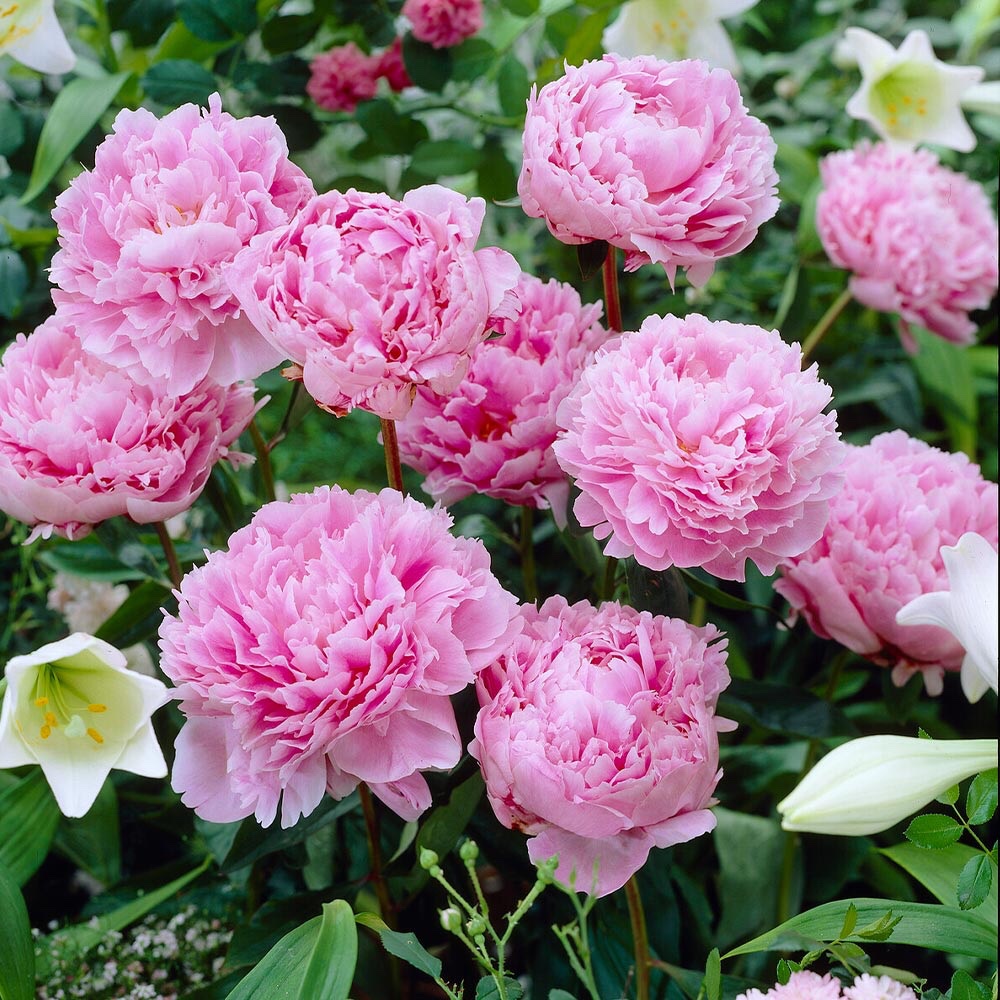
Made you smile, didn’t they?
*. *. *
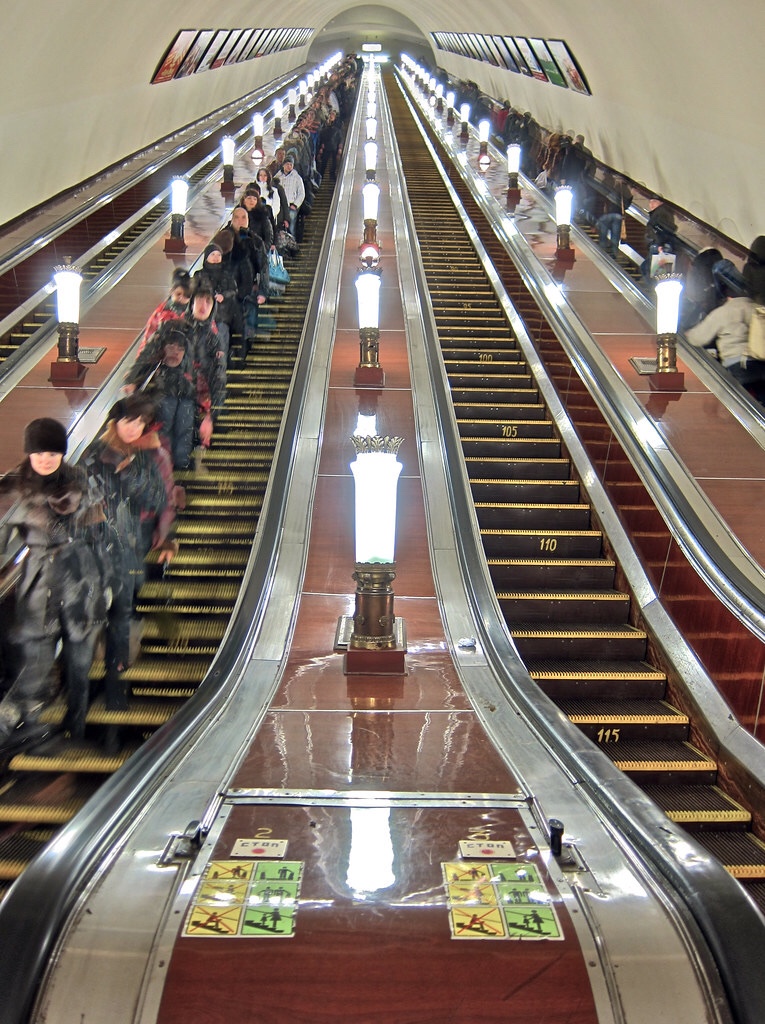
Then there was the woman in the Metro with a little girl around five or six years old and two big bags of groceries, but only two hands when she clearly needed three. As I was approaching the top of the escalator to head down into what looked like a quick ride to the center of the earth, the woman walked up to me, nudged her little girl toward me and demanded, rather than requested, that I help her child onto the escalator. With a crowd of people close behind us, there was no time to think, much less quibble; so I took hold of the girl’s hand, jumped with her onto the fast-moving escalator, and saw the mother jump on behind us, still clutching her groceries. They both were apparently expert at this maneuver.
The little girl was adorable, with two big bows anchoring her pigtails in the old Russian style, and was obviously shy. In my most friendly voice I told her my name and asked hers, but she just stared down at her feet. I said I was from America, far away, but still no response. When we finally reached the bottom, we both jumped off, her mother following close behind. The little girl then ran to her mother’s side and they hurried off — without so much as a “thank you” or “goodbye.” Nothing. I assumed she had mistaken me for a Russian woman (which happened from time to time), and that this was just how things were done there; I really don’t know. But can anyone imagine an American mother entrusting her child to a stranger that way? “Hey, you, take my kid.” I must have a really honest face.
*. *. *
Another incident that has stayed with me had to do with an ice cream vendor in a kiosk located along our usual route home from the city center. Vitold introduced me to it, and I decided to stock the freezer with the yummy treat to share with my co-workers. There wasn’t much of a selection; actually, there was none at all. You either liked vanilla or you were out of luck. And it was sold by the “brick,” which as I recall weighed about a fourth of a kilo, or just over half a pound, each brick wrapped in some sort of butcher’s paper. So one day we stopped there, and while Vitold guarded the car, I stood in line at the kiosk. When it was my turn, I asked the lady, in my best Russian, for eight bricks, and held up eight fingers to be sure she understood me.
Oh, she understood, all right. But what she didn’t understand was what anyone was going to do with four and a half pounds of ice cream. So she demanded, in a voice resembling my fourth-grade teacher’s, “Eight?! What for?” Knowing that it would be the height of rudeness to brag about having the luxury of a freezer at home, I came up with a quick answer I thought would satisfy her: “For my friends at work.” And for probably the first time that day, she smiled. In fact, she liked my answer — and me — so much that when I came back again another day, she greeted me like an old friend and handed over my eight bricks of ice cream without even being asked.
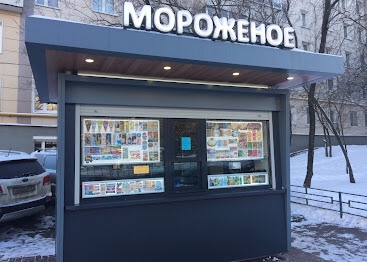
By the way, there is — or was then — no such thing as low-fat ice cream in Russia. To hell with calories and cholesterol; you may as well die with a smile on your face — and a few extra inches on the hips.
*. *. *
I could have gone on daydreaming, but it was time to begin wrapping things up. Unbelievably, one of the first things on my to-do list was taking Maya to the American Embassy to obtain her visa in order to fulfill one of her long-time dreams: a visit to the United States. Yes, that’s right: somehow money had been found in the budget for her plane fare and a one-week stay for . . . I believe it was called on her visa application . . . “training,” or perhaps “orientation.” She was supposed to develop, in just one short week, the skills it had taken me thirty-plus years to hone. It doesn’t matter what you call it — it stank. But as the manager of the Moscow office, I had to vouch for her to our State Department. So we spent a couple of hours in the visa office, being grumped at by an American Consular officer who clearly wanted to be anywhere but where he was, until finally he was satisfied that Maya did not pose a threat to U.S. security, and approved her application.
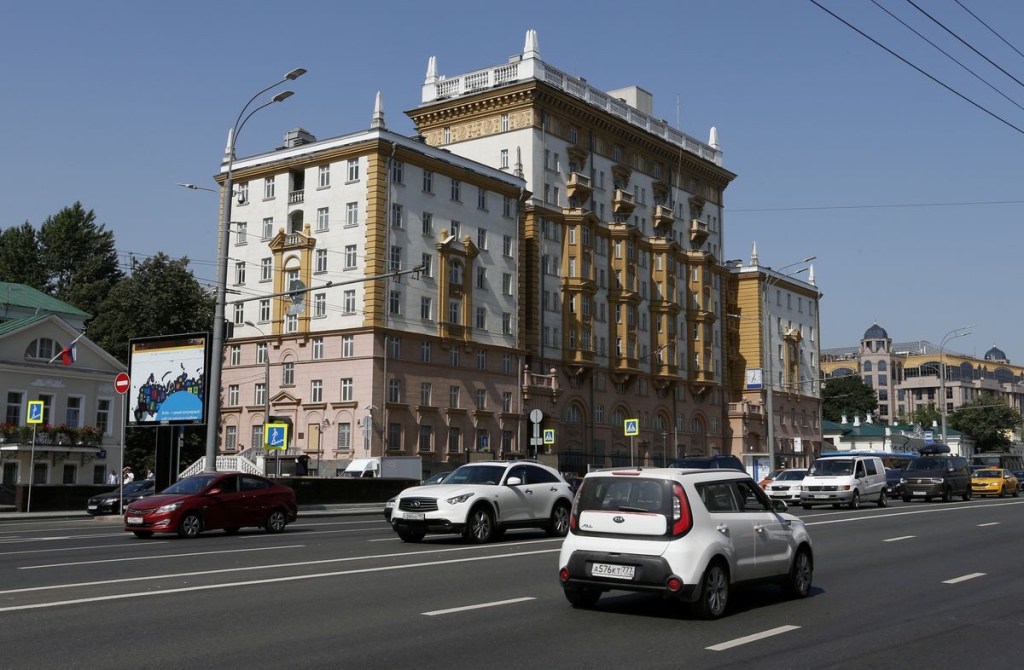
On leaving the Embassy and heading toward the nearest Metro station, we had to cross a popular cut-through street that ended in a “T” at the busier road and had only a stop sign — which was mostly being ignored by the frazzled drivers turning onto the main road. Pedestrian right-of-way appeared to be an unknown concept in Moscow, despite the presence of crosswalks, and we stood on the sidewalk for a full five minutes, waiting for a break in the traffic that never happened. Predictably, I finally lost patience. With Maya shouting for me to stop, I decided to take my chances with an oncoming black Mercedes — a rarity in those days, and obviously belonging to someone of the criminal persuasion. It appeared to be slowing for the stop sign, so I stepped off the curb, walked to the middle of the street, stood my ground, and held out my right hand in what I hoped was a good imitation of a Moscow traffic cop. All I needed was a whistle.
As I looked more closely at the driver and the other occupants of the approaching Mercedes, I saw four rather tough-looking men, well-dressed, and sporting aviator sunglasses: clearly Mafiosi. I heard Maya screaming, “Brenda! Are you crazy? Do you know who they are???” Well, sure, I knew who they were — but I couldn’t back down now, could I? The car stopped; the driver looked at me for a moment with an angry scowl; then he unexpectedly broke into a huge smile, bowed his head toward me, and dramatically waved his arm from left to right in a gesture inviting me to continue across. I smiled back, bowed my head in return, mouthed “spasibo” (“thank you”), and continued on my way to the opposite curb. Once again, I had proven that you have as much power as you can make others think you have. Armed border guards, KGB officers, Mafia dons — no difference, really.

Then, of course, I had to wait another five minutes for Maya to make her way across the street. But it was worth it, just seeing the fear on her face when I confronted that Mercedes. (Yes, I know that’s sadistic, but she wasn’t my favorite person at that moment, and sometimes you just have to grab your pleasure when you can.) When she asked what on earth I had been thinking, I told her that those men — regardless of who they were — undoubtedly had mothers, wives, sisters, and/or girlfriends, and wouldn’t be likely to run over a woman unless she was pointing a gun at them. Another calculated risk taken . . . and survived. Moscow was such fun.
*. *. *
We were scheduled to present a luncheon promoting our much-touted veggie burger at Petrovka Headquarters on the day before my departure from Moscow, so there were still preparations to be completed for that event. Co-hosting the luncheon, and instructing the “chef” at Petrovka, would be one Vladimir Pivovarov, then head of the Department of Alimentation (Nutrition), whom I had not yet met. I had a meeting scheduled with him a couple of days prior to the luncheon.
When I arrived at his office — a second-floor walkup in an old building on Leninsky Prospekt, away from the center of the city — the first thing I noticed was a portrait on the wall of Vladimir Ilyich Ulyanov, better known as Vladimir Lenin. Those mass-produced portraits had occupied a place of honor in every single government office and every single shop and factory throughout the entire Soviet Union. But since the dissolution of the USSR at the end of 1991, they had rapidly disappeared from most of those walls. The fact that Pivovarov still had his copy proudly on display spoke volumes to me about his political leanings. Or perhaps he was just too lazy to take it down. In any event, I suddenly had another of my diabolical little ideas.

When we had finished our discussion of the arrangements for the luncheon, I stood up as though to leave, but then hesitated. Pointing at the Lenin picture, I asked, “Would you be willing to sell that, and if so, for how much?” Clearly taken by surprise, he said he had no idea, as he had never been asked that before. I told him I would pay $50 for it, and he could think it over until our next meeting two days later. In 1993, $50 in hard currency was a lot of money to an underpaid government apparatchik, and I was pretty sure I would be going home with Lenin in my luggage . . . somehow.
*. *. *
On the personal business side, there was also one more meeting to be held with Valentin Aksilenko before leaving. He came to my apartment on a Sunday, when none of my co-workers were there. We made small talk for a while about my departure, whether I was glad to be going home, etc. Then, pointing at the ceiling and placing a finger across his lips in the universal signal that someone might be listening, he handed me a plain, white, letter-sized envelope and gestured toward a desk drawer, indicating that I should get it out of sight. Finally he said out loud that he had to leave, and silently gestured that I should go outside with him. I replied that I would walk him out and we left the confines of the apartment, remaining silent in the elevator and as we passed the lady at the desk on the ground floor. I felt as though I was taking part in a really bad spy movie.
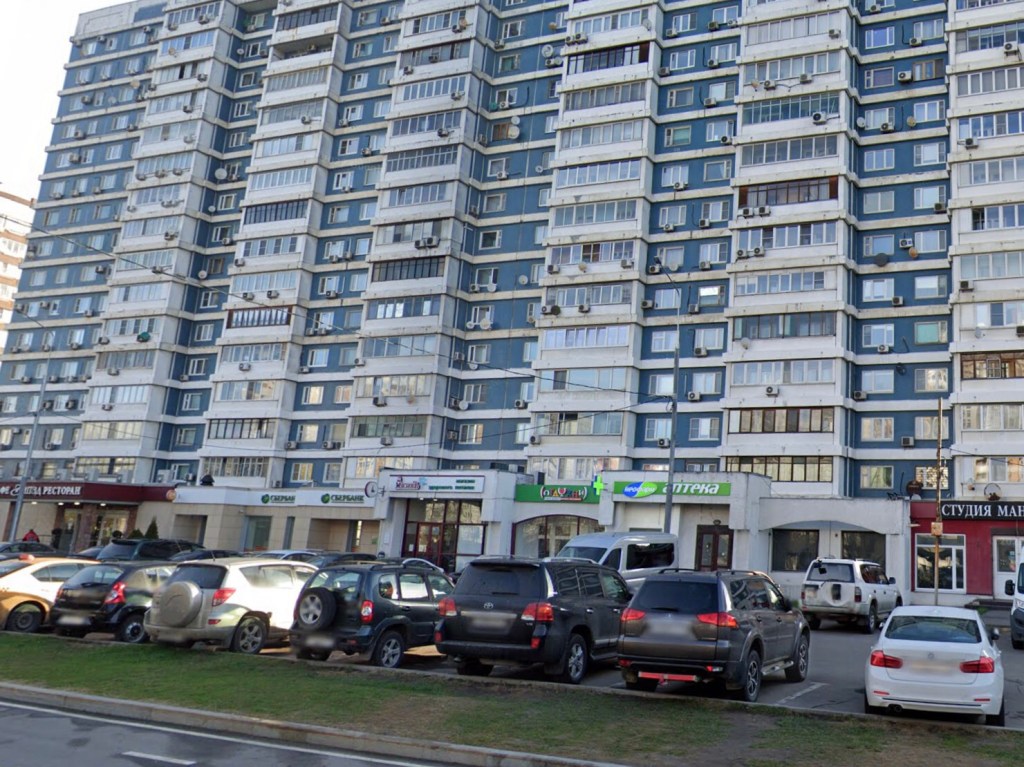
Directly outside the entrance was a rather busy parking area for residents of the building, so we walked around the corner toward the street. But he stopped along the side of the building and motioned to a specific spot where we should stand and finish our conversation. It was a rather odd place to stop, completely empty and exposed, and it appeared that he had pre-selected it. As I glanced at the neighboring building, just a driveway’s width away, I spotted a man standing on his second-floor balcony, leaning on the railing and making no secret of the fact that he was watching us — whether out of simple curiosity, or for some other reason, I had no way of knowing. I mentioned him to Valentin, but, without even looking up, he simply shrugged and said not to worry about it.
Not to worry? His nonchalance alone was cause for concern, especially considering his extreme caution just moments before. Did he already know the man was there? Had he intentionally chosen this spot to stand and talk? Who was that person? This was more than a little weird, and I was beginning to feel seriously creeped out.
We stood there and talked for ten minutes or so about Yuri Shvets’ continuing work on his book, during which time he also cautioned me to guard the contents of the envelope he had given me very carefully. I was to keep it for him until next we met, presumably in Washington. I didn’t like this at all. — Not. One. Bit.

Then we shook hands and said goodbye once again. He walked away toward the street, and I wondered whether that would be the last time I would ever see him. I turned in the opposite direction and headed back toward my building entrance, catching a glimpse in my peripheral vision of the man still watching from his balcony. It took every ounce of self-control I could muster to keep from looking directly up at him. I slept fitfully that night, dreaming that people were trying to break into the apartment, and waking several times in a cold sweat.
*. *. *
But despite the lack of sleep, I still had to survive my final appearance the next day at Petrovka 38, where — unbeknownst to me that night — I would be facing a dozen terrifying plain-clothes Militia strongmen, Officer Bragin from the KGB, and a huge surprise in the basement. Details to follow, next time.
TTFN,
Brendochka
4/27/23 (re-posted 9/7/24)
 The Blog About Everything … and Sometimes Nothing