I did promise to catch up. I just wasn’t sure I could do it this quickly. So let’s get right to it.

As always, there were a number of interesting events on this date throughout the centuries: Pope Benedict XV was named to the papacy in 1914; President Wilson embarked on a tour to promote the League of Nations in 1919; and back in 1777, the Stars and Stripes — the official flag of the United States — was flown in battle for the very first time.
But there were two standout events that deserve to be commemorated, both involving wars: one happily ending, and one just beginning:
1783: Treaty of Paris signed. It had taken more than seven years from the signing of America’s Declaration of Independence on July 4, 1776, but at last a treaty was signed by the United States, Great Britain, Spain and France declaring the independence of the American colonies.
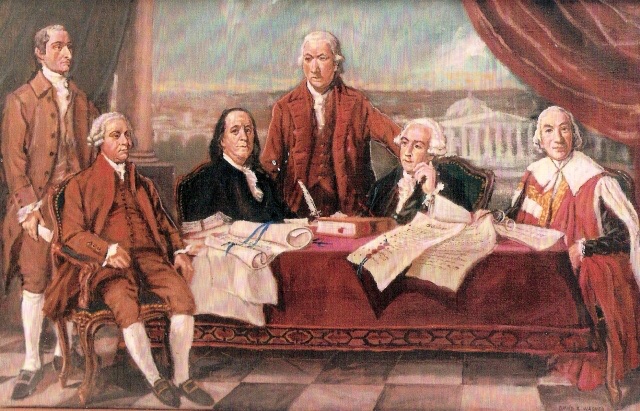
The boundaries of the new nation were established from Florida in the south to the Great Lakes in the north, and from the Atlantic coast west to the Mississippi River.
There remained a great many battles to be fought and hardships to be overcome before this great nation would stretch all the way to the Pacific Ocean to the west. But this was a formidable start.
*. *. *
1939: The life-changing day World War Two began. On September 30, 1938, the Munich Agreement had been signed among Great Britain, France, Italy and Germany — a peace treaty that would prevent further armed hostilities following Germany’s annexing of the Sudetenland in western Czechoslovakia. British Prime Minister Neville Chamberlain returned from Munich to London a hero, declaring “peace for our time.”
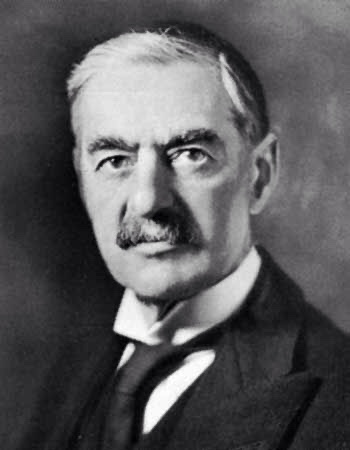
Less than a year later, on September 3, 1939, Chamberlain was forced to announce to the British people that Germany had violated the treaty by invading Poland, and that Britain had no choice but to declare war on Germany. In part, he told his people:
“It is evil things that we shall be fighting against — brute force, bad faith, injustice, oppression and persecution — and against them I am certain that right will prevail.”
Within minutes of his announcement, air-raid sirens went off across London. The peace had ended.
Five hours later, France also declared war on Germany.
And at 18:00 hours on that same day, King George VI — overcoming his own great personal difficulties** — broadcast his message to the people of the British Commonwealth, telling them to . . .
“. . . stand calm, firm and united in this time of trial. The task will be hard, there may be dark days ahead and war can no longer be confined to the battlefield,, but . . . with God’s help, we shall prevail.”

And the rest, as they say, is history.
Brendochka
9/3/24
** For an outstanding (if somewhat dramatized) depiction of the life of King George VI — an accidental monarch, and the father of the late Queen Elizabeth II — I recommend the 2010 film, The King’s Speech, starring Colin Firth, Geoffrey Rush, and Helena Bonham Carter. It’s one of my all-time favorites.
 The Blog About Everything … and Sometimes Nothing