Back in Moscow following my first visit to Kiev, I had settled into a comfortable routine of busy days and quiet evenings. I’d even begun venturing out by myself on weekends. The nearest Metro stop was an easy walk of only about a kilometer, along a pleasant pathway that skirted a patch of undeveloped, public parkland; and it was a quick ride from there into the city. More often, though, I would investigate my own neighborhood, finding handy little shops and introducing myself to the shopkeepers who didn’t quite know what to make of the newly-arrived American lady in their territory. Or friends would take me to some of the non-touristy areas of Moscow, and invite me to their homes for some good food and “kitchen conversation” — the traditional Russian after-dinner talks around the table that go on for hours. I finally came to understand why my grandparents had rarely used their living rooms: the kitchen was the true heart of the home.
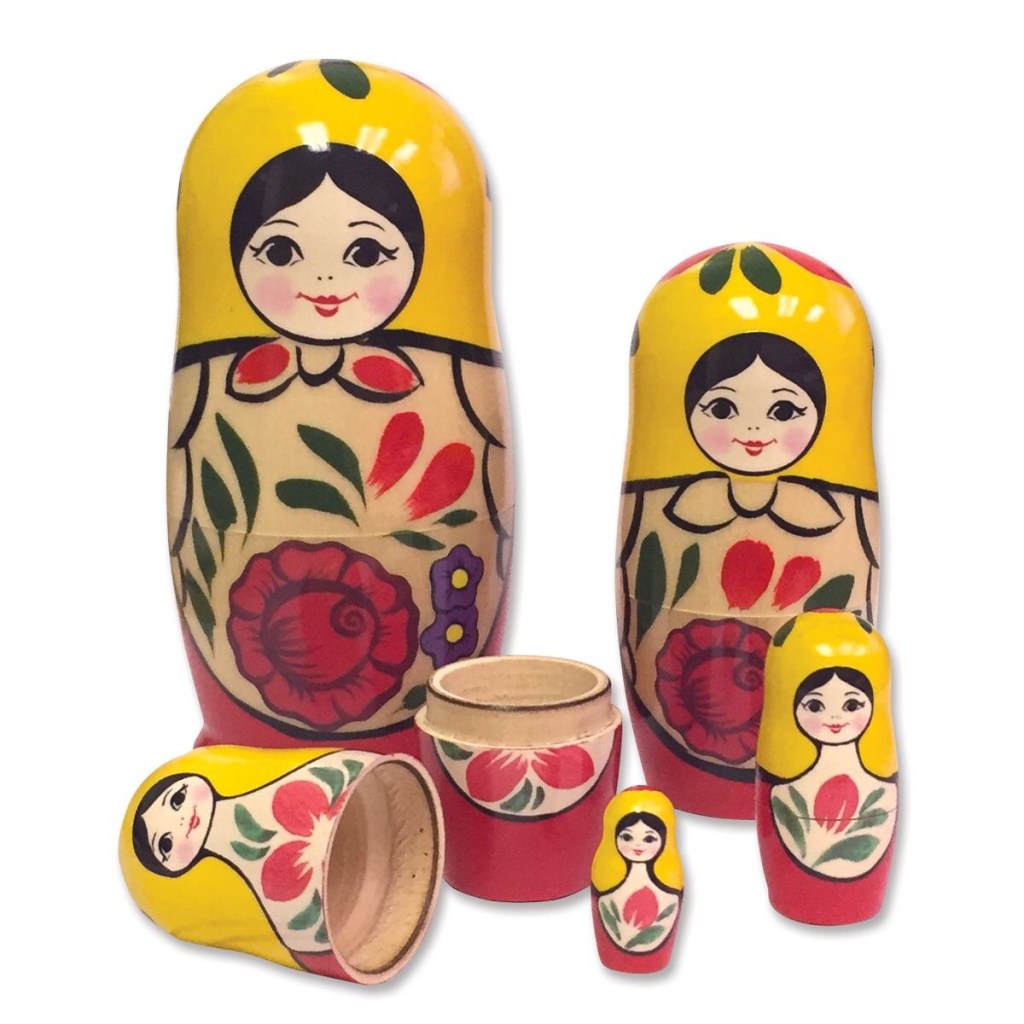
One weekend, Vitold offered to drive me to an amazing place called Izmailovsky Park on the outskirts of the city, which featured a huge weekend open-air market that quickly became my favorite place to find items for the apartment: hand-woven rugs, hand-embroidered tablecloths, hand-crocheted bedspreads, hand-sewn curtains — everything beautifully handmade. And there was the odd trinket, like the famous Russian matryoshka (nesting doll) — a couple of which are staring across the room at me even now, thirty years later, as I write this chapter.
Then one day the office phone rang, and I answered it to hear a man’s deep voice introducing himself as Mikhail Pashkin of the Moscow Militia — and specifically, head of the Moscow Police Workers’ Union. I waved Lena over to the phone to be sure I didn’t miss anything, as Pashkin was, of course, speaking Russian. She was understandably a little nervous, since no law-abiding (or other) Russian citizen wants to be involved with the law enforcement authorities for any reason, even over the phone. And we’d already had one unannounced drop-in by a uniformed officer, “just checking to see how things are going.” Why had we become the beneficiaries of such loving attention? Surely, I thought, they must have better things to do. Did they check up on all registered foreign organizations this way? Quite possibly. Or was there something special about ours? My association with Aksilenko, for example? There was no way of knowing.
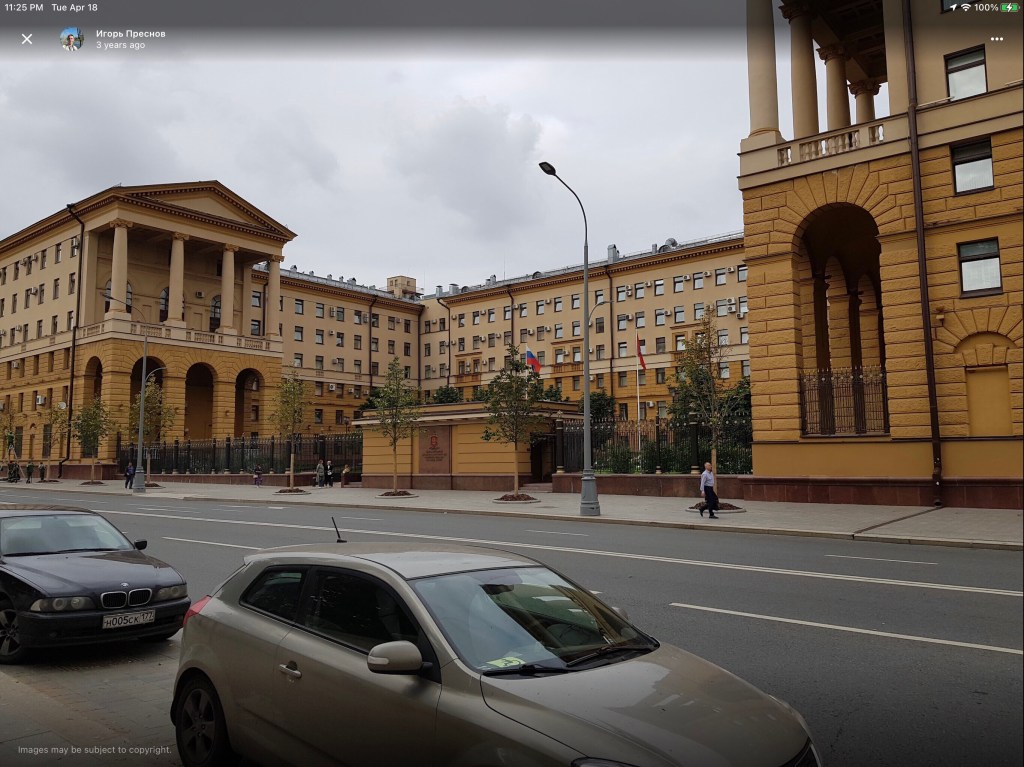
This day, however, Officer Pashkin was calling to invite me to visit him at Militia Headquarters, known to Muscovites by its infamous street address, Petrovka 38. He had heard of our Foundation and was interested in obtaining — gratis, of course — a quantity of our Veggieburger product “for the widows and orphans of Militia officers killed in the line of duty.” A nice way of making it impossible to refuse.
As luck would have it, the head of our Foundation, Gil Robinson, was due to arrive in Moscow in a few days. I relayed that information to Officer Pashkin, and we scheduled a meeting several days ahead in order to include Gil. That gave me plenty of time to work up a good case of nerves. But from a practical point of view, I decided it was better to have friends in certain places, in case I ever needed a favor. Spoken like a true Russian citizen.
A few days later, Gil arrived as scheduled. He decided that Maya should accompany us on the visit to Petrovka, mainly because she was the most self-assured of our three interpreters and least likely to be intimidated. So off we went at the appointed time, with Vitold driving but refusing to enter the scary building with us. He would wait in the car, no matter how long it might take, but would not set foot inside. We had been given directions, not to the main headquarters, but to a small, dilapidated old building around the corner. The guard at the desk was expecting us, and accompanied us up the stairway to the third floor (there was no elevator), gratuitously pointing out along the way the “interrogation room” on the second floor — mercifully unoccupied at the moment.
Oh, please! Was that really necessary? Did he actually think we’d enjoy a touch of gallows humor to begin our day? Speaking for myself, I could have done without it.

On the third level, three men were waiting in a small — really small — office: one seated behind an old, somewhat scarred desk, and one standing to either side and slightly behind him. There were three mismatched chairs on the front side of the desk for us. And that’s all there was room for in the office; it wasn’t exactly the executive suite. Gil took his seat in the middle, flanked by Maya to his right and me to his left.
The man seated at the desk was, of course, Mikhail Pashkin. He was movie-star handsome, dark-haired, with shoulders, pecs and biceps that strained at the seams of his short-sleeved, light blue shirt. This was not a man you would ever challenge to an arm-wrestling contest. If his intention was intimidation, he succeeded magnificently. (All right, now I’m starting to sound like a Mickey Spillane novel. Enough of that.)
Pashkin introduced the uniformed man to his left (our right) as Militia Officer Kostylev. And on Pashkin’s other side, now perched casually on a windowsill, was a pleasant-looking man in khakis and a plaid sport shirt, who introduced himself as Bragin. Just . . . Bragin.

After we three had identified ourselves, Gil began by politely asking a couple of questions as to the specific jobs of our hosts. Pashkin talked a bit about his work within the Police Workers’ Union, and Kostylev said that as an officer in the Militia, he was also a member of the Union. Then Gil turned to Bragin and asked, “Are you also with the Militia?”
And that was when the fun began. Bragin simply shook his head and softly replied, “No.” Obviously a man of few words.
Now remember, please, that Gil Robinson was a former Ambassador-at-Large with the U.S. State Department — supposedly a trained diplomat, right? In Washington, and every other world capital, when someone gives you a non-responsive response like that, you don’t press them; you assume their job involves some sort of classified work. And Gil, of all people, should have remembered that. But did he? Oh, no. Instead, he asked, “Well, where do you work?” And when Bragin responded, “A different department,” Gil incredibly went on: “Well, what department is that?” And Bragin softly replied, “It doesn’t matter.”
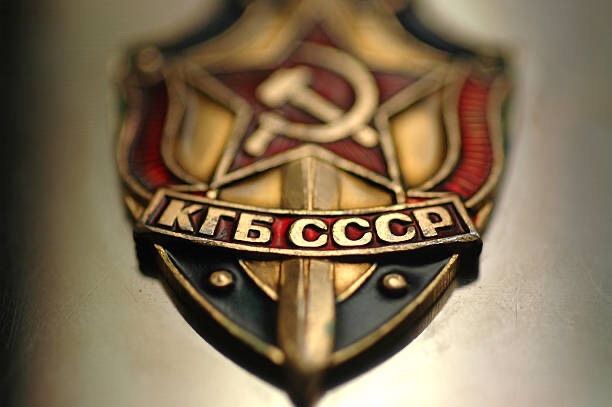
At this point, as Gil prepared to push the envelope with yet another idiotic question, Maya and I began elbowing him in the ribs from both sides, saying quietly, “Gil, drop it.” “Let it go, Gil.” “Just leave it.” Maya understood; I got it; but the professional diplomat remained clueless. Meanwhile, Bragin had caught my eye. Seeing that I was shaking my head in embarrassed disbelief, he smiled and nodded knowingly at me. In that instant I sensed that Vladimir Bragin (I learned his full name later) had become my newest friend in Moscow. He then looked at Gil again, shrugged resignedly, and said, in Russian, “КГБ” — which Maya and I translated for Gil, in unison: “KGB.”
If the floor had opened up beneath Gil’s chair at that moment, he would have been a happy man. As it was, he was trapped in that little office, trying to worm his way out of a gigantic faux pas. His face turned several shades of reddish-purple, and he began to stammer. I believe the only word he actually managed to choke out was, “Oh.” To his credit, though, he did shift gears fairly quickly, turning from Bragin to Pashkin and asking what we could do for the good folks of the Militia; and the meeting then began in earnest.
When I looked again in Bragin’s direction, he was once more looking at me and smiling. You might say we bonded over Gil’s embarrassment, and I was to be the beneficiary of that connection throughout my stay in Moscow. He was my Russian krysha, literally “roof” — my protection — and it never cost me a thing. It didn’t change what he did for a living, of course, but he turned out to be a very likable fellow.
Now, you’re probably wondering where the Russian Mafia comes into play in this story. At that time in Russia — and I’m not sure how this may have changed under the current regime and with the rise of the oligarchs — it was difficult to know with whom you were dealing at any given time. The so-called “Mafia” families — actually just criminal gangs who named themselves after the Italian originals — were so seamlessly woven into the Russian hierarchy and society in general, you simply couldn’t avoid them.
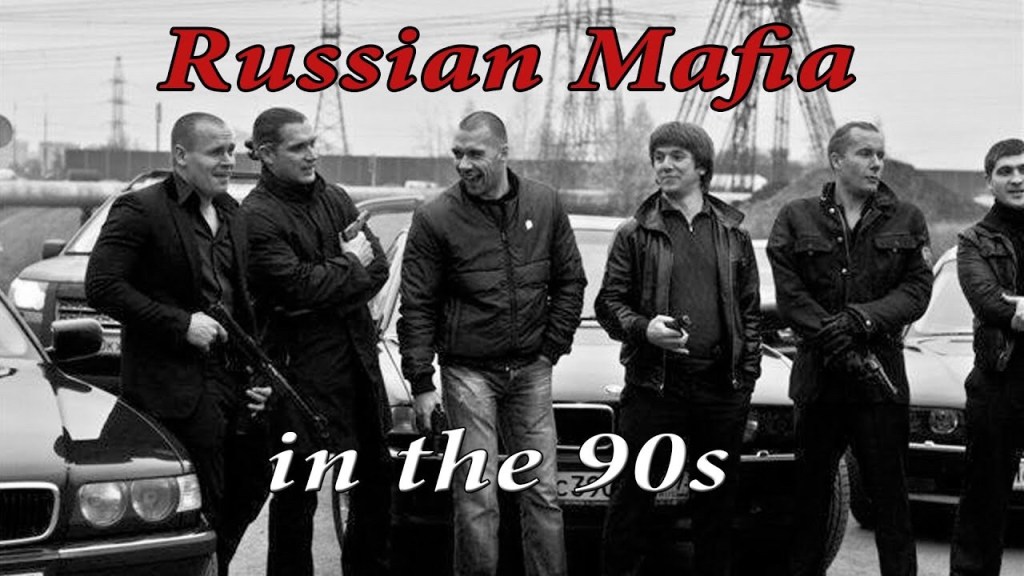
In the case of Pashkin and his buddies at Petrovka, it all had to do with the final distribution of the huge shipping container of Veggieburger we were able to deliver to them. Information we later received indicated that the widows and orphans had enjoyed little, if any, of it. All or most of it went in the front door and right out the back, directly onto the black market, earning a sizable profit for both the “wholesalers” and the “retailers.” And those operations were generally controlled by the various Mafia gangs. So while I spent those months in Moscow for the most part steering clear of the criminal elements, it proved impossible to bypass them entirely.
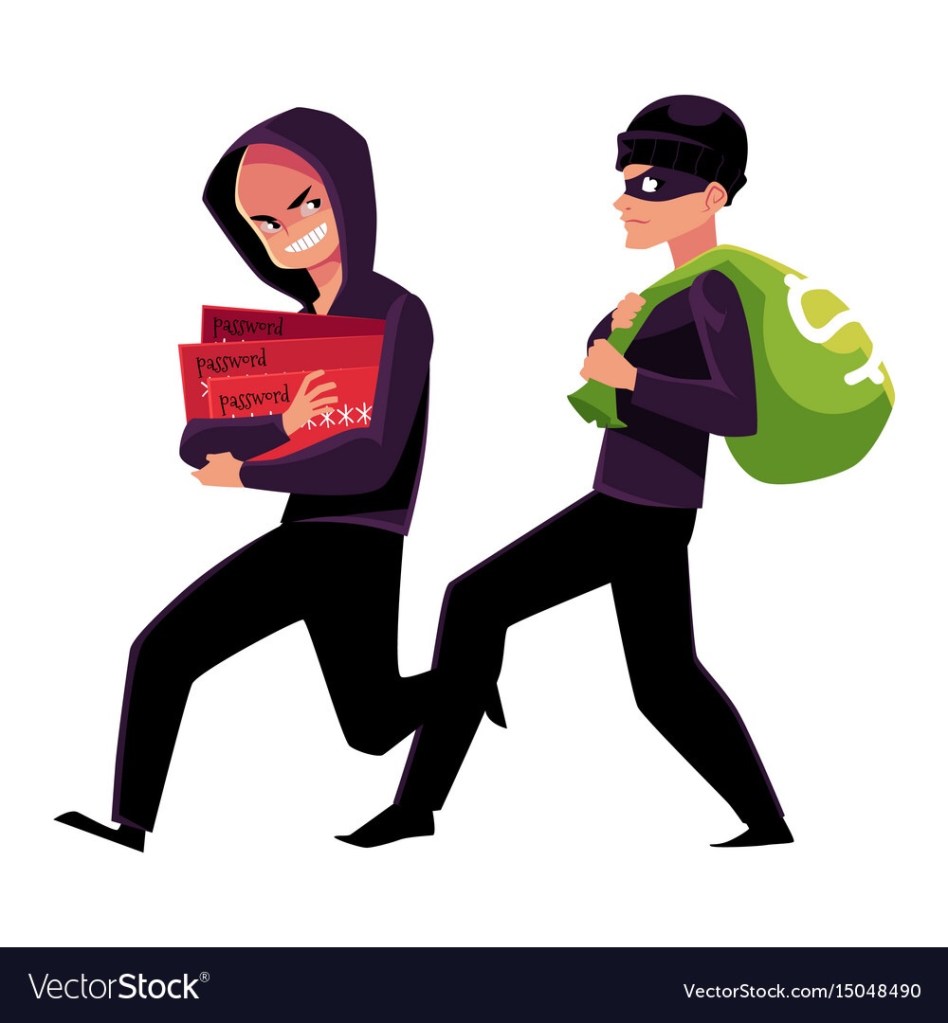
One example of the steps we took to protect ourselves was the safe in the apartment. The ‘90s were a time of rampant criminal activity in Russia, sometimes referred to as “The Great Mafia Wars.” There were daily drive-by shootings; burnt-out vehicles by the side of the road; and kidnappings or slayings of individuals as they entered or left their banks with large amounts of cash — much like living in Newark or Detroit. So we had a sturdy safe in one of the bedrooms in which we kept the thousands of dollars periodically carried over by Gil Robinson for payroll, rent and other expenses. As with the front door, it would have taken a bomb to get into that safe; and it relieved me of the need to go near a bank . . . ever.
*. *. *
When I was preparing to leave D.C. for Moscow that May of 1993, people had frequently asked whether I wasn’t afraid to be going to such a dangerous location. At the time, I had been living in the metropolitan Washington D.C. area for most of my life, and I simply pointed out to them that I was already in what was then known as the murder capital of the United States. The only difference, I argued, was geography. I had long since developed a “que sera sera” attitude, and didn’t think too much about the daily hazards of life. My philosophy was, and still is, that we’re all born with a pre-determined expiration date — though it’s not stamped on our bottoms like a can of beans — and if my time was due to come up in Moscow, then so be it. I was going to have a grand time while I could.
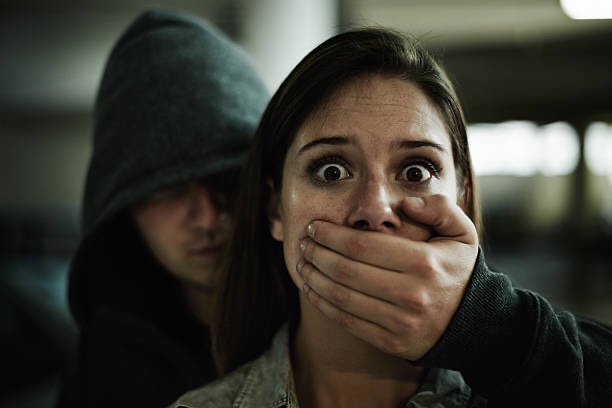
And so I did, for the most part. But there were nerve-wracking moments as well. One of those involved the aforementioned need for my continuing contact with Valentin Aksilenko. We kept our telephone communications brief and infrequent, and only actually met a couple of times during the entire summer. He seemed relaxed enough, but again, I attributed that to his years of KGB training. We would “walk and talk” — strolling outside in busy places near my apartment building to avoid any electronic bugs that might be hidden in the apartment — and I think I managed to appear nonchalant enough. But my insides always felt as though I’d swallowed a gallon of Mexican jumping beans. I fully expected at any moment to be pounced upon by a couple of big thugs, dragged into a car with darkened windows, and driven to an isolated spot where I would be shot in the back of the head and left for the crows to feed on. But then, I always did watch too many bad spy movies. Obviously, I survived without anything of the sort ever happening.
*. *. *
But there were other moments as well. It seemed that even a holiday — specifically, in this case, the American Fourth of July celebration — could turn scary in Moscow, and not just from any errant fireworks. Join me next time for that memorable episode, which still gives me the willies when I think about it.
So long for now,
Brendochka
4/6/23 (re-posted 8/29/24)
 The Blog About Everything … and Sometimes Nothing