May 11, 1993 – Sheremetyevo Airport, again. But at least this time, it wasn’t a snowy February. It was springtime, and I had someone waiting for me at the baggage claim area: good old Vitold. He had thoughtfully brought a friend with him, one who owned a truck. Vitold was a little crazy, but he wasn’t stupid — he knew his Lada automobile would never be able to hold a woman’s six-months-worth of luggage and office supplies.
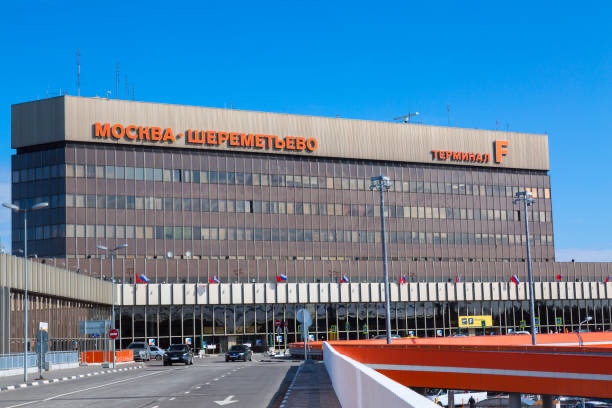
That ride — from the airport far to the north of central Moscow, to the Foundation’s apartment at the far opposite end of the city — has to go down in the record books as one of the most miserably uncomfortable rides in history. In my history, at least. This truck wasn’t a Ford pickup, or anything even close. It was a nameless rattletrap, a junkyard reject, a pitiful conglomeration of spare parts seemingly held together with Scotch tape and baling wire. Its creator had obviously never heard of shock absorbers — or, for that matter, padding in the seats. Welcome home, Brenda; your limousine awaits.
Add to that, the driver from hell and the notoriously rutted Russian roads (pardon the alliteration), and it’s no wonder I was ready to kiss the ground when we finally arrived at No. 16 Rublevskoye Shosse: a 16-story, blue and white Soviet monstrosity, ground-floor commercial space in the front, parking and entrance in the rear, springtime mud everywhere. And in the dismal little entryway, a small desk at which was seated the ubiquitous dezhurnaya: the lady concierge cum watchdog whose responsibility it was to report — to whomever her bosses were — on the comings and goings of all residents and visitors. Innately suspicious of the newly-arrived American on the sixth floor, she eventually decided that I wasn’t there to kill her or to steal anything, and by the time I left Moscow, she had almost come to accept me. I considered that one of the major accomplishments of my time in Russia.
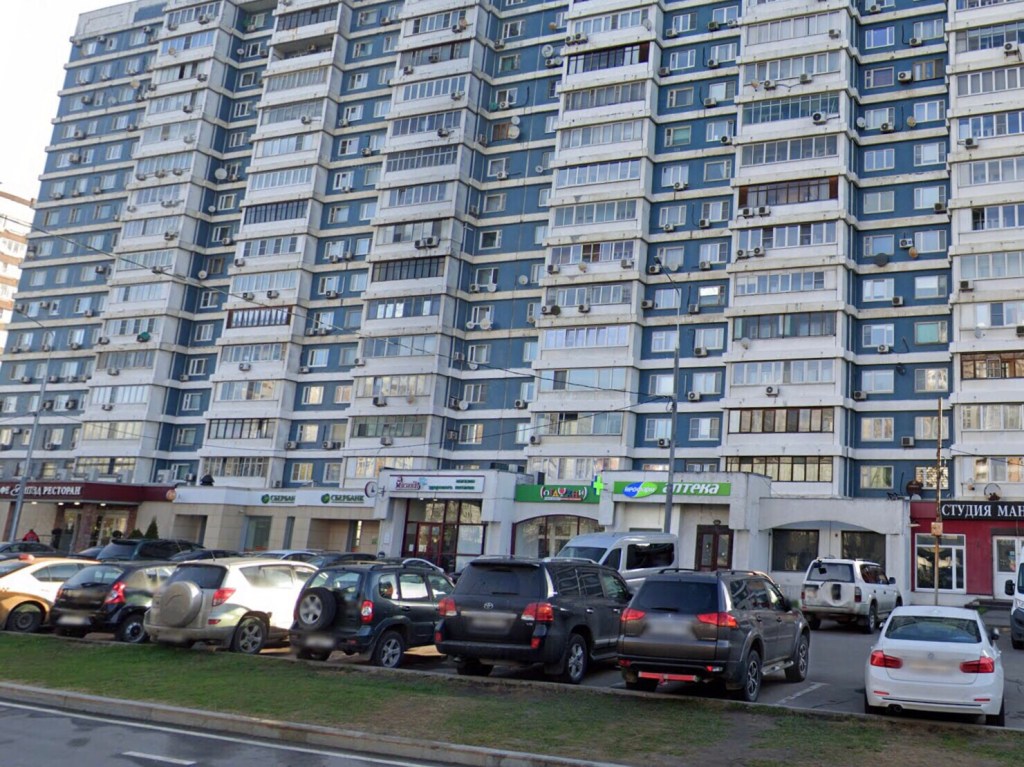
The building was owned by the Ministry of Defense; but the apartment belonged to an army officer who had been sent, along with his family, on indefinite assignment to Tajikistan. I’m sure they were thrilled. But they were allowed to rent out their apartment, and were delighted to find American tenants willing to pay in dollars. They had hired one of their neighbor families on the same floor to look after the place and collect the rent, and we in turn hired the lady of that household, Tamara, to do a bit of cleaning and cooking. I do not know what I would have done without her. She was a great cook, and she knew where to shop for the best meats, produce and bread. In return, I would bring items for her from the hard currency stores that weren’t otherwise available to her. She also volunteered to do my laundry for me. I would have adopted her and brought her home with me when I left Moscow, but her husband and daughters objected rather strenuously for some reason.
Happily, the interior living spaces were far superior to the building’s exterior. My apartment was unusually large for Moscow, clearly indicating that it belonged to a somewhat privileged family. It had a spacious living-dining room, three big bedrooms, two well-appointed bathrooms, and a very nice eat-in kitchen that had been upgraded with German-made appliances and cabinetry. The furniture wasn’t beautiful, but it was comfortable and clean, and I immediately felt right at home. There was also a large enclosed balcony, which became a very handy storage room. Part of the main living area had been portioned out as office space, with a desk, file cabinet, computer, satellite phone, and a Xerox printer/copier (one of the 16 pieces I had brought with me).
My favorite feature of the place, though, was the apartment door. It was made of steel, roughly three inches thick, and had a three-fingered steel deadbolt, each finger, or rod, measuring a good inch or so in diameter and about six inches in length. Nobody was going to break through that sucker — not without a bomb, anyway.
And more people came with the office as well. Olga and Lena had been hired by Gil, and were soon my new best friends. They were delightful women, both fluent in English, who acted as interpreters and office assistants. Olga was outgoing, Lena more on the shy side, but we all got along beautifully, and I soon was referring to them as my Russian sisters. Many an evening I would invite them to stay after work for zakusky (hors d’oeuvres), vodka and a movie. With Vitold’s help — I nicknamed him “the Scrounger” — I discovered kiosks where I could buy the best caviar at the equivalent of about $3.00 for a two-ounce container, decadently rich ice cream to stock the freezer, and vodka that wasn’t rotgut. With all that good food and a VCR player, my popularity was pretty much assured, even though they did suspect I was a CIA agent because why else would an American learn to speak Russian? It had been less than two years since the breakup of the Soviet Union, and paranoia still ran deep.

The final two members of our little family were Vitaly and Maya. Vitaly was a quiet sort, and acted as a back-up driver and gofer. Maya was a strikingly beautiful young woman, married without children, and the spoiled daughter of an army general. She was also intelligent and an excellent interpreter, but was obviously more interested in her social life and eventually visiting America than in actually doing any work.
So this was my home, and these were my people, for the next several months. How on earth had this come to be? What twists of fate had led me from my prosaic childhood in New England to this strange and forbidding place? As I thought about it, the answer became obvious: it was all Walter Surrey’s fault. (Sure, blame the guy who’s not here to defend himself.) When I walked into the offices of Surrey, Karasik & Morse for the first time in April of 1979, I was taking the initial, unsuspecting step toward this moment. Every path, every byway, every road from that point on led me directly — do not pass “Go,” do not collect $200 — to my lifelong obsession with all things Russian . . . and now, to Russia itself.
As I write about these people who were such a big part of my life that summer, I have a hard time picturing them as they would be now, thirty years later, and I can’t help wondering how their lives have turned out. It broke my heart when, less than a year after leaving, the roads to Russia were suddenly closed off to me, and I had to lose touch with them — but that’s a whole other story for another chapter (or two).
*. *. *
There was little time to get acquainted that first day — I was off to Kiev just 24 hours later, compliments of Gil, who had arranged for me to meet with our Ukrainian partner. Olga had made my train reservations, I had brought a small bag already packed for a two-nighter, and Vitold drove me to the Kievskiy Vokzal — the Kiev Train Station — which, coincidentally, is located around the corner from my old standby, the Radisson Hotel.
I had a sleeping compartment on the train, and headed off — alone once more — into the unknown. The train left Moscow around 5:00 p.m., and arrived in Kiev in the morning. I had brought along food and bottled water, and had been warned to use the bathroom early in the voyage, as it was unisex and would be too disgusting to use later. They were right. It’s hard to aim on a moving train.
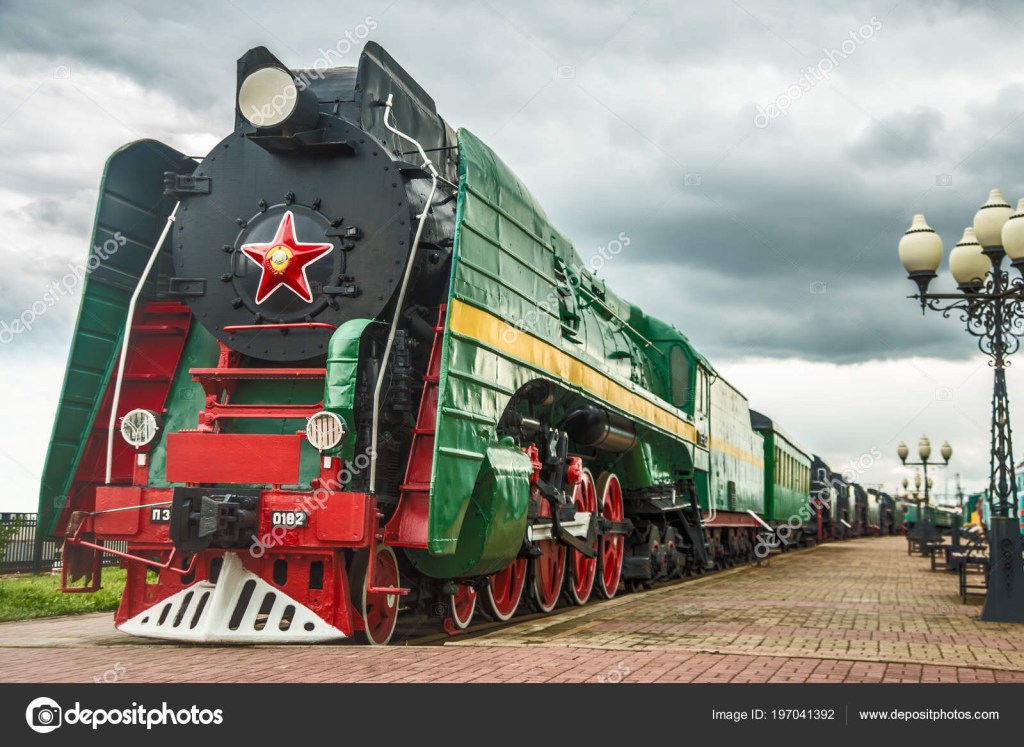
Somewhere in Ukraine, we made a fairly lengthy stop at a village where we were able to leave the train and mill around the station for a few minutes. There were vendors, of course, and I bought a couple of pieces of fruit and bottles of mineral water. I even had a chance to talk with a very sweet lady, who was tickled to learn that I was an American whose grandparents had emigrated from her region around the time of the first, failed Revolution of 1905.
Around 9:00 p.m., I left my compartment to stretch my legs in the corridor, and was looking out the window at the passing scenery (it was not quite dark), when we made a brief stop at a small station. As I glanced at the people on the platform, I suddenly noticed a familiar face: a woman who appeared to be the identical twin of my mother’s older sister — or, rather, as she had looked many years before. Unfortunately, there was no time to disembark, and I have always regretted that I was unable to talk with her. She may have been a distant relative; I will never know, but I like to think so.
We arrived without incident in Kiev in the morning, and as I stepped down onto the platform, a woman approached me and introduced herself as Irina Shakhova. Irina was a little younger than I, spoke fluent English, and looked enough like my mother’s side of the family to have been my cousin. It was obvious that we felt an immediate affinity for one another; we talked as though we’d known each other all our lives, and soon became fast friends. Later, when she and her husband Yuri moved to the Washington area with their two children and Irina’s mother, we remained close.
In addition to meetings at the Ukrainian Ministry of Health and the storage facility that housed our shipments of food, Irina did manage to give me a driving tour of the beautiful, historic city of Kiev, and a couple of exquisite restaurant experiences where the food was reminiscent of my grandmother’s cooking when I was a little girl. But the most amusing incident involved a small demonstration of coal miners from the Donbas region — an area so tragically in the news this past year — in front of a government building across the street from my hotel. I had some free time, and wandered over to see what I could learn, and to take a few pictures.
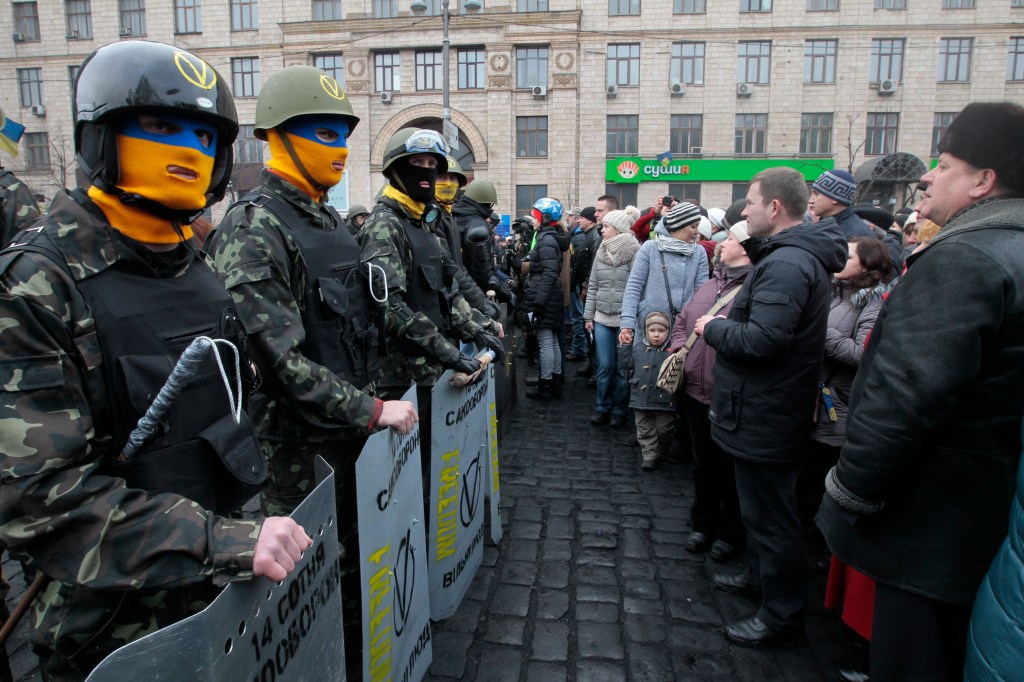
The crowd was peaceful; they had no choice, really, as the militia seemed to outnumber the demonstrators. As I was wandering about among the two hundred or so miners, a man — obviously spotting me as a foreigner — approached and began speaking to me in Russian. He asked where I was from, and when I said “Washington,” he became very excited and asked me to take a message back to my President. Okay, sure, glad to; I’m from Washington so obviously I know the President, right? And what was his message? Quite simply, that a dentist had implanted a radio transmitter in his mother’s teeth through which the government was spying on their family. [Cue Twilight Zone theme.] Never mind the other coal miners’ legitimate complaints about poor wages and working conditions; let’s first take care of Mama’s listening device. The poor man must have inhaled one too many liters of coal dust. I didn’t want to upset him, or invite trouble for him by enlisting the help of a Militsionaire, so I assured him I would do my best and hightailed it out of there, back to the safety and quiet of my hotel room.
But the most memorable — and saddest — event of that trip to Kiev was my visit with Irina to a treatment center for child victims of the Chernobyl nuclear disaster some seven years earlier. These were some of the children who were receiving our Veggieburger. If you can recall how the poor orphans were portrayed in the movie versions of Charles Dickens’ “A Christmas Carol,” you’ll have an idea of how these children looked: pale, emaciated, eyes dark-ringed and sunken, and faces sad beyond description. There was not a spoken word or a hint of a smile from any of them, as though they had never known a moment when they weren’t ill, and they realized the future wasn’t going to be any better. Their faces haunt me to this day. And these were just some of the less-afflicted children — the ones who were mobile and not visibly deformed. I was not given access to an inpatient hospital or an orphanage, undoubtedly for good reason. And of course, I was not allowed to touch the children, though I wanted desperately to give each one a huge hug. But the danger of radiation contamination was still too great.
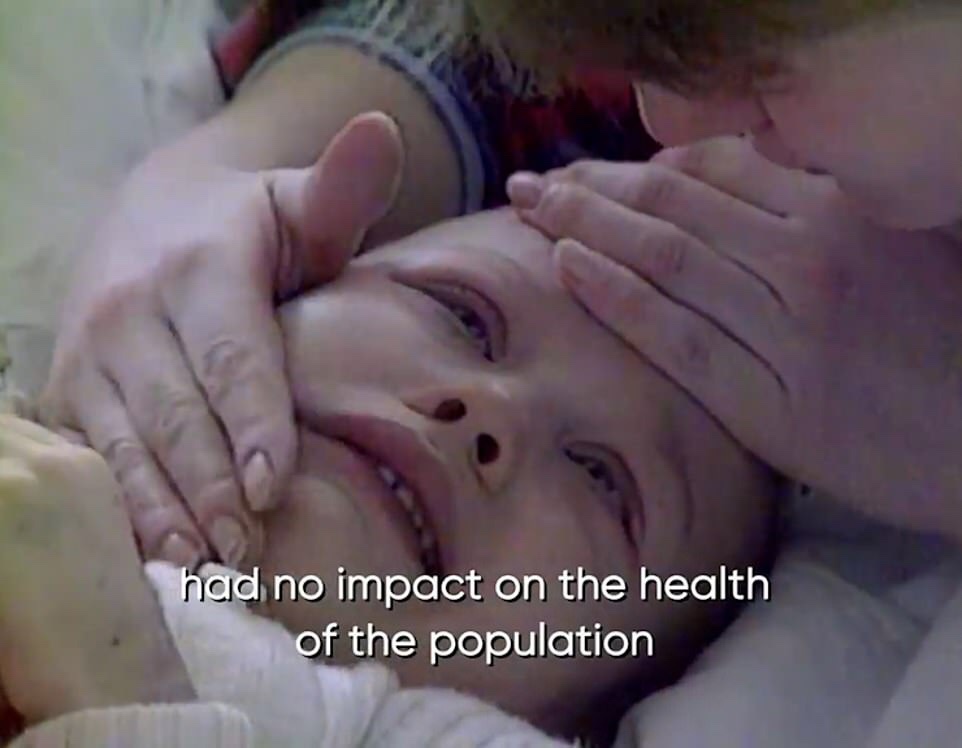
Yet their condition, as greatly as it affected me, in no way surprised me. For those three days in Kiev, I had a sore throat that felt for all the world like tonsillitis, only it couldn’t be, because I’d had my tonsils removed decades earlier. But I had breathed the Chernobyl-polluted air and eaten locally-grown food, and that was enough. As soon as I left Kiev, I felt fine again; my sore throat disappeared, and to my knowledge I have suffered no lasting ill effects from that brief exposure to nuclear contamination. But those children had been breathing that foul air for all or most of their young lives. An entire generation had been sacrificed to the ravages of mankind’s insatiable lust for advancement.
Then it was back “home” to Moscow on another overnight train, and onward to a summer of fun and games in the ancient land of the Tsars, the Commissars, and the Oligarchs. Near the top of my to-do list: discreetly reestablishing contact with Valentin Aksilenko.
*. *. *
Today, I can’t remember what I had for dinner last night; but the details of those months in 1993 remain etched in my mind as though I had just lived them. Please join me again next time, when I revisit my first encounter with the Moscow Militia and the local KGB, on their turf, at a place known only by its address: Petrovka 38.
TTFN,
Brendochka
3/30/23 (re-posted 8/26/24)
 The Blog About Everything … and Sometimes Nothing