This is the second episode of my adventures in Moscow in 1993 (the first one — Chapter 14 — was re-posted on 8/20/24). This one will make much more sense if you read the earlier one first. Enjoy.
*. *. *
February 21, 1993 – Eight time zones away in Moscow, Valentin Aksilenko answered the ringing telephone: “Allo?”
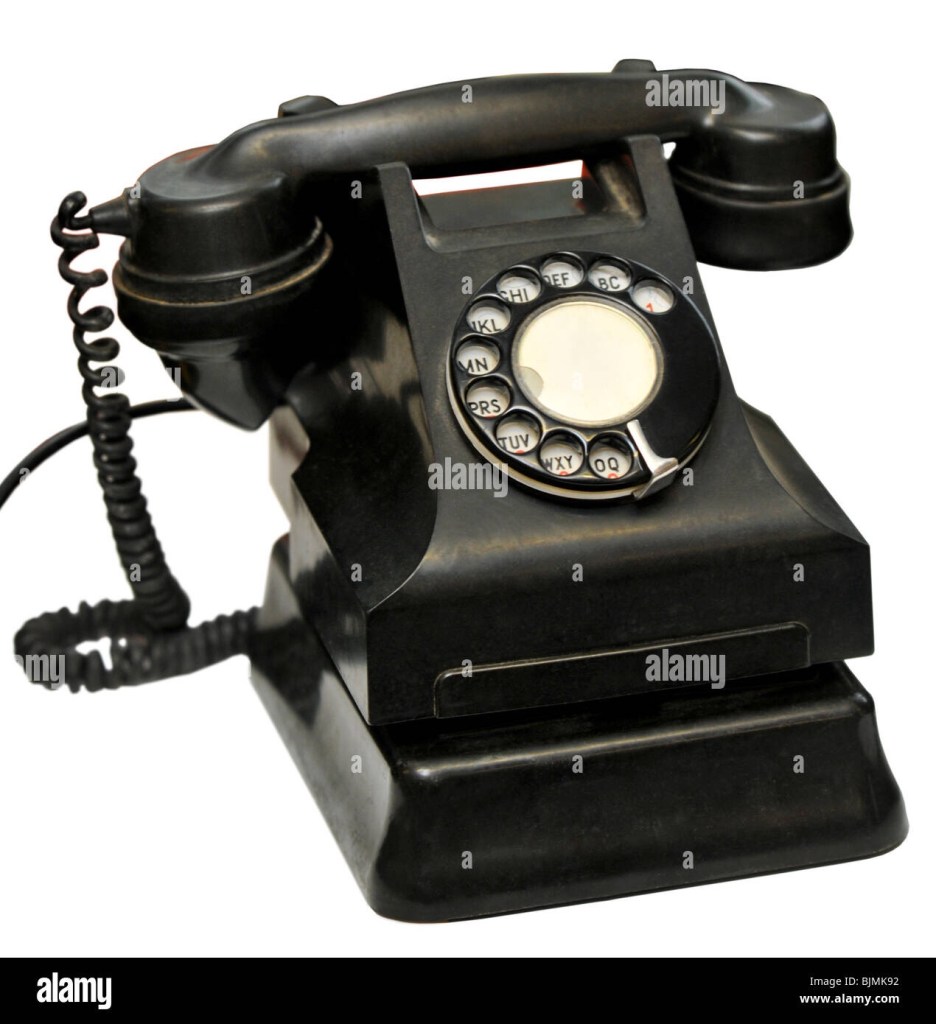
“Valentin, what in hell is going on over there?!!” I was clearly in no mood for preliminaries.
Valentin chuckled, not at all surprised to have heard from me. “Oh, you saw the Washington Post?”
So this Yuri Shvets quoted in the article was the friend he had told me about in Moscow. The entire scenario had obviously been carefully planned, by both of them, well in advance. And Shvets’ last interview had taken place while I was still in Moscow — perhaps at the very moment that I had been sitting and talking with Valentin in the Radisson’s business center. What kind of dangerous game were they playing? And how had I managed to be dragged into it? Was my being in Moscow at that exact time just the worst kind of serendipity?
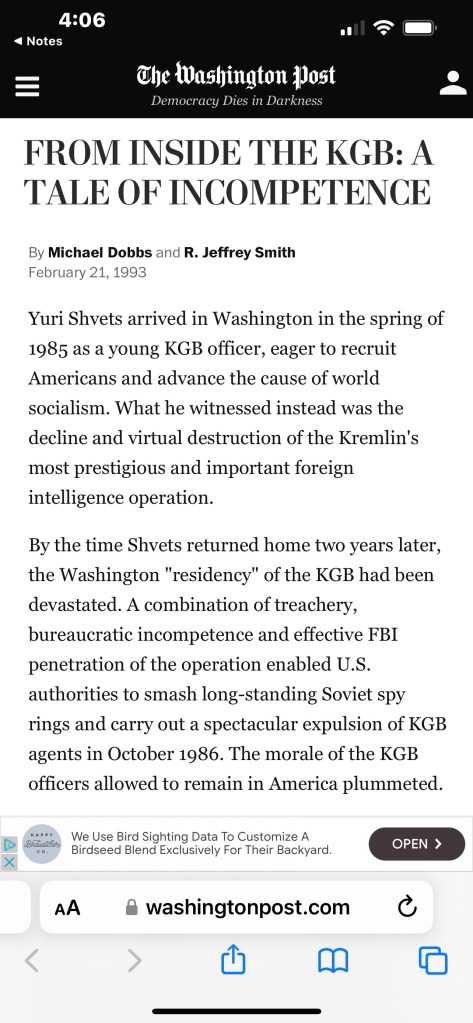
In disbelief, I responded: “Is he crazy? Does he know what he’s doing?’
I was clearly upset, yet Valentin remained perfectly calm. He assured me that everything was fine, that there was no cause for concern, and that his friend had things well under control. Seriously?? This Shvets guy was advertising the fact that he was about to blow the whistle on the KGB, and everything was “under control”? How was that even possible? But I somehow managed to restrain myself, and not ask any further questions. I reminded myself that we were, after all, on an unsecured phone line between Moscow and the United States. Valentin’s calm demeanor, at first puzzling, was actually smart; he had been well trained. I should have realized that in the first place, but this was unfamiliar territory for me.
Valentin further confirmed that our business arrangement was still in place; they would draft an agreement to be signed by the three of us, granting me a percentage of any income from the “transaction”; and I should please go ahead with the search for a publisher. That was the least of my worries at the moment, but I took my cue and thanked him, told him I looked forward to receiving the agreement, and we said our goodbyes. Then I started pacing from room to room.
I never did get breakfast that day, and I’m not all that sure about lunch either. I kept rereading the newspaper article and trying to imagine a scenario in which Shvets’ book could be published without creating a firestorm in Moscow; but I wasn’t having any luck. First, however, I decided I had to protect myself on this end — not just financially, but legally. I needed to be sure that a commercial transaction of this type would not be in violation of any U.S. laws, regulations, or existing sanctions against Russia. As for the controversial content of the book, that would be the publisher’s problem, not mine. It was Sunday, so I couldn’t make any phone calls that day, but I knew whom I had to call on Monday: a friend in the Justice Department.
I woke early Monday morning and made the call. My friend asked a few questions, then assured me that there was no legal restriction against the type of business arrangement I had described, and no reason why a book by a Russian author couldn’t be published in the U.S. One of his questions concerned the identities of the two men.
The next day, the FBI came to call.
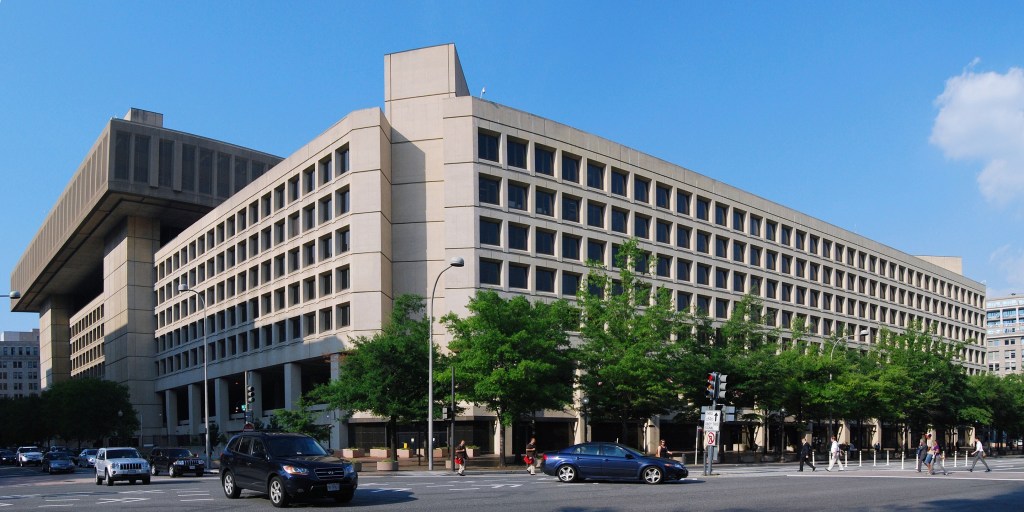
One or both of the names had apparently sent up a red flag in the Justice Department’s database, and my inquiry had immediately been referred to the Department’s investigative arm, the FBI. My first thought was that they were going to suggest that I back off and not get involved with anyone, former or current, from the KGB — which, of course, would have been sound advice. But that’s not what happened. In fact, they said they saw no problem, but asked that I keep them informed of my progress.
If you’ve never been in this type of situation, let me assure you that it’s really hard to say no to the FBI. They’re the good guys, right? — no threats, no strong-arm tactics, polite and friendly, bravely protecting our country’s interests. If you’ve done nothing wrong, not broken any laws, then you naturally want to help, to give something back to the country that has given you so much. It’s a no-brainer . . . or so it seemed. So I said fine, I’ll keep in touch.
Without going into the boring details, I was able, through a mutual acquaintance, to arouse the interest of a leading literary agent in New York, John Brockman. John was taken with the story of the would-be author Shvets and his colleague Aksilenko, but said that he could not consider representing an author he had never met or spoken to. He urged me to send an invitation to the two men to visit the U.S. for a brief period, during which he could assess the validity of their story and the likely value of Shvets’ manuscript.
Oh, okay, sure . . . no problem. Two (allegedly) retired, high-ranking KGB officers — Colonel Aksilenko and Major Shvets — would certainly be allowed to leave Russia for the United States, and thereafter be permitted by our State Department to enter the U.S., unquestioned and unrestrained at both ends. Just a little ten-day business jaunt — a piece of cake.
What it really was, was insane.

But I told myself I had to try. Regardless of who they were, or had been, I was representing them in a legitimate commercial transaction, and had a contractual obligation to them as my clients. I also, of course, had made a promise to the FBI, and I dutifully reported this development to them. I issued the requisite official letter of invitation to each of the men for a ten-day business-related visit in the spring, and sat back to wait for the State Department’s inevitable (I assumed) denial of their visa applications.
But what actually occurred was mind-boggling. With lightning speed, the visas were approved by State and issued by our embassy in Moscow; the two men managed to make airline reservations on the Russian airline, Aeroflot; and Aksilenko advised me that they would be arriving at JFK International Airport in New York on April 25, 1993, for a ten-day stay. Someone obviously wanted them here — but who? And why? And how had they managed their departure from Moscow so easily? These were just the first of scores of questions yet to be encountered . . . and never answered. Regardless of how or why, the Russians were coming.
*. *. *
I was to go to New York to meet them on their arrival. John Brockman had invited all three of us to stay overnight at his country home in Connecticut, and was sending a car and driver to transport us there from JFK Airport. We would drive back into New York City the following morning for meetings with prospective publishers. It was VIP treatment, and all very efficiently arranged. But a funny thing happened on the way to the airport . . .
I had opted to travel to New York by Amtrak’s express train. On arrival at New York’s Penn Station, I took a taxi to JFK Airport, instructing the driver to drop me at the international arrivals terminal for incoming Aeroflot flights. Whether he didn’t understand me, or simply didn’t know his way around the airport, I don’t know; but I was delivered to the wrong terminal. And by the time I got inside and realized it, my taxi was gone and there were no others around. And no shuttle bus in sight. I had no idea of how to get where I was supposed to be; I’m a Washingtonian, not a New Yorker.
And just then the clouds parted, the hand of God descended and delivered to this lost lamb an angel from Heaven.
Or, more likely, the FBI had reached out and sent me an agent. A very respectable-looking man approached me, said I appeared to be lost, and asked if he could help. I explained my problem, and he said — miracle of miracles! — that he was also going to international arrivals and would be happy to give me a lift. His car just happened to be parked nearby.
Now, I’m not a stupid person, and under normal circumstances I do not get into vehicles with strangers. But this was not a normal circumstance, and he was not your average stranger. Plus, I was running late and becoming desperate. So with some trepidation and a silent prayer, I accepted the Good Samaritan’s offer. He knew exactly where to go, dropped me off in front of the correct terminal, said goodbye and good luck, and drove off. I never saw him again; apparently he had no business in international arrivals after all.
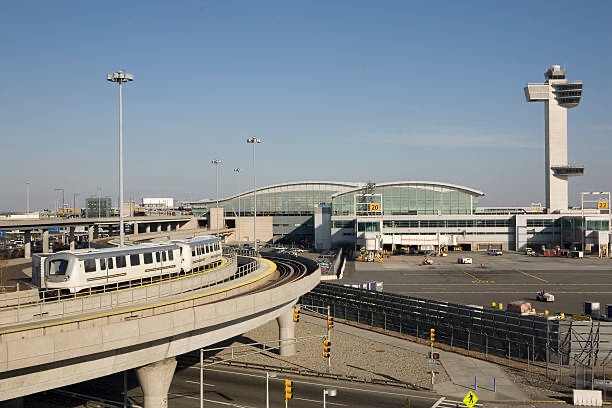
But there was no time to think about that. I ran into the terminal, looked around near baggage claims, and found Valentin Aksilenko standing next to a man, obviously our driver, who was holding a card with my name written on it. What a relief! But where was Yuri Shvets?
As I greeted Valentin and the driver, apologizing for my tardiness, a man came inching out of a nearby corner, where he had been partially hidden in the shadows. He was of average height, slight build, with luxuriant dark hair that was styled in what could only be described as a pompadour (you younger readers can look that up), and conspicuously well dressed and unwrinkled for a long-distance traveler. Was this the mysterious author, whistle-blower, and spy extraordinaire? Really?
After a quick introduction, we grabbed our respective suitcases and headed for the car to take us to Connecticut. I sat in the front seat with the driver, giving the two visitors a bit of privacy in the rear. In addition to jet lag, they must surely have been stressed beyond belief. We chatted a bit about their flight, the lovely countryside, and other nonsense, and then I left them alone to talk softly between themselves — in Russian, of course. I couldn’t catch a word of their conversation, nor did I try.
The Brockmans were the perfect hosts, and we all spent a delightful evening, with drinks on the enclosed porch, a stroll through the historic farm property, a lovely dinner, and endless conversation. The following morning, we rode into the city, met with three prospective publishers, and Shvets’ book was quickly bought for publication by Simon & Schuster. After a brief meeting back at the offices of Brockman, Inc., we enjoyed a celebratory lunch (again, compliments of John Brockman) in a restaurant with a beautiful view of Rockefeller Plaza, and three of us — the two exhausted Russians and I — hopped a train back to Washington, where I had left my car parked in the Union Station garage. I drove across the Potomac River via the 14th Street Bridge, checked them into their previously-reserved rooms in a suburban Virginia hotel, and took myself home to collapse. They weren’t the only ones feeling the stress.
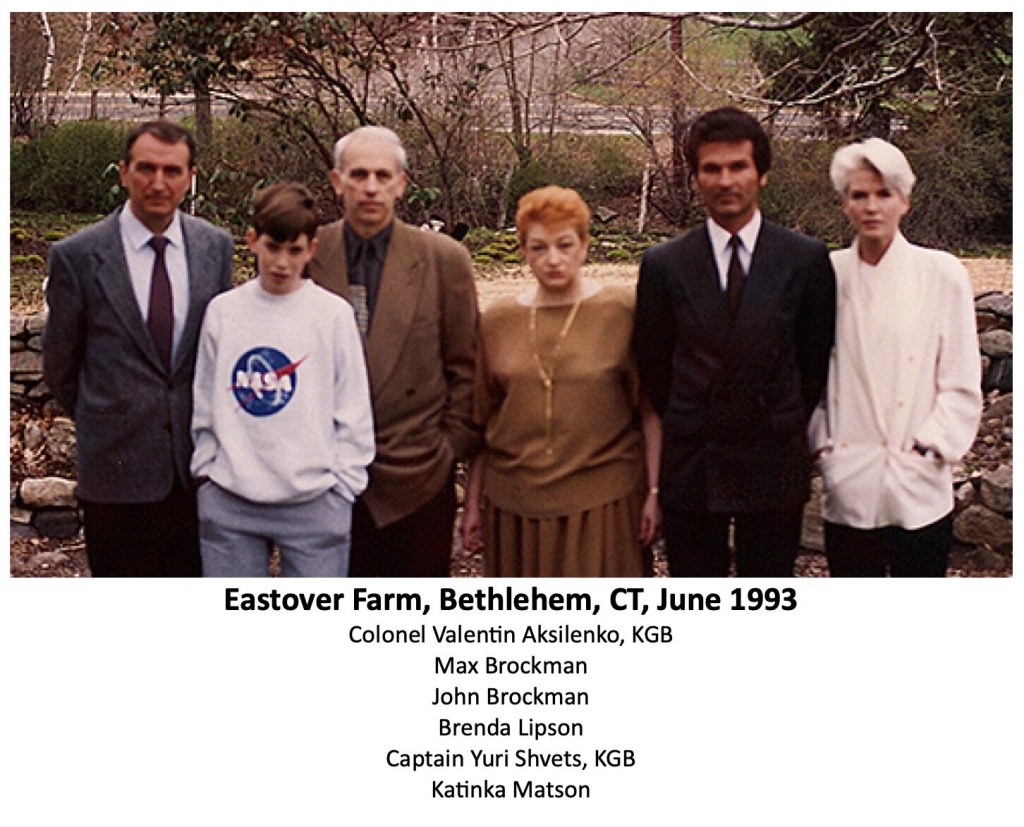
It later became public knowledge that, during their stay in Washington, they met with the FBI. How many times they met, or for how long, or what was discussed, I do not know — and I’m sure it’s better that I don’t.
*. *. *
I have to backtrack a bit here. Following my February trip to Moscow with Kate Williams, I had received an offer from Gil Robinson to join his Foundation as their Moscow office manager for an estimated three to six months. Needless to say, I jumped at the opportunity. I spent a couple of weeks part-time in the Foundation’s Washington office, and was scheduled to leave for Moscow on May 10th. Valentin’s and Yuri’s visas were due to expire on May 5th. I was cutting it close, with only five days between their departure and my own in which to get ready for the move. And all the while I was spending time with them, with the FBI (whose presence had increased dramatically since the arrival of the two visitors), with my family and friends, on the phone with Brockman, suspending home deliveries and services, cleaning out my refrigerator, and packing half my wardrobe and an entire pharmacy. Today, just thinking about it is exhausting.
So when they took off as scheduled on May 5th, I was relieved, to say the least. And on May 10th, I left on an Air France flight from Dulles International Airport with 16 pieces of baggage — seven or eight of my own, the remainder being office supplies and equipment belonging to the Foundation. The overweight charges were enormous, but luckily a very sympathetic Air France supervisor, on hearing that we were doing humanitarian aid work for children, cut the costs in half. Also fortunately, I had the Foundation’s American Express corporate card to cover the still hefty charges.
And off I went, leaving everyone and everything behind, heading into . . . what? I had no idea, but I was sure it wouldn’t be dull. And I was so right.
Join me next time, as I arrive in Moscow to get settled, meet my new “family,” visit Kyiv at last, and become much too well acquainted with the Russian authorities.
*. *. *
Re-posting these chapters is almost like reliving those events in 1993, and I find myself wondering where I found the courage to take off into the unknown, by myself, in those days when Russia was being referred to as “The Wild East,” and all business was being conducted through the new “mafia” gangs. But I’m so glad I did, while I had the chance.
Just sayin’ . . .
Brendochka
8/24/24
 The Blog About Everything … and Sometimes Nothing