
Every now and then, when the headlines aren’t terribly exciting and I’m stumped for interesting topics for my daily blog, I like to look back at earlier chapters that might bear re-posting. And I usually fall back on my very earliest tales of my own adventures in the late 1980s and early ‘90s, when I was fortunate enough to be traveling and working overseas, mainly in Prague and Moscow.
Those of you who weren’t following me back in early 2023 may wonder why my recent interests seem to center so greatly around Russia and Eastern Europe. So today I have taken an excerpt from Chapter 14, originally posted in March of ‘23, to give you an idea of what my life was like 30 years ago — far, far different from these retirement years.
Do I miss those times? Damned right, I do! Would I do it again? Only if I could turn the clock back — but not now; not in Putin’s Russia today. I’m all for a bit of adventure . . . but I’m not insane.
Here, then, is a teaser that will give you some idea of who I am . . . or once was.
*. *.. *
“‘Glasnost’ is on everyone’s lips, but the rules haven’t changed for either side.” — The Russia House, John le Carre (1989).
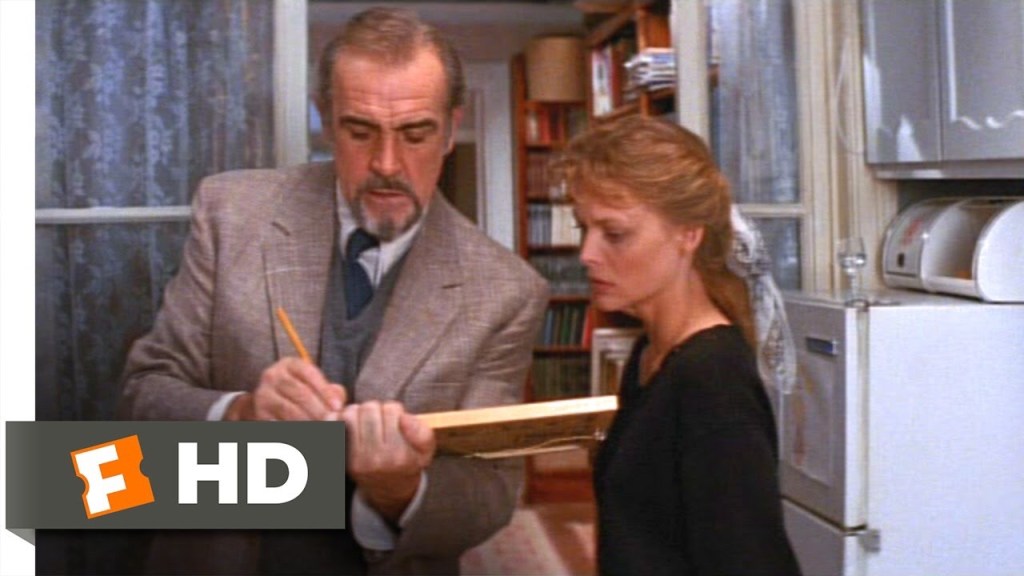
You know how sometimes you can go to a party expecting it to be a total drag, and end up having a wonderful time? Or on a blind date you’re really dreading, where it turns out you meet the love of your life? Well, my next event wasn’t a party or a date, but a simple get-together with an old acquaintance for a bit of pleasant conversation. I certainly never anticipated that that afternoon meeting would be one of the most significant turning points of my life.
“Viktor Akimov” — the commercial/economic First Secretary from the Soviet Embassy in Washington in the late 1970s and early ‘80s — was in fact Valentin Pavlovich Aksilenko. Everything else I’ve told you about him was factual, but I had originally thought to protect the privacy of some individuals by not naming them in my earlier narratives. However, since the stories I’m about to relate are already matters of public record, what would be the point? So, here we go . . .

On one of my free afternoons during that week of February 14, 1993, I again met with Valentin Aksilenko in the business center of the Slavyanskaya Radisson Hotel in Moscow. As we had done the previous February, we caught up on world events of the past year, and what each of us had been doing. This time, though, Valentin dropped a seemingly offhand comment to the effect that he was so glad to be “out of intelligence work.”
EXCUSE ME??? I could not have heard that correctly! Were those really the words of a man who obviously had never admitted being in the intelligence field, now telling me how happy he was to be out of it? And why was he revealing it at this particular moment? And why to me?
It’s thought that if you want another person to keep talking, you should just keep quiet. So I did. But instead of continuing, he became still. Leaning forward in his chair, with his forearms resting on his legs, hands clasped between his knees, he stared at the carpeted floor for a seemingly endless moment, deep in thought. I waited, scarcely breathing. At last he sighed as though having made a crucial decision, sat up straight, and looked back at me. To paraphrase his next words:
“I have a friend here in Moscow who was also an intelligence officer at the Embassy in Washington. He’s secretly writing a book about his experiences as a KGB spy in the United States, but obviously he can’t get it published here. We were wondering if you know anyone in the publishing business, and if you think you could help us?”
And there it was: that exact moment in the movie of John le Carre’s The Russia House, when the Russian Katya Orlova delivers a manuscript from her scientist friend to be placed in the hands of the British publisher, Barley Blair, for publication in England because its content is too explosive to be released in Russia.
Only this wasn’t a movie; this was real. And it was happening to me, right then, and right there, in Moscow. Oh! My! God!

It never ceases to amaze me how quickly the human brain can process information and make decisions in sink-or-swim situations. I reasoned that I had a choice between a flat-out “Sorry, no, I don’t” and a totally false “Actually, yes, I do.” But my brain, now in overdrive, told me there was a third option: stall. So what I finally said was that, in all honesty, I did not personally know anyone, but that I did know people in New York who might well have connections in publishing. And thereby I unknowingly altered the course of my future, as well as Valentin’s and his friend’s.
. . . that is, if there even was such a friend. He hadn’t mentioned the friend’s name. Wasn’t it just possible that Valentin himself might be this anonymous author, and the unidentified “friend” was merely a kind of misdirection? But there was no time for reasoning just then. I told him I would see what I could do, and left the thinking for later. We parted with a handshake and a promise to be in touch.
When Kate asked me at dinner how my meeting with my friend had gone, I said it had been really nice to see him again, and let it go at that. This was not the sort of information you share with the world. But I hardly slept that night, or for the next couple of nights. We left Moscow on Saturday morning, February 20th, arriving at Dulles International Airport in mid-afternoon Washington time — nighttime in Moscow. I was so exhausted by then — both mentally and physically — that I was in bed by 9:00 p.m. and actually did sleep, not waking until noon on Sunday, February 21st.
Yawning and stretching, I opened my apartment door, bent down to pick up the Sunday edition of the Washington Post, dropped it face-up on the kitchen counter, and headed toward the refrigerator for my customary wake-up glass of orange juice. And halfway there, I stopped dead in my tracks.
Something had caught my eye as that newspaper landed on the countertop. What was it . . . something about the KGB? Turning back, I focused on an article by Michael Dobbs, then the Post’s Moscow Bureau Chief, about a series of interviews given in Moscow — the last one just a few days earlier — by a former KGB Major named Yuri Shvets, who had served in the Soviet Embassy in Washington from 1985-87, and was now writing a tell-all book about his experiences there.
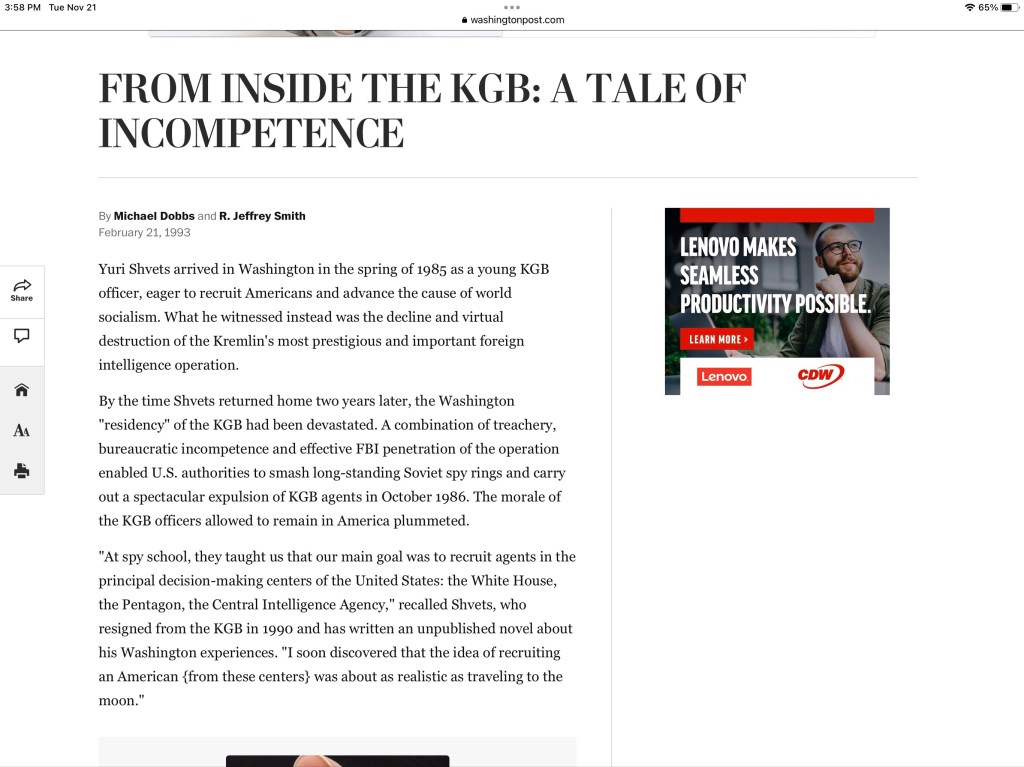
The words that came flying from my mouth as I stood alone in my kitchen that day are not fit for printing in this blog. Or anywhere else.
“That #&$*#$ has to be Valentin’s friend.”
“What the #$&%*$ is he doing??”
“Is he #$&#*$-ing INSANE????????”
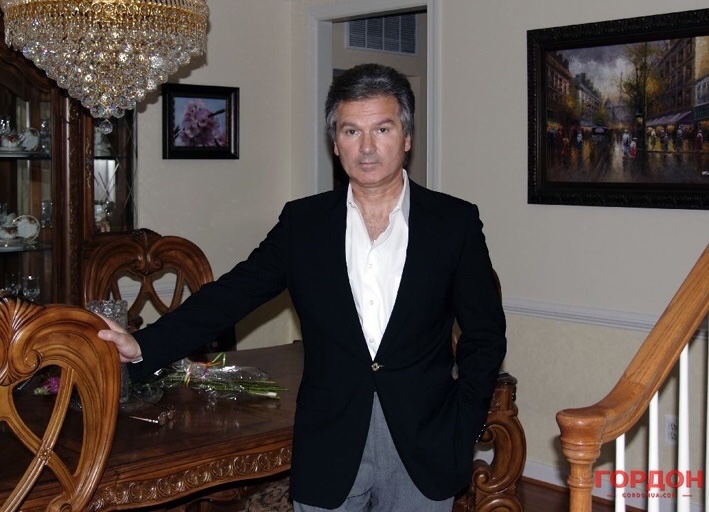
Well, whoever he was — Valentin’s friend or, unlikely, some other lunatic — I was sure he had just signed his own death warrant. I reread the article and tried to calm down. Then I reached for the phone and dialed Valentin’s number in Moscow, where it was nearly 9:00 p.m. There had to be a logical explanation for this.
*. *. *
Please don’t yell at me for stopping here. It’s an ongoing story, with many twists and turns and some fun stuff in between, that will require about a dozen installments to write. So, like a 1940s radio soap opera (but all true), I must ask you to tune in next time for the continuing saga, etc., etc.
*. *. *
And that’s where Chapter 14 ends. I know . . . that’s so-o-o-o-o mean! But if things stay reasonably calm, and time permits, I promise to continue with subsequent installments. In fact, I can’t wait to reread them myself.
Just sayin’ . . .
Brendochka
8/20/24
 The Blog About Everything … and Sometimes Nothing