Science is a wonderful thing. It can tell us how far away Pluto is (not the Disney dog — the planet that isn’t a planet anymore, but maybe it is, or not, because no one seems to be sure). And it can tell us what’s going on in the insides of our bodies (though it can’t fix everything just yet). And it can allow us to create artificial entities that look and act just like real people (except that the hands are always too big, too small, or just in the wrong place).
And now — wonder of wonders, miracle of miracles! — science has proven that J.R.R. Tolkien knew something the rest of the world didn’t: He knew that Hobbits were real.

Of course, the folks at New Line Cinema were sure of it all along, or they wouldn’t have produced the movie series that made all of their investors incredibly wealthy. But the world was still full of unbelievers; and to all of you, I say . . .

So how has science come to verify what has long been consigned to the category of science fiction? Perseverance, that’s how. By not giving up on a mystery dating back to a discovery made in 2003, when archaeologists found a teeny-tiny human skull on the Indonesian island of Flores.
They found other small bones as well, and at first assumed they were all those of a child from ancient times. But there were teeth, and the molars were those of an adult. A very small adult.
And voila! They realized they were looking at “a newfound kind of human who lived 60,000 years ago: Homo floresiensis.” [Ashley Strickland, CNN Science, August 10, 2024.]
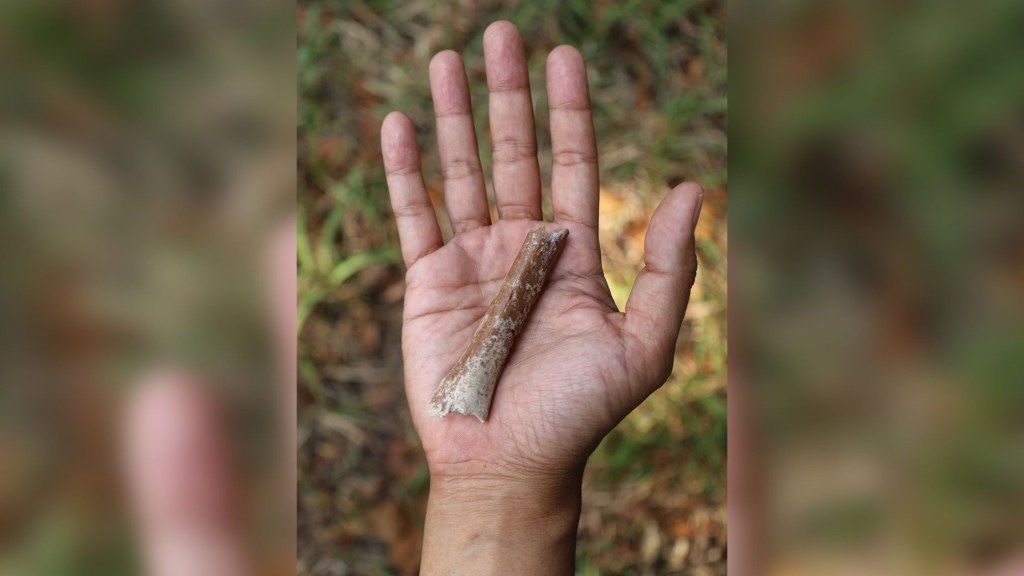
Okay . . . I will freely admit that science was my worst subject in school. Therefore, I will not be attempting to explain how the scientists were able to identify these bones, or how they figured out how old they were . . . or, indeed, how they knew they weren’t just the bones of a “normal” person suffering from dwarfism. All of that is beyond me.
But I am convinced it is proof of Hobbits. And if they investigate that island very, very thoroughly, I would be willing to bet they will find this . . .

. . . or a reasonable facsimile.
And they can argue all they want to about studies, and tests, and methodologies, or whatever. As far as I’m concerned, they can take their test tubes and microscopes and computers, and put them where the sun don’t shine.
Because in today’s world of global warming, and wars, and artificial intelligence — and even at my advanced age — I still prefer to believe in the fantasy.
Just sayin’ . . .
Brendochka
8/10/24
 The Blog About Everything … and Sometimes Nothing