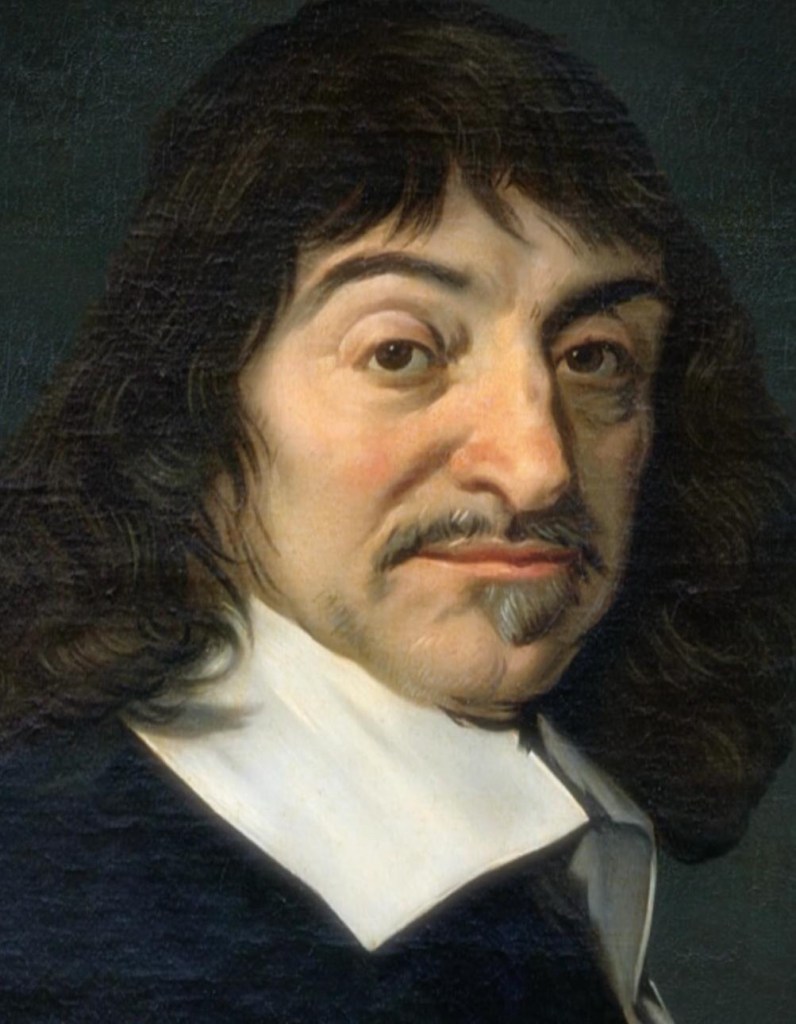
“I think, therefore I am.” – Rene Descartes, Discourse On the Method (1637).
*. *. *
It all began a few days ago while catching up on the daily news, when I made the colossal error of asking myself which I thought was more important in the character of a world leader: being guided by rational thought, or by human emotion. And since the obvious answer (to me) would be “both,” then the next logical question was, “How do you balance them?”
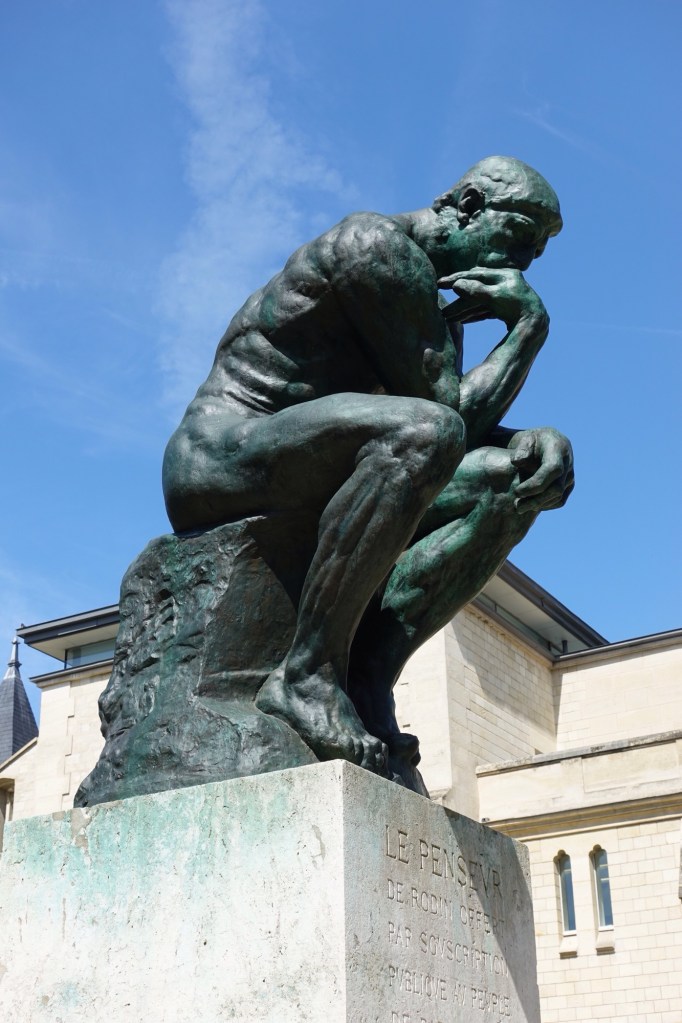
Well, naturally this led me directly to the writings of a long-dead French philosopher. (Doesn’t everyone’s mind work that way?) Luckily, nearly 400 years after his demise, I assumed that Descartes’ copyright had long since expired — if copyrights even existed in 17th Century France. So I felt free to paraphrase the philosopher’s words to suit my own purpose:
“Sentio, ergo sum.” I feel, therefore I am.
Not the sort of “feeling” described as one of the five senses: sight, hearing, smell, taste, and . . . obviously . . . touch, or the literal ability to feel a solid object. Because if existence depended upon having each and every one of those five senses in good working order, then wouldn’t a person lacking one of them cease to be? (“I don’t feel, therefore I am not . . .” )

Rather, I’m talking about the vast range of human feelings: love, hate, joy, anger, pleasure, sorrow, sympathy, empathy. Without these, would we truly exist?
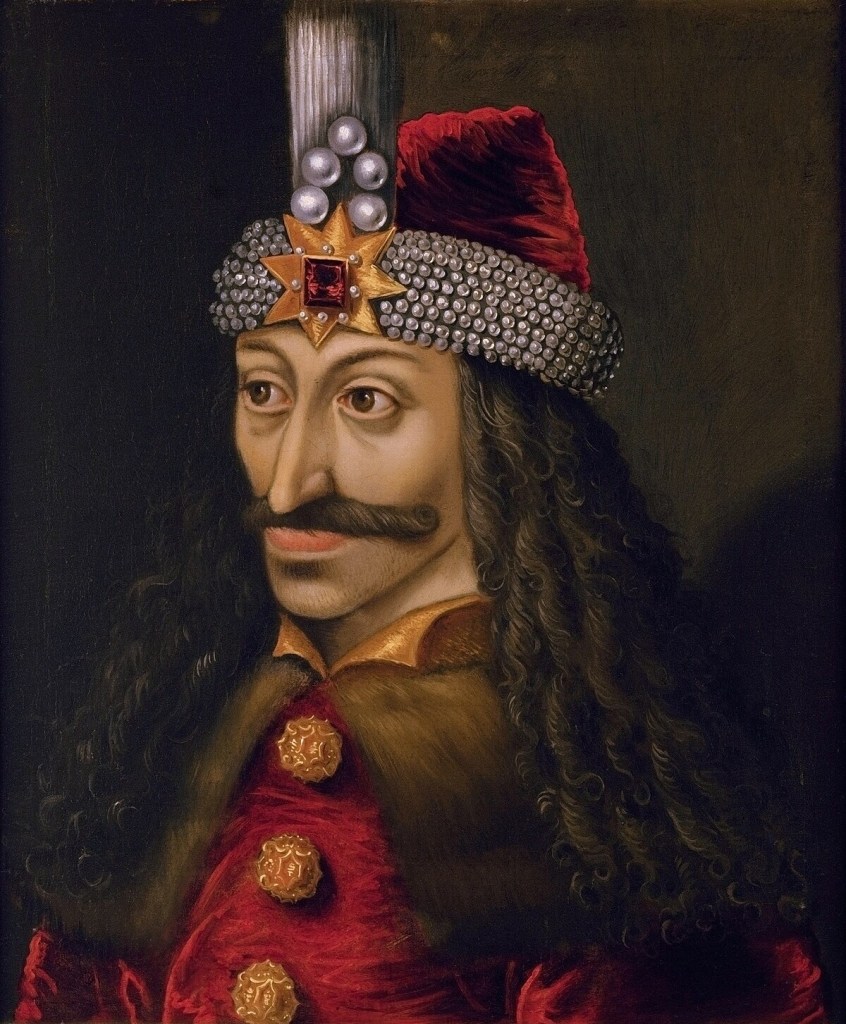
Literally, yes . . . of course we would. Our bodies wouldn’t suddenly evaporate, and even if they did, wouldn’t they still exist in another form: gas, rather than solid? So, according to Descartes, “Sentio, ergo sum” would not be a valid statement. After all, look at the people who have walked this earth — and some who still do — who have exhibited no human emotion whatsoever (with the possible exception of hate): Vlad III of Wallachia (a.k.a Vlad the Impaler, or Vlad Dracula), Adolph Hitler, Osama bin Laden, Vladimir Putin, Donald Trump . . . (Or is narcissism the ultimate form of love — self-love — thereby eliminating the last two names from the list?)
Okay, maybe we’d better just forget about the existential stuff for now. I’m getting caught up in my own limitations, because I have failed to differentiate between literally being alive and feeling alive: that sense, if you will, of being eager to get out of bed in the morning; of facing the day with optimism and enthusiasm; of wringing every drop of pleasure or pain out of each minute of the day, knowing that it will become an integral part of what makes you . . . you.
Isn’t that far preferable to hanging around the house in your pajamas, trying to find that last corner piece of the monochromatic jigsaw puzzle you bought in a moment of pure masochism; or watching a rerun of one of last year’s “Christmas In July” Hallmark movies for the 13th time?
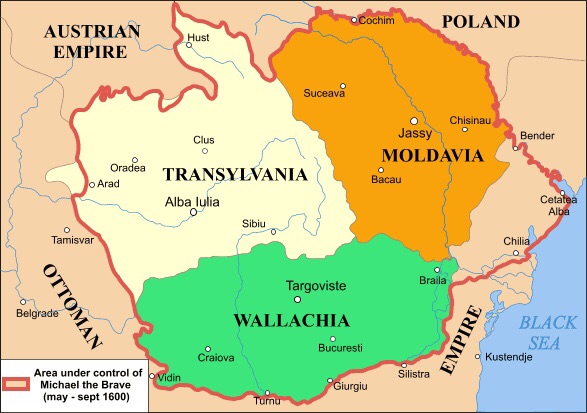
And by now, I’ve drifted so far from my original question about world leaders that I’ve forgotten why I asked it in the first place, or where in the world Wallachia is. So I go ahead and Google it, and find that it was part of what is now Romania, but thanks to that insatiable Ottoman Empire of yesteryear, it no longer exists, so who cares how it’s pronounced anyway?
*. *. *
You know, I’m thinking that perhaps I should leave the philosophizing to the philosophers, and stick to things I know, like news reporting and childhood reminiscences. Or maybe I just need to reread The Unbearable Lightness of Being.* That should complete the confusion.
Boy . . . even yesterday’s poetry was easier than this.
Just sayin’ . . .
Brendochka
6/27/24
* Milan Kundera, 1984.
 The Blog About Everything … and Sometimes Nothing