It’s late Sunday night, nearly Monday morning, and I’ve got . . . nothing. Nada. Zip. I’ve gone blank.

Not that there isn’t anything to write about. There’s always news, after all. It’s just that I’m momentarily burned out on all of the horror that confronts us every day, day after day. So I thought I’d just cheer myself — and hopefully you — up a bit with some of the absurdities and plain old silliness of life, past and present. I did not make any of this stuff up; I’m not that clever. It’s all from the pages of The Book of Useless Information (Publications International, Ltd., 2011). The book, by the way, was manufactured in China. For whatever that’s worth.
So here we go, with the first “Did you know . . . ?”
Charles Dickens was a master of inventiveness when it came to making up names for his characters. Who, for example, could ever forget Uriah Heep (from David Copperfield), Bumble (from Oliver Twist), or Pumblechook (from Great Expectations)? But after reading the list contained in my Book of Useless Information, I have a new favorite. And I anticipate that you, my readers, will not require an explanation of the reason that this fellow made it directly to the No. 1 spot on my list of all-time great names. Without further ado, from Dickens’ The Old Curiosity Shop, I present to you:
Dick Swiveller.

Okay, so much for the Monday morning blahs. I’m on a roll now.
*. *. *
I love music, most kinds. I even enjoy an occasional opera, though I must admit the plots, in addition to being unnecessarily complicated, are frequently downright depressing. Allow me to elucidate (if we’re talking about opera, I think it’s okay to use the upscale vocabulary).
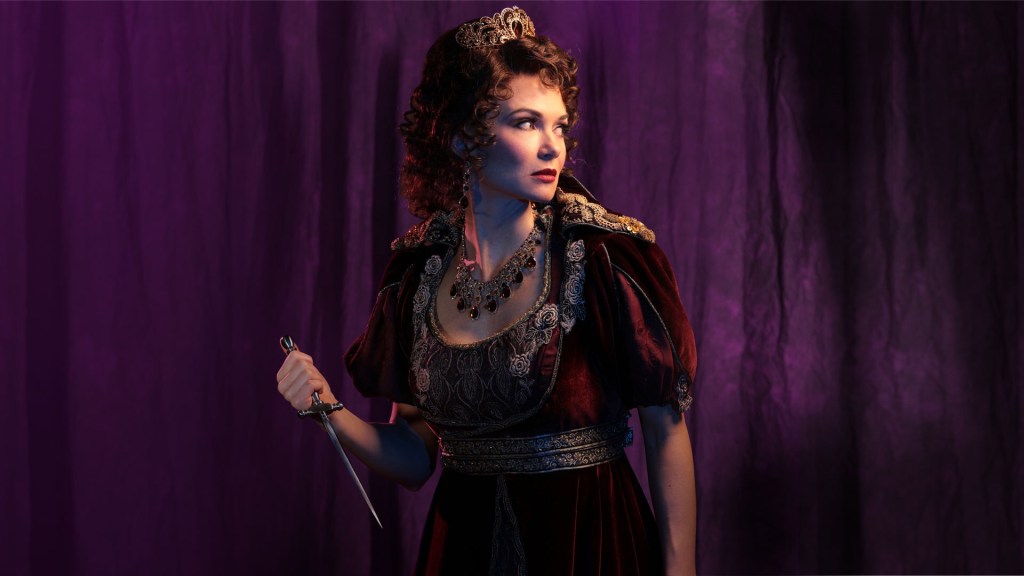
— Tosca (by Giacomo Puccini, 1900): Floria Tosca is a celebrated singer whose lover is arrested by a corrupt police chief. She kills the police chief, but her lover is executed, and she commits suicide. * * * Now, there’s a plot that could have been wrapped up in 40 minutes of running time on an episode of Columbo. But no . . . onstage at the Met, it’s two hours and forty-five minutes of eye-rolling and breast-beating, not including two intermissions. Oy!
*. *. *
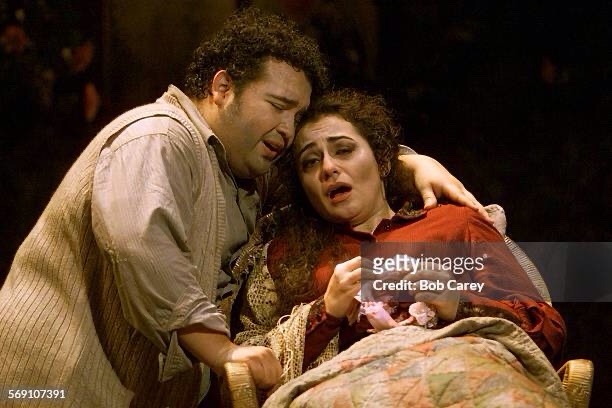
— La Boheme (also by Puccini, 1896): Set in the Latin Quarter of Paris, this opera focuses on the love affair between Rodolfo, a poet, and Mimi, a seamstress. The couple tragically separates for some reason or other, but they reunite shortly before Mimi dies of tuberculosis. * * * I wonder if that’s where the idea for the 1936 Greta Garbo movie “Camille” came from. In the movie, though, the dying heroine didn’t sing. She just coughed a lot.
*. *. *
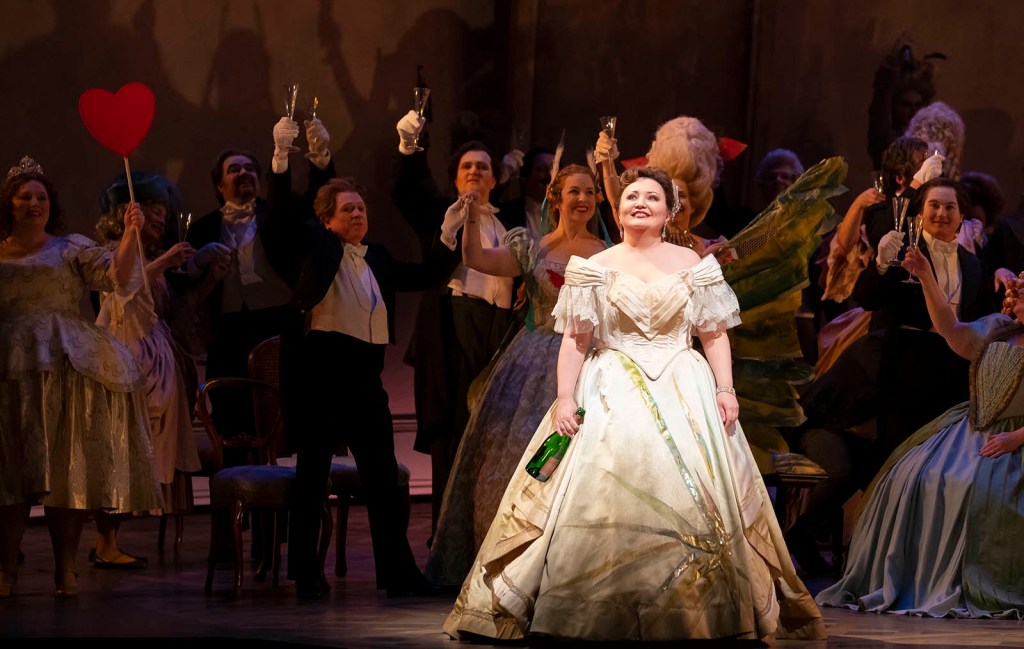
— La Traviata (by Giuseppe Verdi, 1853): In Italian, “traviata” supposedly means “fallen woman.” Appropriately, then, this opera is the tale of a courtesan who is spurned by her respectable lover before dying in his arms. * * * Come on, now! “Respectable”? By whose definition? He’s been hanging around with this fallen woman, then he dumps her. That’s not respectable.
*. *. *
And one more, before I get seriously depressed:
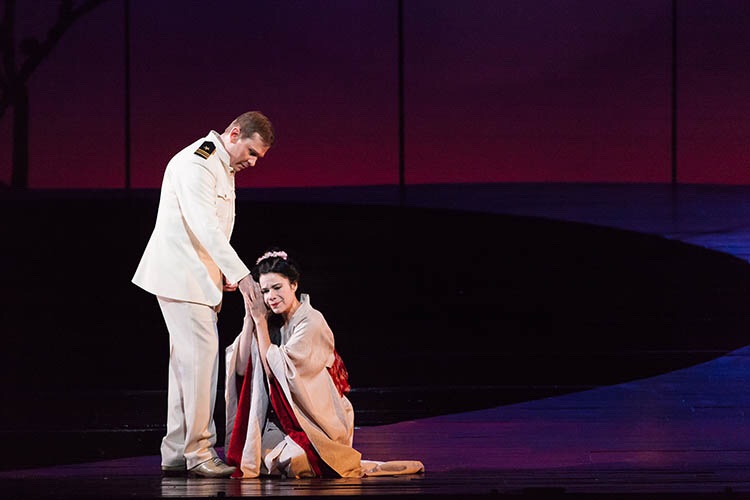
— Madame Butterfly (by the prolific Puccini again, 1904): Possibly my favorite, both because of its hauntingly beautiful arias and the incredibly adorable name of its heroine, Cio-Cio-San (pronounced, if I recall correctly, “Cho-Cho-Son”). Anyway, she is a Japanese girl who embarks on a love affair with a U.S. naval officer, Lieutenant B. F. Pinkerton. (I have no idea what his initials stand for, and I’m not going to take a stab at it.) The couple has a child together, but the B.F. Lieutenant later runs out on her to marry an American woman, and Cio-Cio-San — as I’m sure you’ve already guessed — commits suicide. Don’t know what happens to the child. * * * This one actually was the inspiration (well, partially) for a stage play titled “M. Butterfly” but which took place in China, not Japan, and involved a French diplomat and an opera singer who — undetected by the besotted and bemused diplomat — is ultimately revealed to be a man.
And if that’s not intriguing enough, the play, which won the 1988 Tony Award for Best Play, was based most directly on the real-life 20-year affair between French diplomat Bernard Boursicot and the lovely Shi Pei Pu, a “female” Chinese opera singer who did indeed turn out to be male . . . as well as a Chinese spy. If you find it hard to believe, Google it — there was a huge scandal when it came to light in the ‘80s.
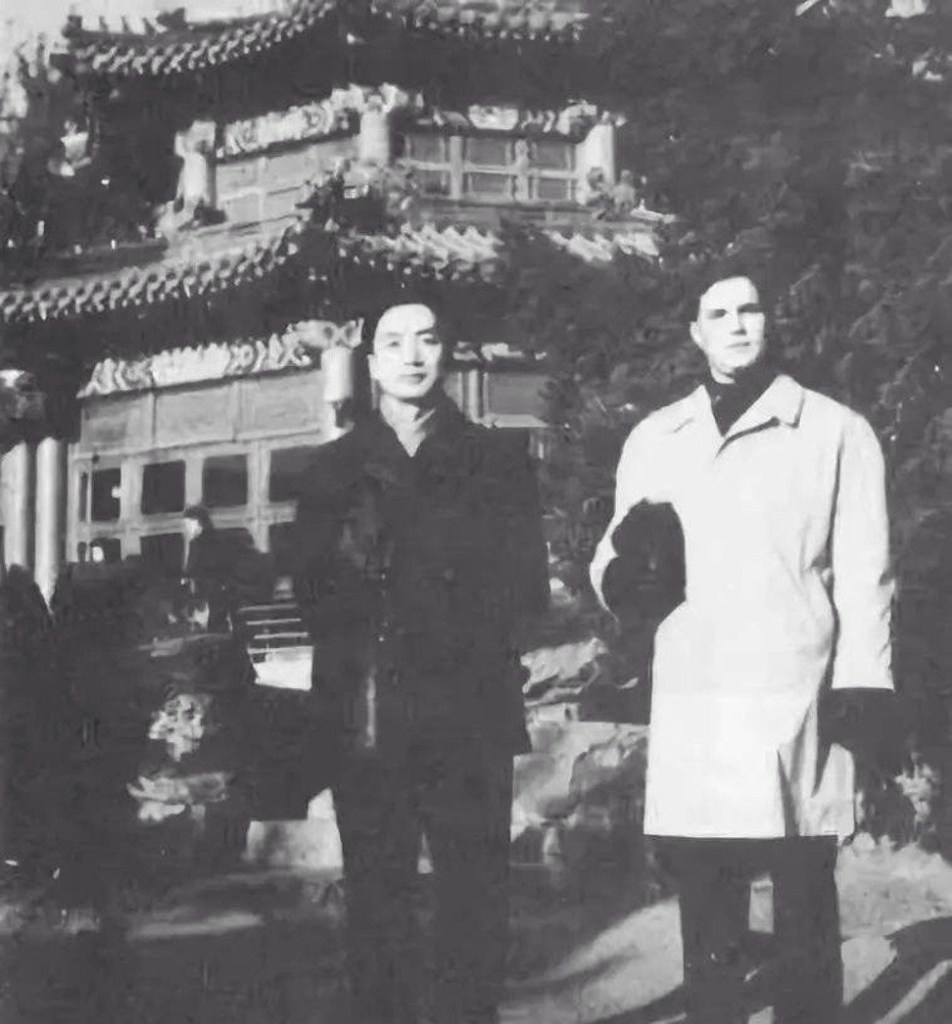
So which is stranger: truth or fiction? You tell me.
*. *. *
Well, for someone who was blank and burned-out an hour ago, I seem to have found enough to say. All of this nonsense has certainly made me feel better; I hope it’s done the same for you.
‘Til tomorrow, then.
Brendochka
4/29/24
 The Blog About Everything … and Sometimes Nothing