Years ago, I was astonished to learn of the huge market for something called “bat guano,” which is the proper name for bat poop. As I recall, China was particularly eager to obtain it for agricultural use at that time. Today it can be bought — in dried form — online, but back in the 1980s it was a big deal. And I have to wonder . . . were those the ancestors of the bats that are now being blamed for starting the whole Covid thing? Hmmm . . .
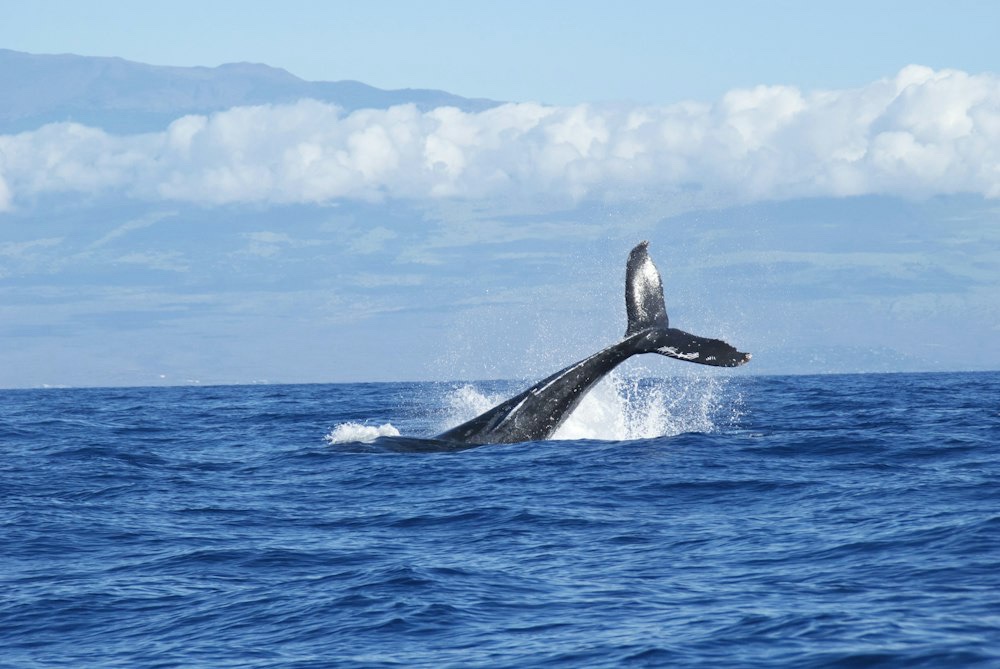
Well, recently I have read that everyone is now going batshit over something called “ambergris,” more commonly known as whale poop. And the first thing that came to my mind was, “how do you get a whale to poop in a pot?” Because otherwise, isn’t that stuff all going to be at the bottom of the ocean?
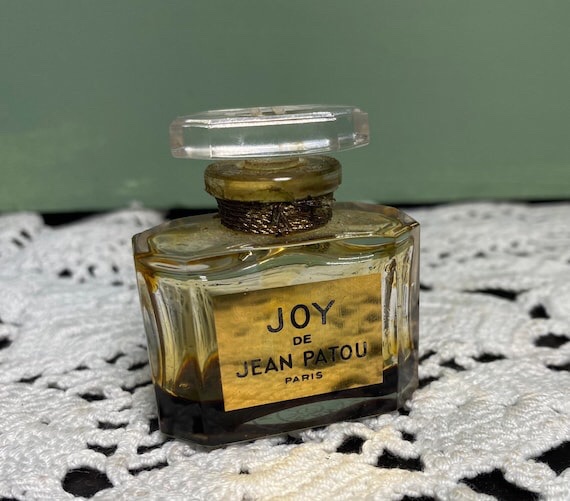
Actually, no, it isn’t — that would only be the excrement from living whales. And apparently, it doesn’t sink anyway; it floats. But there’s also what’s left in the intestines of dead sperm whales that can be harvested and sold for — of all things! — an ingredient in perfumes. Lovely, expensive, mostly French perfumes. Perfumes with lovely French names, like . . . Eau de Fumier. (Don’t bother looking it up — fumier is French for “dung.”)
*. *. *
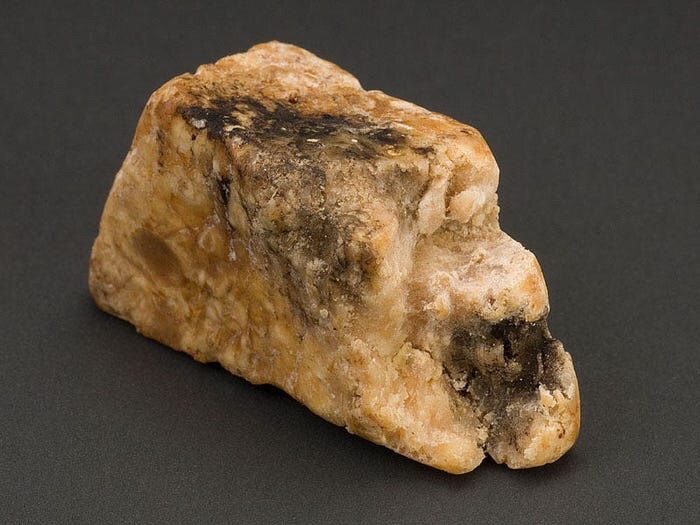
So how, I began to wonder, does a substance transform from a sperm whale’s digested dinner into a rock-hard solid, and thence into an enchanting liquid to be dabbed on the pulse points of a pampered Parisian princess? Thanks to Nathan Rennolds of Business Insider, I was able to find an answer to that question . . . in rather excruciating detail.
Actually, its discovery dates back to the whaling industry of the 1800s, when “the mysterious substance, which is often snagged floating in the sea, was . . . found [to have been] produced by sperm whales.” We now know that “ A large part of the whales’ diet is made up of cephalopods like squid. While most of the indigestible parts are vomited out by the whales, some bits find their way into the intestines and stick together . . . This mass continues to grow and eventually becomes a lump of ambergris.” [Nathan Rennolds, Business Insider, July 8, 2023.] Sounds to me like a plain, old-fashioned bowel obstruction.
So much for the excruciating detail. But how did a 21-pound lump of it, found in the intestines of a dead sperm whale that washed up on a beach on the Spanish Island of La Palma, come to be worth more than half a million dollars? Well, the same way as do most valuable substances — diamonds, gold, oil, uranium: it’s their rarity, and the difficulty involved in extracting and refining them once they are found, plus the availability of a well-heeled niche market greedy for them.
The article goes on to describe the scent of the ambergris and the extraction from it of a substance called ambrein, which apparently is used to make perfume aromas last longer — all fairly technical and not terribly exciting, but crucial to the development of the final product.
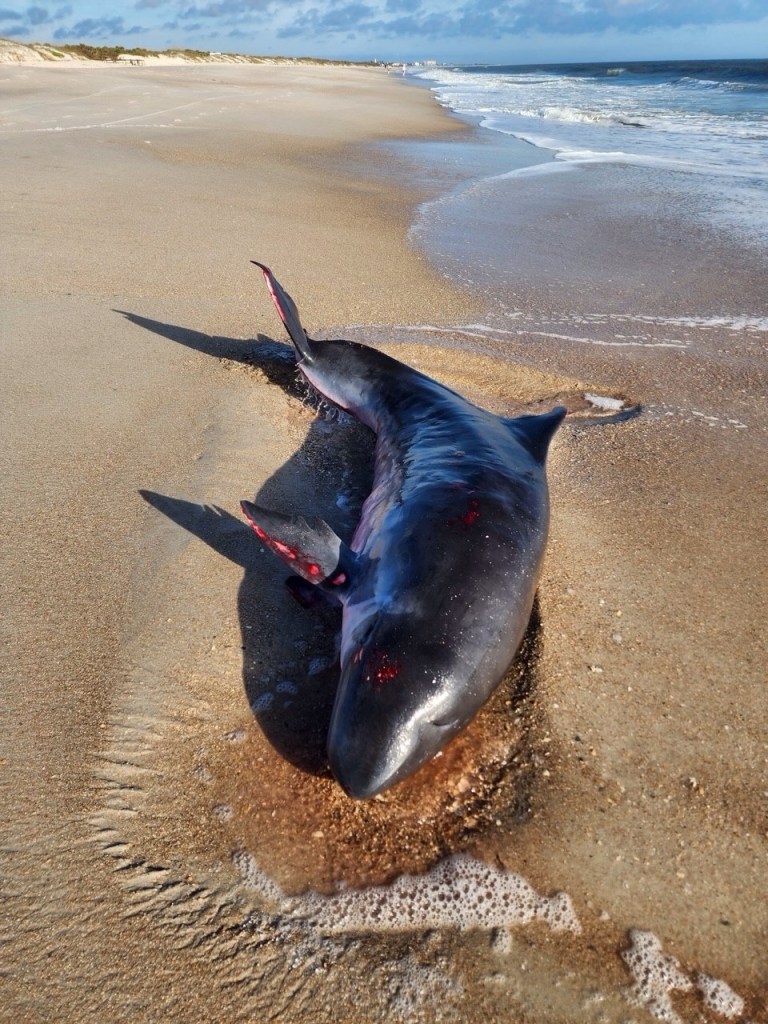
And then I began thinking about the future of all of those magnificent, already endangered behemoths of the sea, and what might happen to them if poachers decided to cash in on their amazing payload. And again, Mr. Rennolds’ article came to my rescue:
“Richard Sabin, the curator of marine mammals at the Natural History Museum, said that ‘whales are now protected worldwide, but could still be at risk in the future.’ He added that ‘synthetic alternatives to ambergris do exist, and the use of these should be encouraged, [as it] would prevent whales being viewed in any way as a resource that humans can exploit.’” [Id.]
Well, they’d better hurry, because there have apparently been instances of this already. “In 2021, a group of fishermen in the Gulf of Aden sold a chunk of ambergris worth around $1.5 million to a buyer in the United Arab Emirates. The 35 fishermen purchased houses, cars, and boats from their profits, the BBC reported.” [Id.]
*. *. *
Other than the long-prized cow manure your nose detects when driving through farm country, who knew that more exotic feces could be such prized material? It makes one wonder whether we should actually be throwing away all those little Zip-Loc baggies we bring back from our walks with Lassie, or the leftovers from the kitty litter box . . . not to mention the stuff on the bottom of the bird cage. That puppy/kitty/parakeet poop could be worth a pile (pun intended) one day . . . much like all those original Barbie dolls and GI Joes and first-edition comic books we wish we’d kept. But where would one store the baggies while waiting for them to increase in value? In the kitchen freezer? Not in my house!
But the next time I see a fund-raiser for a “Save the Whales” group, you can be sure I’ll be digging deep into my pockets to contribute. I’ll just use some of the money I might have spent on that French parfum.
Just sayin’ . . .
Brendochka
2/6/24
 The Blog About Everything … and Sometimes Nothing